
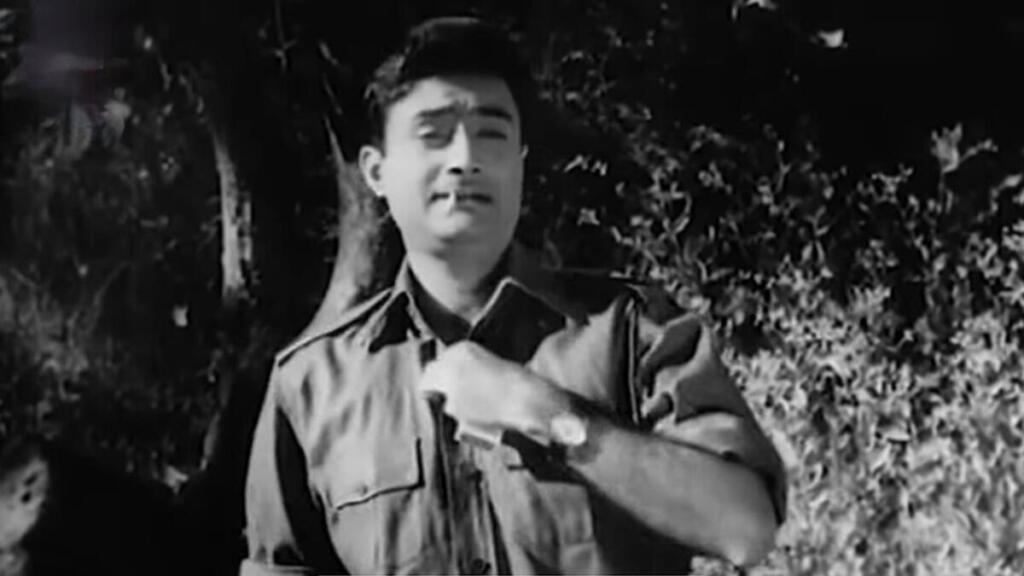
Today marks the 103rd birth anniversary of Dev Anand, the actor who came to define an entire era of Hindi cinema and remained, in the popular imagination, eternally young.
Born Dharam Dev Pishorimal Anand on September 26, 1923, in Shakargarh (in undivided Punjab, now in Pakistan), he went on to become one-third of Hindi cinema’s legendary triumvirate alongside Raj Kapoor and Dilip Kumar, the three actors who defined Bollywood’s golden age through the 1950s and ’60s.
Dev Anand made his screen debut in 1946 in a lead role in Prabhat Films’ Hum Ek Hain, a film built around the theme of Hindu-Muslim unity. His first real commercial success came two years later with Ziddi (1948), but it was the 1951 crime thriller Baazi — made under his own newly founded Navketan Films — that made him a star and is widely credited with kickstarting the “Bombay noir” wave that swept Hindi cinema through the decade.
The Golden Run
Across the 1950s, ’60s and into the ’70s, Dev Anand delivered a string of era-defining hits: Jaal, Taxi Driver, C.I.D., Paying Guest, Kala Pani, Kala Bazar, Hum Dono, Tere Ghar Ke Samne, Jewel Thief, Johny Mera Naam, and Hare Rama Hare Krishna. Perhaps none looms larger than Guide (1965), based on R.K. Narayan’s novel, which is still regarded as one of Hindi cinema’s finest artistic achievements. Many of these films came out of Navketan Films, where he frequently collaborated with his brother, director Vijay Anand.
He wasn’t just a leading man with a rakish scarf and a lopsided smile — he built a reputation for spotting new talent and taking creative risks, moving fluidly between acting, writing, direction and production over a career spanning more than six decades and over 100 films. He also introduced several actresses who went on to become leading stars of Hindi cinema.
Later Years and Recognition
He continued working through the 1970s and ’80s in films like Des Pardes, Swami Dada and Lashkar, and kept directing and producing well into his later years. His contribution to Indian cinema was recognised with the Padma Bhushan in 2001 and the Dadasaheb Phalke Award, the country’s highest honour in cinema, in 2002.
Dev Anand passed away in London on December 3, 2011, at the age of 88, following a cardiac arrest — only days after the release of what would be his final film, Chargesheet.
The Legacy Lives On
His birth anniversary continues to draw tributes from across the industry and government each year — Bollywood veterans, government leaders, and institutions like the Film Heritage Foundation have marked the occasion in past years with retrospectives and screenings of his classics, including a major “Dev Anand@100 – Forever Young” festival for his birth centenary in 2023. More than a decade after his passing, he’s still remembered as Indian cinema’s original evergreen romantic hero — an actor whose restless creative energy and refusal to age gracefully into nostalgia became as much a part of his legend as his films.