
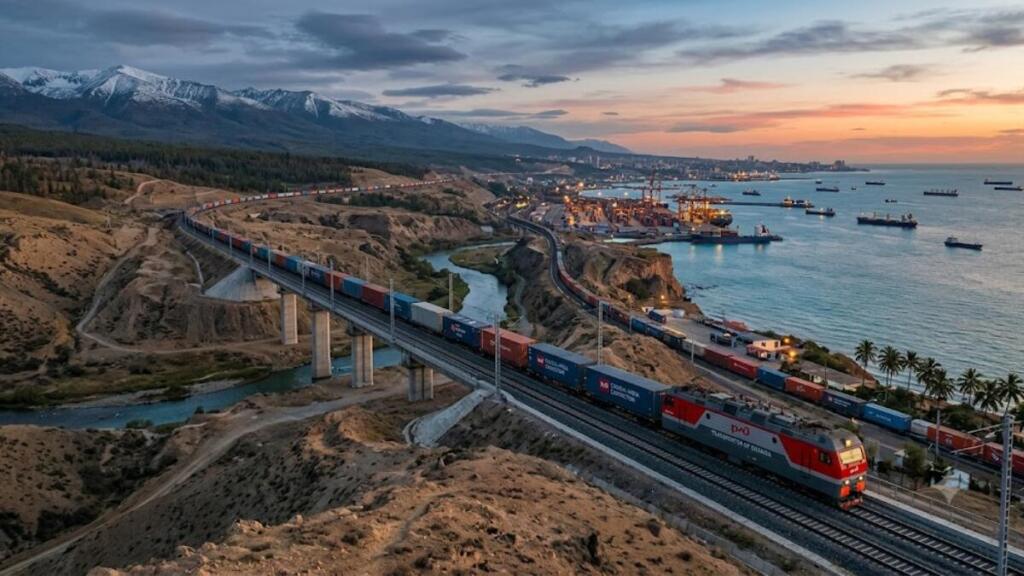
Russia wants a railway to the Indian Ocean. The reasoning is straightforward: it’s tired of depending on sea routes that keep getting disrupted. Deputy Prime Minister Marat Khusnullin raised the idea in an interview with TASS, and the timing says a lot.
For months, war has choked the Strait of Hormuz. The US and Israel struck Iran in February. Tehran hit back with missiles and drones, then blockaded the strait itself. That single waterway carries about a fifth of the world’s oil and a similar share of its LNG. When it shuts, prices spike and cargo piles up. Russia has felt this pain too. A large chunk of its trade with Asia moves through the same vulnerable chokepoints.
So a rail alternative starts to look sensible. Khusnullin suggested a corridor through Turkmenistan, Iran, Afghanistan and Pakistan, though he didn’t insist on any one path. “Any options providing access to India are acceptable,” he told TASS.
That openness matters, because none of the obvious routes are simple. Afghanistan sits under Taliban rule, and much of the world still hasn’t recognised that government. Pakistan and India barely get along, which makes it hard to imagine New Delhi routing trade through Pakistani soil. Iran is friendlier territory, but Western sanctions there complicate financing and insurance for big infrastructure builds. Every option comes with a catch.
Even so, the logic underneath it all holds up. Hormuz isn’t the only pressure point worrying Moscow. Khusnullin also pointed to the Bosphorus, the strait connecting the Black Sea to the Mediterranean, which Turkey briefly restricted earlier this year amid regional tensions. Two critical corridors, both capable of shutting overnight — that’s the kind of exposure that pushes governments to start drawing new maps.
A rail line wouldn’t replace shipping. Trains simply can’t move what ships can. But it would give Russia a backup for when the water routes fail, and that kind of insurance carries real weight in an unpredictable region. It would also build on a relationship that has deepened steadily since Western sanctions pushed Moscow closer to New Delhi. Russia already sells discounted crude to Indian refiners, so a direct freight corridor would slot naturally into that partnership.
For now, though, this is only a proposal. Khusnullin described a route worth studying, not a project already under way. No financing has been announced, and no timeline exists. Still, the fact that Moscow is even weighing alternatives tells its own story. Chokepoints like Hormuz used to feel like distant, occasional risks. Increasingly, they look like something planners have to build around, not just live with.