
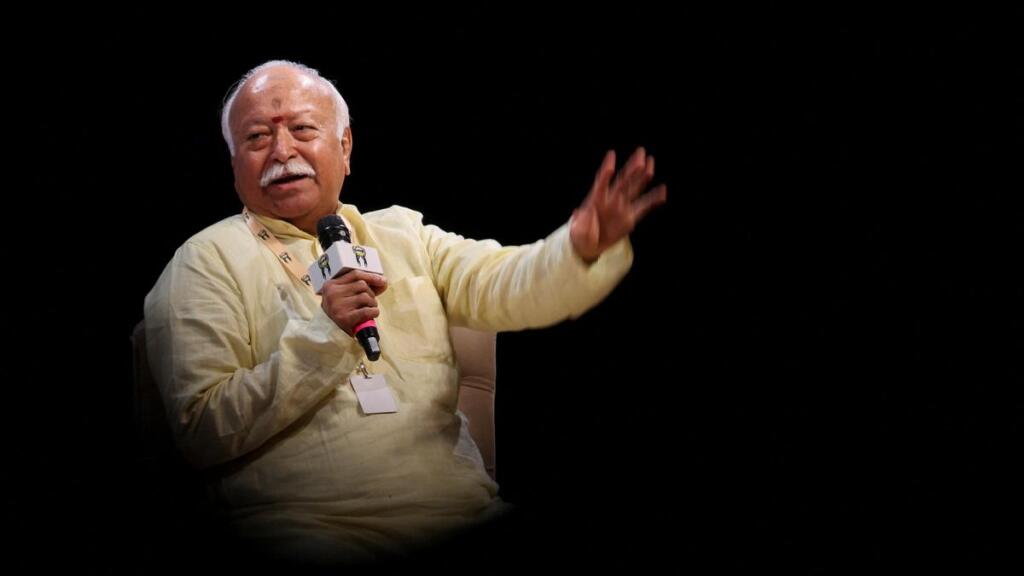
Amid weeks of youth-led unrest over the NEET paper leak, RSS chief Mohan Bhagwat used a Mumbai address on Thursday to reject the branding of young protesters as anti-national, framing their anger instead as something the establishment needs to listen to rather than suppress.
“I’m saying, if Gen Z is protesting, they’re not anti-national. They’re our own people. They’re our next generation,” Bhagwat told the gathering.
The venue itself was pointed: the 15th-anniversary event of the India International Model United Nations, held at the Nita Mukesh Ambani Cultural Centre and drawing over 2,000 students from more than 100 Indian cities, built around the theme of youth’s role in shaping the country’s global engagement. Bhagwat used the platform to directly address the student demonstrators rather than speak about them in the abstract.
On the substance of their anger, he did not hedge — the RSS chief acknowledged that the underlying complaints about India’s education system are legitimate and long overdue for fixing, rather than dismissing the protests as manufactured or externally driven.
He went further on the question of generational character, describing Gen Z and Gen Alpha as unusually candid compared with older cohorts, and suggesting that appeals rooted in honesty and service land more effectively with them than appeals to blind loyalty.
Asked whether the standoff could have been defused earlier, Bhagwat pointed to systemic failure rather than protester misconduct as the root cause, indicating that accountability lies with those running the system rather than those objecting to it.
On the mechanics of dissent itself, he offered a second framing, this time via the Tribune’s account of the same event: “Gen Z is our own next generation. They are not anti-national,” he said, tying the line to a broader point about generational trust needing active recognition on both sides. He separately urged that protest be aimed at correcting institutions, not attacking individuals, and stressed that dialogue between authorities and demonstrators should begin well before tensions escalate.
He also invoked the Indian tradition of “shastrarth” — structured debate between opposing positions in pursuit of truth — as a model for how the state might now engage its youngest citizens, arguing that today’s generation expects reasoned justification rather than deference.
The remarks land against the backdrop of the ‘Sansad Chalo’ march, where police used tear gas and lathi-charges against demonstrators approaching Parliament, and are widely being read as an attempt by the RSS chief to soften the tone of the establishment’s response to the protests.