
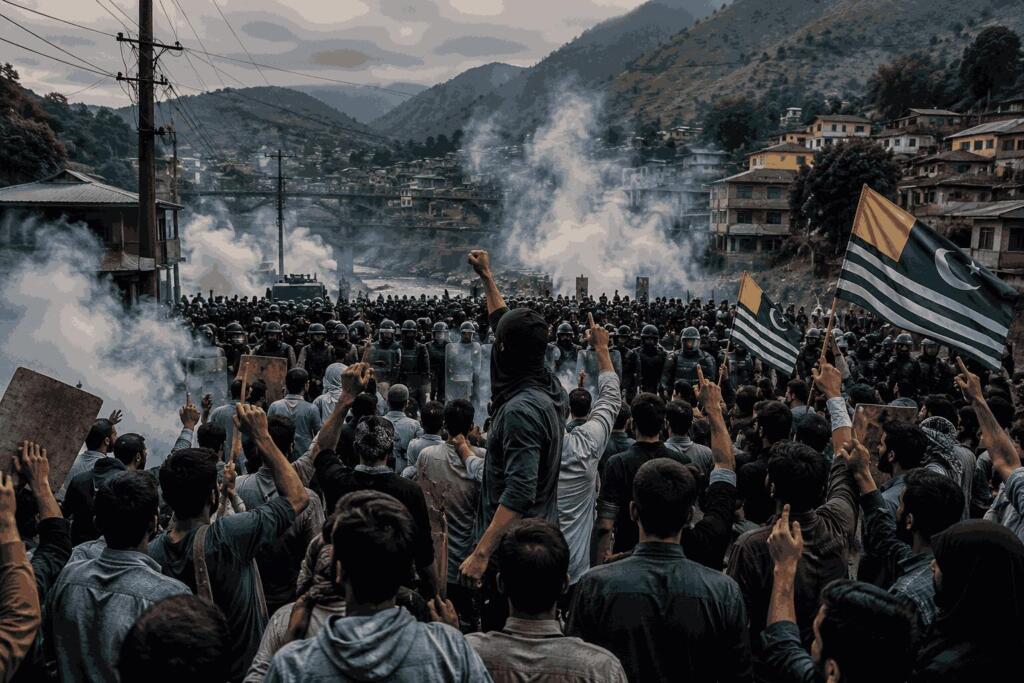
Pakistan’s decision to restrict access to media coverage surrounding the PoK protests has intensified debate over transparency, press freedom, and the deteriorating political situation in Pakistan-occupied Kashmir. The move came amid continuing unrest, allegations of excessive force, and election-related tensions in Muzaffarabad and other parts of the region. Reports indicate that restrictions were imposed on digital access to certain international media platforms after extensive reporting on the demonstrations and the government’s response.
The unrest has been building for months, driven by a combination of political grievances, governance concerns, and disputes surrounding the regional electoral process. Protesters have demanded institutional reforms, greater political representation, and changes to the system of reserved assembly seats, while authorities have maintained that security measures are necessary to preserve law and order. The situation has transformed from isolated demonstrations into a broader political confrontation affecting several districts.
The latest controversy emerged after reports that Pakistan restricted access to news platforms carrying detailed coverage of the demonstrations. Observers argue that limiting media access during periods of political unrest raises questions about transparency and the public’s ability to access independent reporting. The restrictions have also drawn attention because they coincide with heightened political sensitivity surrounding the ongoing electoral process in the region.
The PoK protests have unfolded alongside phased legislative assembly elections that have been conducted under extraordinary security arrangements. Authorities divided polling into multiple phases after weeks of violence, road blockades, and internet disruptions. While officials have described the measures as necessary for maintaining security, critics argue that communication restrictions and the tense atmosphere have complicated election campaigning and public participation.
Residents in several affected areas have reported disruptions extending beyond politics. Internet shutdowns, transport difficulties, banking interruptions, and shortages of essential supplies have affected daily life in numerous communities. Businesses, students, and families have all experienced the consequences of prolonged restrictions, adding to frustration among local populations already dealing with political uncertainty.
The PoK protests have also attracted international attention because of allegations regarding the use of force during demonstrations. Various reports have described clashes between protesters and security personnel that resulted in casualties and injuries. Competing narratives have emerged over responsibility for the violence, with authorities maintaining that security personnel responded to armed elements, while many protesters insist their movement began as a campaign focused on political and civic demands.
Political analysts believe that the current unrest reflects deeper structural issues rather than a temporary law-and-order challenge. Questions surrounding governance, representation, and the functioning of local institutions have increasingly become central themes in public discourse. As election results continue to emerge, observers suggest that resolving these concerns will require political engagement rather than relying solely on security measures.
The PoK protests have also renewed discussion about the importance of press freedom during periods of political instability. Media organisations and free speech advocates frequently argue that unrestricted reporting allows the international community and local citizens to understand rapidly evolving events. Conversely, governments facing internal unrest often justify temporary restrictions by citing security concerns and the risk of misinformation.
For many residents, however, the immediate concerns extend beyond political debate. Families continue to seek stability, uninterrupted communication, and access to essential public services. Business owners hope for the restoration of normal commercial activity, while students and professionals remain affected by communication disruptions that have complicated education and employment.
As the situation develops, the PoK protests remain a significant test for Pakistan’s ability to balance security, governance, and public confidence. The handling of media access, election administration, and public demonstrations will likely continue to shape domestic political discourse as well as international attention in the weeks ahead.
With political tensions showing few signs of easing, developments in Muzaffarabad and surrounding areas are expected to remain under close scrutiny. Whether authorities pursue broader political dialogue or continue relying primarily on administrative and security measures may determine how the current crisis evolves. Regardless of the immediate outcome, the PoK protests have become one of the most closely watched developments in the region, highlighting the complex intersection of elections, governance, public dissent, and media freedom.