
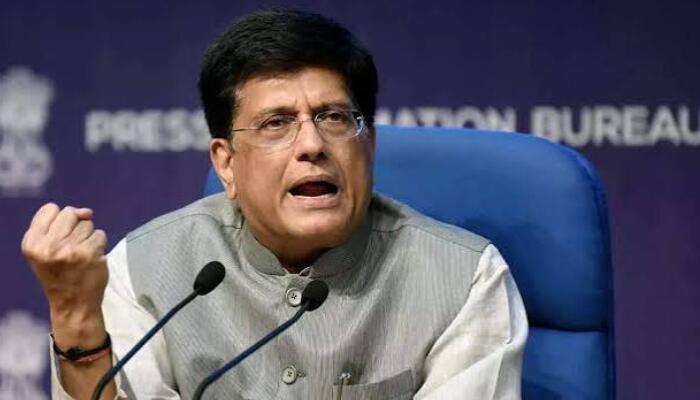
India has entered the final phase of negotiations for the proposed Bilateral Trade Agreement (BTA) with the United States, with only a narrow but critical issue preventing the conclusion of one of the most consequential trade pacts between the two countries. Union Commerce and Industry Minister Piyush Goyal said that the agreement is “very fair and equitable”, while making it clear that New Delhi will not sign the deal until it receives a meaningful competitive advantage over rival exporting nations.
Speaking at the Indo-Japan Strategic Dialogue in New Delhi, Goyal said that almost every substantive element of the agreement has already been settled, including concessions across multiple product categories and the removal of non-tariff barriers. The remaining obstacle, he explained, lies in the United States establishing a legally tenable framework that guarantees India preferential access to the American market.
Negotiations for the comprehensive trade agreement began in February 2025, and both sides have since finalised the framework for an interim arrangement while working to resolve the remaining one to two per cent of outstanding issues.
India holds firm on preferential market access
Goyal emphasised that every free trade agreement is ultimately judged by the competitive advantage it creates for participating economies. India, he said, has consistently negotiated with the objective of securing preferential market access over competing exporters, including neighbouring countries and manufacturing economies across Southeast Asia.
He noted that developed economies such as the European Union, the United Kingdom, Switzerland, Japan and South Korea have all pursued trade agreements through the same lens of competitiveness and relative economic gains.
According to the minister, the principal hurdle emerged after the US Supreme Court struck down tariffs imposed under the International Emergency Economic Powers Act (IEEPA). Following the ruling, Washington must now devise an alternative legal mechanism that allows it to extend preferential treatment to India without creating legal complications.
Goyal said India cannot operationalise the agreement until such a mechanism is in place, adding that the United States understands and appreciates New Delhi’s position. He also noted that US Trade Representative Jamieson Greer has acknowledged India’s concerns during the negotiations.
Months of negotiations conclude without friction
Despite the complexity of the discussions, Goyal dismissed suggestions that the negotiations had been difficult.
Responding to a question about the biggest “nightmare” during the talks, he said the process had been both enjoyable and intellectually enriching. The only challenge, he remarked, was managing discussions across the considerable time difference between New Delhi and Washington.
While he said working late into the night posed little difficulty for him personally, he acknowledged that members of his negotiating team occasionally found the prolonged sessions demanding. Even so, Goyal stressed that there had been no period of tension during the negotiations.
“I don’t think there was any stress at any point in time,” he said, adding that both negotiating teams maintained an excellent working relationship throughout the process and that he enjoyed “fabulous relations” with his American counterparts.
Broader trade agenda gathers momentum
Goyal’s assessment echoes recent remarks by US Ambassador to India Sergio Gor, who said the agreement is now in its final one to two per cent, with only a handful of issues remaining on both sides. Describing the proposed pact as a “win-win situation”, Gor said it would provide greater certainty and long-term stability for businesses in both countries.
The commerce minister also highlighted progress on India’s wider trade strategy. He announced that the India-UK Free Trade Agreement will come into force on 15 July, opening fresh opportunities for Indian exporters. He further said that legal scrutiny of the India-European Union Free Trade Agreement is expected to conclude within the next 10 to 12 days before entering the formal approval process. Expressing confidence in the negotiations, Goyal said the agreement remains on track for implementation before the end of the year, noting that all 27 EU member states support the pact.
With negotiations effectively complete, the final chapter of the India-US trade agreement no longer hinges on tariff concessions or market access discussions. Instead, it rests on Washington’s ability to establish a legally sound mechanism that delivers the preferential treatment India has consistently sought, a condition New Delhi has made clear it is unwilling to compromise on.