
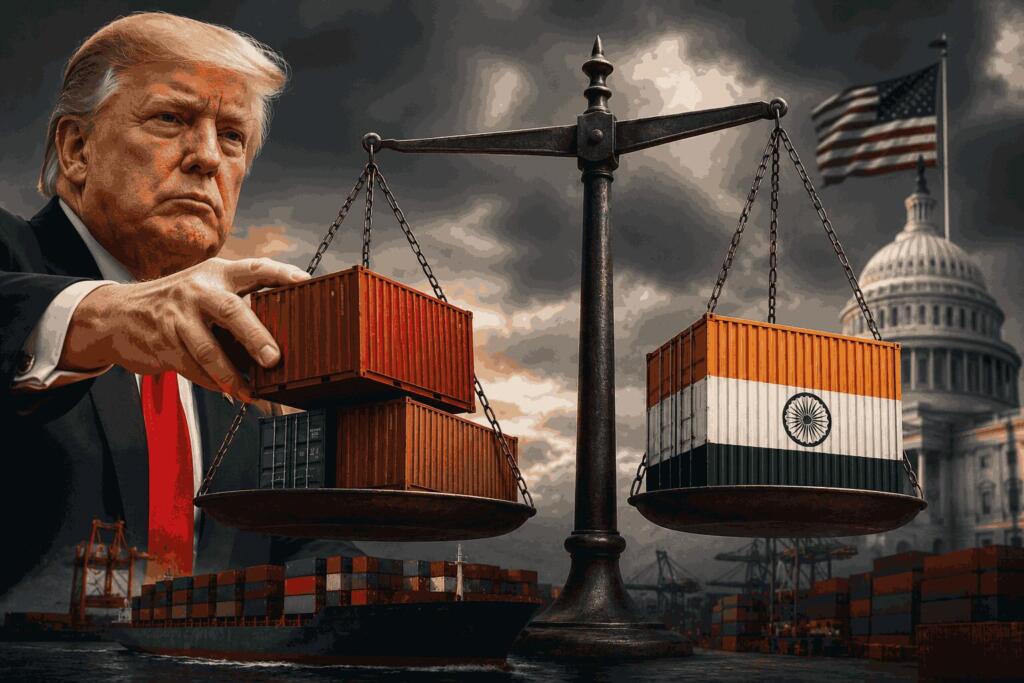
The latest tariff announcement by Donald Trump has triggered fresh concerns over the future of global trade, with India among the countries facing an additional 10% levy on selected exports to the United States. Washington has justified the move by alleging that some trading partners benefit from goods produced through forced labour, but the sweeping nature of the decision has drawn criticism from economists and industry leaders who argue that broad tariffs risk penalising legitimate businesses and straining strategic partnerships. The measures are expected to affect exporters across multiple sectors while adding another layer of uncertainty to international commerce.
India has long been regarded as one of the United States’ most important strategic partners in the Indo-Pacific, with bilateral trade expanding significantly over the past decade. Against this backdrop, the decision to impose new tariffs has surprised many observers who believe economic cooperation should complement, rather than complicate, the broader geopolitical relationship. Critics argue that punitive trade measures undermine years of diplomatic engagement aimed at strengthening commercial ties between the two democracies.
Trade experts contend that tariffs often function as indirect taxes ultimately borne by businesses and consumers rather than foreign governments. Importers may pass increased costs down the supply chain, resulting in higher prices for manufacturers and ordinary consumers. Several economists have warned that repeated reliance on tariffs can reduce competitiveness, disrupt investment decisions, and create uncertainty for companies planning long-term operations across borders.
Supporters of free trade have also questioned the effectiveness of imposing blanket duties on multiple countries simultaneously. They argue that allegations involving forced labour deserve careful investigation and targeted enforcement where credible evidence exists. However, extending broad tariff measures to a wide range of trading partners risks creating friction with countries that maintain otherwise productive commercial relationships with Washington. Donald Trump has defended the policy as necessary to protect American industry and workers, but critics say such an approach may produce unintended economic consequences beyond US borders.
For Indian exporters, the latest duties could present fresh challenges in sectors that rely heavily on access to the American market. Manufacturers may face reduced competitiveness if additional costs make their products less attractive compared with goods from countries not subject to similar tariffs. Export-oriented businesses have therefore urged policymakers to continue diplomatic engagement with Washington while exploring opportunities to diversify overseas markets.
Industry bodies have cautioned that abrupt changes in tariff policy complicate business planning and discourage investment. Global supply chains today depend on predictability, efficient logistics, and stable trade rules. Frequent shifts in customs duties can force companies to rethink sourcing strategies, delay expansion plans, and increase operational expenses. Analysts believe that prolonged uncertainty benefits neither producers nor consumers.
The controversy also raises broader questions about the direction of international trade policy. In recent decades, successive governments across the world have negotiated agreements intended to reduce barriers and encourage cross-border commerce. Many observers fear that a renewed emphasis on protectionist measures could weaken confidence in the multilateral trading system and encourage reciprocal actions by affected countries. Donald Trump has consistently argued that tariffs are an effective negotiating tool, yet critics maintain that prolonged tariff disputes rarely produce clear economic winners.
Diplomatic observers note that India and the United States continue to share extensive cooperation in defence, technology, energy, and regional security. These strategic interests provide strong incentives for both governments to prevent commercial disagreements from escalating into wider diplomatic tensions. Even so, trade disputes can generate political friction if businesses and workers perceive that their interests are being adversely affected.
As discussions continue between policymakers and trade officials, many stakeholders are hoping for negotiated solutions rather than prolonged tariff battles. Constructive dialogue, transparent investigations into labour concerns, and adherence to established international trade norms are widely viewed as more sustainable approaches than broad punitive duties. Donald Trump has indicated that the administration intends to maintain pressure through tariffs, but whether this strategy achieves its stated objectives remains the subject of considerable debate.
For India, the immediate priority will be safeguarding export competitiveness while engaging with the United States through diplomatic and commercial channels. Diversifying export destinations, strengthening domestic manufacturing, and pursuing balanced trade negotiations may help cushion the impact of future disruptions. Meanwhile, the latest tariff decision ensures that Donald Trump remains at the centre of an increasingly contentious global trade debate. As governments, businesses, and consumers assess the consequences of the new measures, the world will be watching closely to see whether Donald Trump chooses continued tariff escalation or renewed engagement with trading partners. The outcome will influence not only India-US economic ties but also the broader trajectory of international commerce shaped by the policies of Donald Trump.