





















The political churn within Maharashtra’s Shiv Sena has entered a decisive new phase with a carefully orchestrated outreach strategy, internally referred to as “Operation Tiger”, aimed at weakening the Shiv Sena (UBT) through a series of targeted political realignments and defections. The plan, conceived soon after the 2024 Maharashtra Assembly elections, has now moved into execution mode, reshaping equations within the broader NDA alliance.
At the centre of this operation are Maharashtra Deputy Chief Minister Eknath Shinde and his son, Kalyan MP Shrikant Shinde. According to senior leaders, the campaign gained momentum when the recent defeat of the delimitation bill in Parliament created a political opening that allowed the leadership to accelerate discussions with potential defectors. The strategy was further strengthened after convincing sections of the BJP leadership at the Centre that a coordinated shift could increase the NDA’s numerical advantage in Parliament.
Strategic target: Shiv Sena (UBT) MPs under pressure
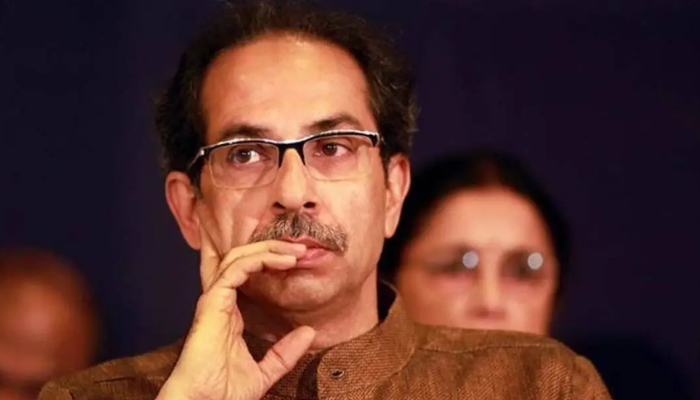
Shiv Sena (UBT), led by Uddhav Thackeray, currently holds nine Lok Sabha MPs. The immediate objective of Operation Tiger is to bring at least two-thirds of these MPs on board to bypass the anti-defection law. Initial outreach focused on four MPs, Nagesh Patil Ashtikar, Sanjay Jadhav, Sanjay Deshmukh and Bhausaheb Wakchaure, all of whom were reportedly approached through intermediaries with strong political links, including Union Minister of State Pratap Jadhav, with whom several of them share longstanding rapport.
Party insiders suggest that internal dissatisfaction also played a role. Concerns over limited access to leadership, financial constraints, and organisational marginalisation created fertile ground for negotiations. Among them, Sanjay Jadhav was the first to publicly signal discontent by skipping party meetings and later facing organisational pushback in his constituency after his aides were removed.
Personal equations shaping political decisions
Beyond organisational strategy, personal relationships have played a decisive role. Shrikant Shinde is believed to have steadily cultivated ties with several MPs, while Eknath Shinde leveraged past working relationships formed during the 2019 to 2022 MVA government. One of the more complex cases was that of Dharashiv MP Omraje Nimbalkar, who initially resisted switching sides but was gradually drawn in through revived political familiarity and trust-based engagement.
Another notable case involves Sanjay Dina Patil, a former Congress MP who later joined Shiv Sena (UBT). His hesitation reportedly shifted after a personal incident involving his family, during which Eknath Shinde visited his wife in hospital following an accident. Party sources claim that informal conversations following this visit evolved into sustained political engagement, alongside assurances regarding his daughter Rajool Patil’s political future.
High-stakes execution and political signalling
In a significant development, the selected MPs were flown to Delhi in private aircraft on Tuesday night after final rounds of coordination between Shinde and Shrikant Shinde. While sections of the BJP leadership were initially cautious, viewing the move as an attempt by Shinde to expand his influence within the coalition, the plan received backing from the central leadership, which saw strategic value in the realignment.
Operation Tiger now stands as one of the most assertive attempts to recalibrate Maharashtra’s internal political balance since the original Shiv Sena split. Whether it results in a decisive numerical shift or intensifies factional tensions further will depend on how many of these delicate negotiations ultimately convert into formal defections in the days ahead.