
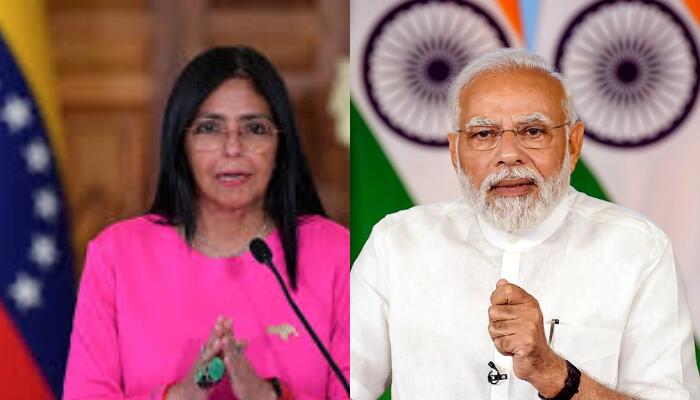
Venezuela’s interim President Delcy Rodríguez will meet Prime Minister Narendra Modi in New Delhi this week. The visit comes as both countries adjust their energy strategies to a rapidly changing global landscape.
The Indian foreign ministry has confirmed the schedule. Officials said the talks will cover the full range of bilateral relations. However, energy cooperation will remain the primary focus. Alongside this, both sides will discuss trade, investment, healthcare, pharmaceuticals, transport, and renewable energy.
India has increased imports of Venezuelan crude in recent months. In May, shipments stood at around 427,000 barrels per day, making India the second-largest buyer after the United States. Reliance Industries Ltd has played a significant role in this revival as Indian refiners look to secure diversified crude sources.
This uptick follows a disruption in trade last year. India stopped importing Venezuelan oil after tariff measures introduced under former US President Donald Trump imposed a 25 per cent duty on countries purchasing Venezuelan crude. The move forced refiners to recalibrate sourcing plans.
Imports resumed in February after sanctions were partially eased under a revised arrangement between Washington and Caracas. That deal followed the capture of Venezuelan President Nicolás Maduro in January. Under the framework, oil revenues were placed under US Treasury-supervised accounts, allowing controlled trade to restart.
India continues to face pressure on energy security as the world’s third-largest crude importer. Supply disruptions in West Asia, particularly around the Strait of Hormuz, have intensified concerns in New Delhi. As a result, policymakers have accelerated efforts to diversify import sources and reduce exposure to chokepoint risks.
Rodríguez previously visited India in February 2025 as Venezuela’s oil minister during India Energy Week. Her return in a senior political capacity reflects Caracas’s intent to deepen engagement with major Asian energy consumers and rebuild long-term export stability.
Although oil remains central to the discussions, both countries are expected to explore cooperation in infrastructure, healthcare, pharmaceuticals, and renewable energy. Still, crude oil continues to define the urgency and direction of the engagement.
Overall, the visit highlights a pragmatic convergence of interests. India is prioritizing energy security through diversification, while Venezuela is working to restore stable export channels. The talks in New Delhi are likely to reinforce this cautious but steadily strengthening alignment.