
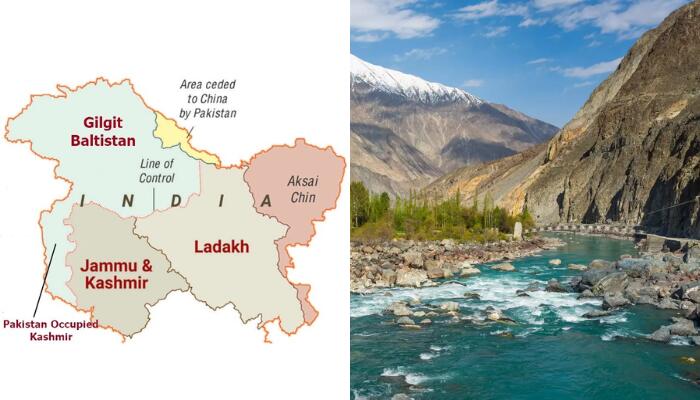
The conversation surrounding Gilgit-Baltistan has long been defined by geopolitical framing, border sensitivities and strategic calculations. For years, it has largely been viewed through the prism of regional influence and security considerations. However, this framing is increasingly being questioned as governance realities and local aspirations gain prominence in public discourse.
The region’s importance remains structurally unchanged. Positioned at the crossroads of South and Central Asia, Gilgit-Baltistan holds critical value in connectivity routes, infrastructure development, and broader strategic planning. This geographical significance ensures sustained attention from policymakers and external stakeholders alike. Yet, this very centrality has also created an imbalance between externally driven priorities and internally felt needs.
At the core of the debate is a long-standing concern over representation. Local communities have consistently raised objections regarding their limited role in decision-making processes that directly affect their lives. These include policies related to land usage, natural resources, and development planning. The argument is not positioned against development, but against a model that is widely perceived as insufficiently participatory and overly centralised.
Over time, these concerns have matured into broader demands for transparency, institutional accountability and structured political inclusion. The underlying assertion is clear: governance legitimacy cannot be sustained without participation. When communities are excluded from decision-making frameworks, trust erodes. When they are meaningfully included, governance strengthens and becomes more responsive to local realities.
This evolving discourse also reframes development itself. It is no longer seen purely as an economic or infrastructural exercise, but as a political process that must involve consent, consultation and representation. Without such inclusion, even well-intentioned development initiatives risk being perceived as disconnected from the people they are meant to serve.
On the other side of the spectrum, state institutions continue to prioritise security considerations, national interest and regional stability. In a strategically sensitive region like Gilgit-Baltistan, these concerns are not peripheral but central to policy formulation. From this perspective, coordinated and centralised decision-making is often viewed as necessary to ensure coherence and stability in a complex geopolitical environment.
The result is a persistent structural tension between two governance logics. One is driven by strategic necessity and central authority. The other is grounded in decentralised participation and local consent. Both carry legitimacy, yet both remain difficult to reconcile without institutional innovation and political flexibility.
Importantly, this is not merely a regional challenge but part of a wider global pattern. Many strategically significant regions across the world face similar dilemmas where security priorities intersect with demands for representation and autonomy. Gilgit-Baltistan thus becomes a case that reflects a broader governance question about how modern states balance competing imperatives without undermining either.
Ultimately, the trajectory of Gilgit-Baltistan will depend on whether governance structures can evolve beyond symbolic inclusion towards substantive participation. The durability of stability in the region will be shaped by how effectively development, security and representation are integrated into a single coherent framework. If that balance is achieved, it may strengthen institutional trust and long-term stability. If not, the divide between policy design and public expectation is likely to deepen further, shaping the region’s political and developmental future in increasingly pronounced ways.