
Over the past 12 years, India’s national security and foreign policy architecture has undergone a significant transformation. Under Prime Minister Narendra Modi, the country has moved beyond a largely defensive strategic posture and adopted a more proactive, pragmatic, and assertive approach towards addressing security challenges and advancing its national interests abroad.
Whether through cross-border military operations, defence modernisation, the expansion of global partnerships, or a stronger diplomatic presence, the government has sought to redefine India’s role both regionally and globally. Supporters view this shift as a reflection of India’s growing strategic confidence, while critics continue to debate its long-term implications. What remains undisputed, however, is that India’s defence doctrine and foreign policy outlook today are markedly different from what they were a decade ago.
A Doctrine of Taking the Fight to Terrorism into their home
One of the defining features of the Modi era has been the evolution of India’s response to cross-border terrorism. The 2016 Surgical Strikes across the Line of Control (LoC) marked a departure from the traditional policy of restraint, with India publicly acknowledging military action against terrorist launch pads for the first time.
Three years later, the Balakot Air Strike extended that doctrine beyond Pakistan-occupied Kashmir, targeting a terrorist facility deep inside mainland Pakistan. More recently, Operation Sindoor further reinforced the government’s position that terrorist attacks would invite a visible, calibrated and decisive response.
Together, these operations have shaped a security doctrine centred on deterrence, retaliation and strategic signalling, reflecting a more assertive approach towards combating terrorism.
Self-Reliance and Modernisation in Defence
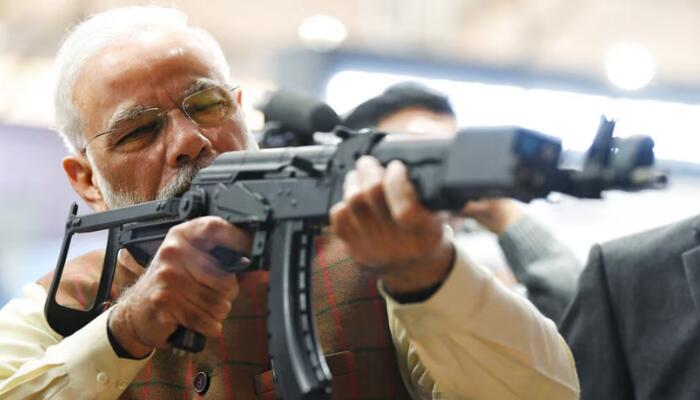
Defence modernisation has also remained a key priority for the government. Military procurement processes have been accelerated, advanced platforms such as Rafale fighter jets have been inducted into the Indian Air Force, missile capabilities have been expanded, and domestic defence manufacturing has received a major boost under the Atmanirbhar Bharat initiative.
The creation of the Chief of Defence Staff (CDS) position and efforts aimed at improving coordination among the three armed services reflect a broader attempt to reform India’s military structure in line with the requirements of future warfare. The effectiveness of these reforms was also visible during Operation Sindoor, where greater coordination and enhanced capabilities played a significant role.
Expanding Global Partnerships and Strengthening Diplomatic Presence
On the diplomatic front, India has pursued a far more active foreign policy than in previous decades. Relations with the United States have expanded significantly, while strategic partnerships with France, Australia, Japan and the UAE have grown stronger.
The Quad has emerged as an important platform in the Indo-Pacific region, while India’s engagement with the Global South has gained renewed prominence through development partnerships and international forums. From the successful evacuation of citizens during global crises to taking leadership roles in multilateral institutions, New Delhi has sought to project itself as a reliable and influential global power.
The successful hosting of the G20 Summit in New Delhi in 2023 stands as a prominent example of India’s growing diplomatic stature and its ability to shape global conversations on key issues.
Twelve years on, the Modi government’s defence and foreign policy legacy is defined by a combination of military assertiveness, strategic partnerships and a push for self-reliance. The shift from strategic restraint to a policy of calibrated and visible response has reshaped India’s security doctrine, while an ambitious diplomatic outreach has strengthened its international standing.
As geopolitical challenges continue to evolve, the coming years will test how effectively these policies translate into long-term security, influence and strategic advantage for India.