
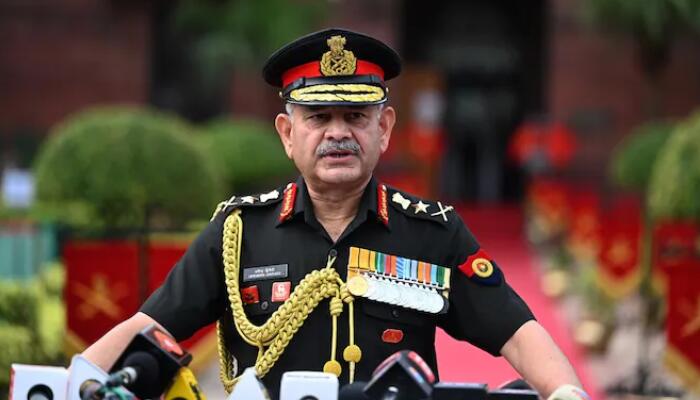
Chief of Army Staff General Upendra Dwivedi declared that Operation Sindoor remains active. He also revealed that the Indian Armed Forces are preparing for a possible “Operation Sindoor 2.0” if the security situation demands another military response.
Speaking after reviewing the Passing Out Parade of the 150th Course of the National Defence Academy (NDA) at Khadakwasla in Pune, the Army Chief said the current situation represents only a temporary cessation of hostilities. Therefore, India continues to maintain a high state of military readiness.
“Operation Sindoor is still continuing. There is a temporary cessation of hostilities. The Indian Army and all three services are preparing well for Operation Sindoor 2.0, if it takes place,” General Dwivedi said.
His remarks offer one of the clearest indications yet that the military posture adopted after the Pahalgam terror attack remains firmly in place. Moreover, they signal that India is preparing not only for immediate threats but also for the future character of warfare.
Operation Sindoor was launched after the April 22, 2025 terror attack in South Kashmir’s Baisaran Valley near Pahalgam. Pakistan-backed terrorists killed 26 civilians in the attack. In response, India carried out a major military operation targeting terror infrastructure and strategic assets across Pakistan and Pakistan-occupied Kashmir.
According to General Dwivedi, the operation established a benchmark for how India responds to provocation. More importantly, it demonstrated the effectiveness of precision strikes, intelligence-led operations and coordinated military action.
Operation Sindoor and the New Warfighting Model
The Army Chief described Operation Sindoor as more than a military campaign. Instead, he portrayed it as a model for India’s future approach to conflict.
Addressing graduating cadets, he warned that modern threats rarely emerge through conventional battlefronts alone. As a result, future military leaders must prepare for increasingly complex and unconventional challenges.
He said Operation Sindoor showcased the value of integrated planning, real-time intelligence, precision targeting and robust air defence systems. In addition, it highlighted the importance of seamless coordination among the Army, Navy and Air Force.
“Presently, we are looking at enhancing our synergy within the three services, equipping ourselves for the next warfare,” he said.
Consequently, strengthening tri-service integration has become a central pillar of India’s military transformation.
A Battlefield Without Boundaries
General Dwivedi stressed that future conflicts will not remain confined to land, sea and air. Instead, they will increasingly extend into cyber, space, electromagnetic and cognitive domains.
He noted that technological advances have transformed modern battlefields. Today, adversaries can track movements, monitor deployments and analyse activity in near real time.
“The battlefield is so transparent that every movement is known to the other side,” he said.
Therefore, military planners must place greater emphasis on operational security, force protection and civilian safety, particularly in border regions.
At the same time, the Army Chief highlighted the growing significance of information warfare. According to him, public trust and national unity have become strategic assets during modern conflicts.
“Information warfare is only successful if the whole nation gets together and trusts the people who are giving the information. If that happens, I can assure you that the nation which trusts each other and all these stakeholders will always win the war,” he said.
AI, Drones and the Future Force
A major portion of General Dwivedi’s address focused on technology.
He identified Artificial Intelligence as one of the most important force multipliers for future warfare. Modern commanders, he said, must process vast amounts of information while making decisions at unprecedented speed.
“When the velocity of warfare is very high, you need additional support within your resources to make decisions faster,” he said.
Accordingly, AI-powered systems and advanced language models can help commanders analyse information, optimise resources and accelerate decision-making.
The Army Chief also emphasised the growing role of drones. Both offensive and defensive drone capabilities, he argued, will shape future battlefields.
Furthermore, he identified networking, data-centric operations, innovation and self-reliance as critical elements of India’s military modernisation strategy.
Theatre Commands and the Decade of Transformation
General Dwivedi also addressed the long-awaited theatre command reforms.
He said discussions among the Chiefs of Staff Committee have concluded. Subsequently, a comprehensive proposal was submitted to the Defence Minister and is currently under examination.
“As far as the theatrisation is concerned, I assure the house that it is on the right track,” he said.
Under the proposed framework, service chiefs would focus on force generation, readiness and sustainment. Meanwhile, theatre commanders would oversee operational employment and joint military operations.
The Army Chief expressed confidence that these reforms could begin taking shape within the next two to three years. Moreover, they form a key component of the Army’s broader “Decade of Transformation” initiative.
A Landmark Moment at the NDA
The strategic message came on a significant day for the NDA. A total of 353 cadets graduated and prepared to join the armed forces.
Among them, 236 received degrees from Jawaharlal Nehru University. The graduating class included 65 Science graduates, 112 Computer Science graduates and 59 Arts graduates. Degrees were also awarded to 21 cadets from friendly foreign nations.
General Dwivedi, himself an alumnus of NDA’s 65th Course, returned as the Reviewing Officer for the parade. He urged the cadets to uphold professionalism, leadership and the academy’s motto, “Seva Paramo Dharma” or Service Before Self.
Additionally, he encouraged them to embrace continuous learning and adaptability. He argued that trust-based leadership will remain essential in an increasingly complex security environment.
The Army Chief also praised the performance of women cadets. He said courage, determination and military excellence are gender-neutral qualities. The graduating batch included 18 women cadets, reflecting the continuing evolution of India’s armed forces.
Former Lieutenant Governor of Puducherry and noted social reformer Dr Kiran Bedi attended the NDA Convocation Ceremony as chief guest.
The ceremony concluded with a flypast featuring Su-30 MKI fighter aircraft, Chetak helicopters, the Sarang Helicopter Aerobatics Team and the Akashganga Skydiving Team.
Yet the most consequential message came from the Army Chief himself. More than a year after Operation Sindoor reshaped India’s response to cross-border terrorism, General Dwivedi made it clear that the armed forces view the current calm as temporary. Meanwhile, India continues to strengthen tri-service integration, embrace emerging technologies and prepare for future threats. Consequently, Operation Sindoor is no longer merely the name of a past military operation. It is increasingly emerging as the foundation of India’s next-generation warfighting doctrine.