
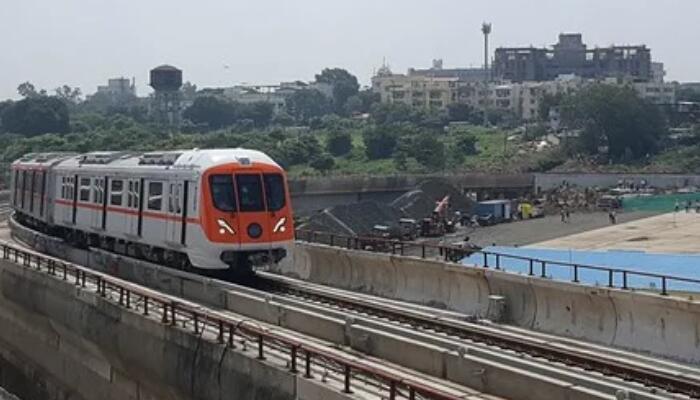
The Bhopal Metro controversy has moved beyond a routine infrastructure dispute. Objections to an underground metro alignment linked to a graveyard in Madhya Pradesh’s capital have sparked a larger political debate on development, land politics, and selective outrage over public projects.
At the centre of the row is a question now dominating social media discussions and political commentary: if underground metro systems can safely pass beneath Parliament, defence establishments, factories, temples, monasteries and crowded urban centres, why should a graveyard suddenly become untouchable? The question has struck a nerve because it exposes the contradictions surrounding India’s development politics.
Metro Beneath Parliament, But Not Beneath a Graveyard?
Modern underground metro systems operate beneath some of the country’s most sensitive and crowded spaces. Across India, metro corridors already pass under government buildings, commercial hubs, and religious sites without disturbing the surface above.
Supporters of the Bhopal Metro project argue that the same engineering standards apply here as well. Advanced tunnelling technology allows metro corridors to move beneath densely populated areas with minimal structural impact. For them, the issue is no longer about engineering concerns or public safety. They see it as selective resistance to development.
India’s population continues to rise while urban land keeps shrinking. Metro systems are no longer prestige projects. Cities now depend on them for mobility, economic activity, and urban growth. Yet major infrastructure projects repeatedly face controversy whenever disputes linked to religious land emerge.
That is why the Bhopal controversy has generated wider frustration among supporters of rapid urban development. Critics argue that infrastructure cannot depend on whose sensitivities are involved.
The Political Undercurrent Behind the Debate
The controversy intensified after strong reactions circulated online. Several commentators accused certain groups of promoting an anti-development mindset while asserting permanent claims over land in the name of religious identity. References to Partition, Pakistan, Bangladesh, and Afghanistan further sharpened the political tone of the debate.
Some reactions argued that despite Partition and the creation of separate nations in the name of religion, disputes over land and identity still dominate sections of public discourse in India. Others accused radical elements of treating graveyard land as permanently beyond civic planning and public infrastructure, even when underground engineering leaves no visible impact on the surface.
Several observers called for restraint in rhetoric. However, even balanced voices acknowledged that the central question deserves discussion.
One commentary framed the issue directly: if underground metro lines can pass beneath India’s Parliament and sensitive defence zones, then why should a graveyard become an exception?
That argument now defines the Bhopal Metro controversy.
More Than Just a Metro Dispute
The controversy reflects a larger reality in India’s development journey. Infrastructure projects often collide with identity politics, land disputes, and ideological mobilisation. Technical decisions quickly turn into symbolic political battles.
Supporters of rapid urban modernisation argue that India cannot aspire to become a major economic power while critical infrastructure remains vulnerable to selective obstruction and vote-bank politics. For them, the Bhopal Metro controversy is not just about one alignment in one city. It reflects a deeper clash between modern development priorities and a political culture shaped by religious sensitivities and territorial assertions.
Whether the alignment changes or proceeds as planned, the controversy has already exposed the tension between India’s infrastructure ambitions and the politics shaping public space and public debate.