
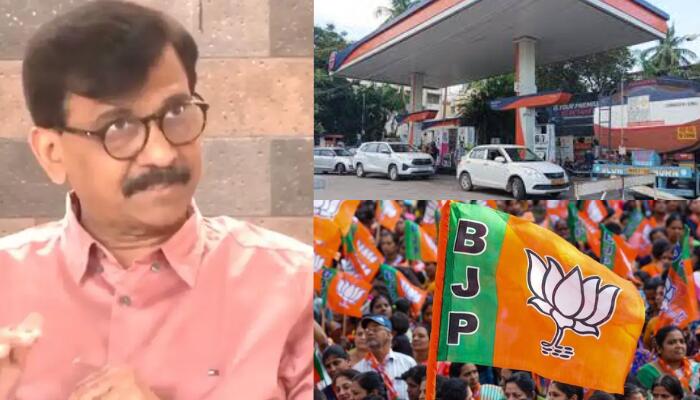
At a time when Indians are facing rising fuel costs and persistent inflation, Sanjay Raut has found himself at the centre of a fresh controversy. He invoked “Jai Shri Ram” in a sarcastic attack on the BJP over fuel price increases.
Speaking to the press, Raut dismissed the latest hike in petrol and diesel prices as inevitable. He then targeted BJP supporters.
“What is new in this? It was bound to happen. If you are a BJP supporter, just chant ‘Jai Shri Ram’ and the price will reduce by Rs 10. That is the BJP’s mantra. Chant ‘Jai Shri Ram’ and you will get whatever you want,” Raut said.
Raut further escalated the attack. He said, “Those who voted for the BJP should sit back and relax.” He implied they must now deal with rising prices.
The remark drew sharp criticism. The BJP accused him of dragging a sacred religious expression into a political and economic debate. On a X post said, “Protest against the government, not Lord Shri Ram! This statement by Sanjay Raut, linking petrol and Lord Shri Ram, is utterly shameful. Politics has its place, but why such hatred towards Lord Shri Ram?
Fuel Prices Rise Again Across India
Fuel prices rose again across major cities. Petrol and diesel increased by around 90 paise per litre. This marked the second hike within a week.
In Delhi, petrol rose to ₹98.64 per litre. Diesel climbed to ₹91.58 per litre. Earlier, both fuels had already increased by ₹3 per litre on May 15.
Mumbai now sees petrol at ₹107.59 per litre. Diesel stands at ₹94.08 per litre. Kolkata and Chennai also recorded higher rates, adding to inflation concerns.
Opposition parties attacked the Centre over the hikes. They accused it of delaying price increases until key electoral cycles ended. The government has denied these claims.
West Asia Conflict Adds Pressure on Oil Markets
The fuel hike mainly comes amid rising tensions in West Asia. The US, Israel, and Iran tensions have disrupted global oil flows. Concerns around the Strait of Hormuz have increased volatility.
Brent crude remains elevated due to supply risks and geopolitical uncertainty. This has put pressure on oil-importing countries like India. Oil companies continue to face losses despite recent price adjustments.
The Centre has said fuel supplies remain stable. Prime Minister Narendra Modi has urged citizens and institutions to save fuel. He has also encouraged reduced travel and remote work where possible.
Politics, Faith, and Public Discourse
The controversy has again highlighted the overlap of religion and politics in India. Religious symbols now feature more often in political messaging.
Critics say the issue goes beyond fuel prices. They argue it concerns the use of a sacred phrase in sarcasm.
The debate now sits at the intersection of Hindu sentiments, politics, and free expression.