
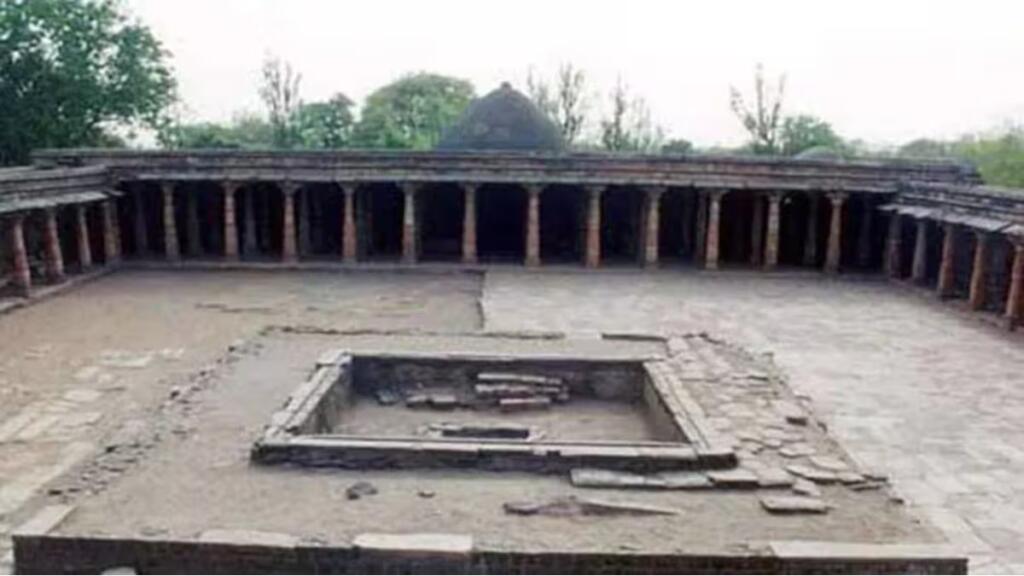
In a major verdict on one of Madhya Pradesh’s most sensitive religious disputes, the Indore Bench of the Madhya Pradesh High Court has recognised Dhar’s historic Bhojshala as the Vagdevi Temple and rejected the Muslim side’s claim seeking namaz rights inside the complex.
The court ruled that Hindus have the right to perform पूजा and religious rituals at the site, while the overall protection and management of the monument will continue to remain with the Archaeological Survey of India (ASI).
The verdict comes after years of legal and historical dispute over the identity of Bhojshala. While the Hindu side has consistently maintained that Bhojshala is an ancient temple dedicated to Goddess Vagdevi (Saraswati) and a historic centre of learning, the Muslim side has claimed it as the Kamal Maula Mosque.
Court Asks Muslim Side to Seek Alternate Land for Mosque
In a significant observation, the High Court also advised the Muslim side to seek separate land from the government for a mosque. The remark assumes importance because Muslims had been offering Friday namaz inside the Bhojshala premises for years under an ASI arrangement.
Following the verdict, the administrations of Dhar and Indore were placed on high alert due to the sensitivity of the issue. Since the judgment came on a Friday, authorities appealed to both communities to maintain peace and avoid any untoward incident.
The Legal Battle Began in 2022
The latest phase of the legal battle began in 2022 when Ranjana Agnihotri and others, on behalf of the Hindu Front for Justice, approached the High Court seeking a declaration of Bhojshala’s religious character and complete rights for the Hindu community over the site.
The petition demanded unrestricted worship rights, a ban on namaz inside the premises, formation of a dedicated trust for Bhojshala, and even the return of the idol of Goddess Vagdevi currently housed in the British Museum.
ASI Conducted 98-Day Scientific Survey
In 2024, the Archaeological Survey of India carried out a 98-day scientific survey of the Bhojshala complex. The survey examined inscriptions, pillars, architectural remains and other archaeological evidence linked to the site’s historical identity.
Later, on January 23, 2026, the Supreme Court allowed uninterrupted worship by Hindus throughout the day on the occasion of Vasant Panchami. Following this, regular hearings in the High Court continued from April 6 to May 12 before the court reserved its verdict.
Hindu Side Presented Historical and Archaeological Evidence
The Hindu side argued before the court that the Places of Worship Act does not apply to Bhojshala because the site is already a protected monument under the ASI.
Lawyers representing the Hindu side described Bhojshala as an ancient temple of Goddess Saraswati and a historic centre of education. They relied on ASI survey findings, inscriptions, historical documents, temple architecture and the long-standing tradition of Vasant Panchami worship.
Advocate Manish Gupta cited the famous text Samarangana Sutradhara written by Paramara King Bhoj and argued that Bhojshala’s structure closely matches the temple construction principles mentioned in the text.
The petitioners also challenged the ASI order issued on April 7, 2003, under which separate timings had been allocated for Hindu worship and Muslim prayers inside the premises.
According to the Hindu side, Bhojshala is fundamentally a temple and should therefore be fully handed over to the Hindu community for uninterrupted worship of Goddess Saraswati.
The High Court’s verdict is being seen as a landmark moment in the decades-old Bhojshala dispute and is likely to have major social and political implications in Madhya Pradesh and beyond.