
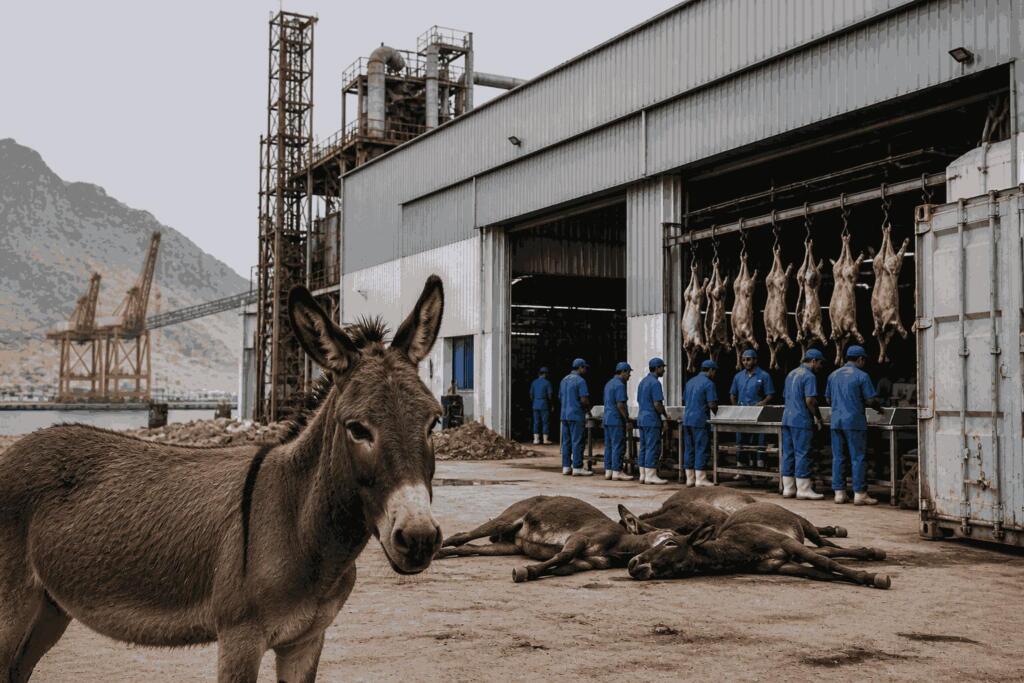
The sudden closure of a major Chinese-run donkey slaughterhouse in Pakistan’s Gwadar region has triggered renewed scrutiny of cross-border investments and regulatory challenges. The facility, once projected as a key export hub for donkey meat and hides, was expected to strengthen economic ties between Pakistan and Chinese markets. However, its abrupt shutdown has highlighted deeper structural issues that continue to hinder foreign ventures in the region.
The project, operated by a Chinese company in the Gwadar Free Zone, had initially been cleared for large-scale exports. Plans included shipping significant volumes of processed products to meet rising demand in Chinese industries, particularly traditional medicine and related sectors. Early reports suggested that the facility could export dozens of containers monthly, making it a potentially lucrative enterprise.
However, despite these ambitions, the company ultimately decided to shut down operations, citing “non-market factors” and persistent operational barriers. These included regulatory hurdles, delays in approvals, and administrative complications that made sustained functioning increasingly difficult. The exit of the Chinese firm underscores the gap between policy promises and ground realities in Pakistan’s investment landscape.
Gwadar itself holds immense strategic importance. Located in Pakistan’s Balochistan province, it is a key component of the China-Pakistan Economic Corridor (CPEC), designed to connect Chinese trade routes to the Arabian Sea. The port has been envisioned as a major economic hub, facilitating regional trade and boosting infrastructure development. Yet, projects like this slaughterhouse reveal the complexities involved in translating strategic vision into practical success.
The shutdown also reflects broader tensions surrounding Chinese investments in Gwadar. While the region has attracted significant funding and infrastructure projects, it has simultaneously faced criticism over regulatory inefficiencies and local resistance. In some cases, security concerns and bureaucratic delays have slowed progress, creating uncertainty for investors.
Another important factor is the evolving policy environment in Pakistan. Even as authorities approved the export of donkey meat and hides to Chinese markets, implementation challenges persisted. This disconnect between approval and execution played a critical role in undermining the viability of the project.
The economic implications of the closure are notable. The facility was expected to generate employment and contribute to local development. Its shutdown not only affects workers but also signals potential risks for future foreign investors considering similar ventures. The withdrawal of a Chinese company from such a high-profile project may raise concerns about the predictability and stability of the business environment.
Moreover, the situation highlights the importance of regulatory clarity and administrative efficiency in sustaining international partnerships. For Chinese enterprises operating abroad, especially in emerging markets, consistent policy enforcement is crucial. Without it, even well-funded projects can struggle to survive.
The episode also feeds into the larger narrative of CPEC’s mixed outcomes. While infrastructure development has progressed in certain areas, challenges like bureaucratic bottlenecks and local dissatisfaction continue to cast a shadow over its long-term prospects. The exit of this Chinese venture serves as a reminder that economic corridors are not just about grand designs but also about effective execution on the ground.
In conclusion, the closure of the Gwadar slaughterhouse marks more than just the end of a single project. It reflects systemic issues that affect foreign investment, regulatory governance, and regional development. As Pakistan seeks to position itself as a key partner for Chinese economic initiatives, addressing these challenges will be essential to ensuring that future collaborations are both sustainable and mutually beneficial.