





















Uttar Pradesh Chief Minister Yogi Adityanath has once again stirred national debate with a strong call for Hindu unity, asserting that if followers of Sanatan Dharma stand together, no adversary can harm Hindus or India. Speaking at a public event in Lucknow, his remarks emphasized cultural cohesion, civilizational identity, and collective strength as essential pillars for national security and social stability.
Addressing a gathering, Yogi Adityanath underlined that unity among Hindus is not merely a religious appeal but a broader cultural and national necessity. He argued that India’s historical resilience has often depended on the collective strength of its majority civilization. According to him, divisions within society weaken the nation, while Hindu unity serves as a powerful force capable of countering both internal and external threats.
The Chief Minister’s remarks were framed within the context of Sanatan Dharma, which he described as an inclusive and ancient tradition that has shaped India’s ethos for centuries. He stressed that when followers of this tradition unite under shared values, they create a formidable social foundation that cannot easily be destabilized. Hindu unity, in his view, is thus intrinsically linked to the preservation of India’s cultural identity.
Yogi Adityanath also highlighted that historical challenges faced by India were often exacerbated by internal divisions. He suggested that lessons from the past should guide present actions, urging people to rise above differences and work towards a unified vision. Hindu unity, he reiterated, is not about exclusion but about strengthening a collective consciousness rooted in shared heritage and traditions.
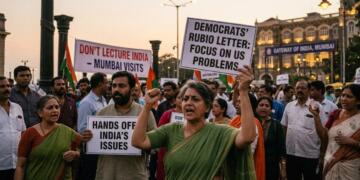
The statement has drawn varied reactions across political and social circles. Supporters of the Chief Minister argue that his call for Hindu unity reflects a legitimate concern for cultural preservation and national integrity. They believe that in a diverse and complex society like India, unity among major communities can contribute to stability and resilience.
However, critics have expressed concern over the implications of such statements in a pluralistic democracy. They argue that emphasizing religious unity in political discourse could risk deepening societal divisions rather than bridging them. For them, the focus should remain on inclusive governance that accommodates all communities equally, rather than prioritizing one identity over others.
Despite differing opinions, Yogi Adityanath’s remarks have undeniably reignited discussions on the role of religion in public life and politics. The idea of Hindu unity continues to resonate strongly among certain sections of society, particularly those who view cultural identity as a cornerstone of national strength.
The Chief Minister also connected his message to broader themes of national development and security. He asserted that a united society is better equipped to face challenges, whether they arise from economic pressures, geopolitical tensions, or social unrest. Hindu unity, in this sense, was presented as a unifying force that transcends regional and linguistic differences.
In addition, Yogi Adityanath called upon citizens to take pride in their heritage and to actively participate in preserving it. He encouraged people to engage with their cultural roots while contributing to the nation’s progress. According to him, unity built on cultural awareness and mutual respect can create a strong and confident society.
The speech also touched upon governance, with the Chief Minister highlighting his administration’s efforts to promote cultural initiatives and ensure law and order. He suggested that a stable and secure environment is essential for fostering unity and enabling development.
As the debate continues, the concept of Hindu unity remains at the center of political discourse. Whether viewed as a call for cultural solidarity or a contentious political stance, it reflects the ongoing negotiation between identity, democracy, and nationhood in India.
Ultimately, Yogi Adityanath’s statement underscores a larger conversation about how India balances its rich diversity with the need for cohesion. While opinions may differ, the emphasis on unity—whether cultural, social, or national—continues to shape the country’s evolving narrative.