
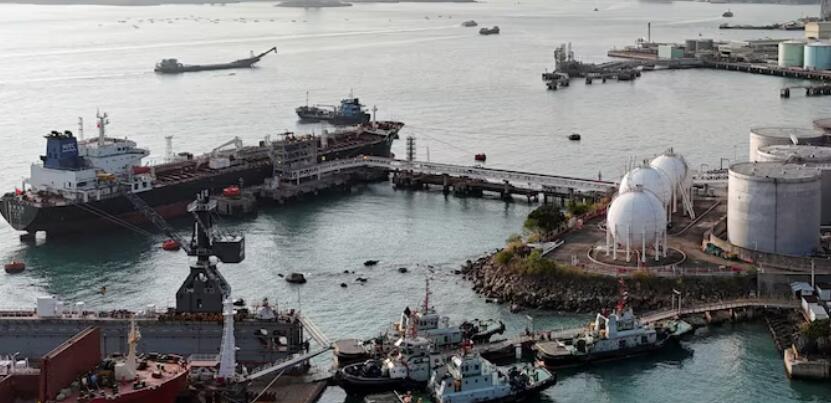
The high-stakes naval game in the Strait of Hormuz took a dramatic turn on Tuesday as the “Rich Starry,” a US-sanctioned tanker linked to China, was forced to abandon its attempt to breach the newly imposed American blockade.
Despite initial reports suggesting the vessel had successfully defied President Donald Trump’s “Zero-Traffic” order, updated maritime tracking data confirmed the ship performed a sudden reversal after failing to break through the US naval perimeter.
The incident has become a primary case study for energy traders and global powers assessing the effectiveness of the US measures. While at least eight ships transited the strategic waterway on the blockade’s first full day, US Central Command (CENTCOM) maintained a defiant stance, asserting that not a single vessel bound for or departing from an Iranian port has successfully made it past the blockade since it went into effect on Monday at 10 a.m. local time.
“Rich Starry” Reversal and Fog of Signal Jamming
The Rich Starry, a medium-range tanker blacklisted by Washington in 2023 for allegedly aiding Tehran’s sanctions evasion, became the center of a confusing maritime “shell game.” Initial signals suggested the vessel, carrying 250,000 barrels of methanol had cleared the Strait. however, by 1 p.m. London time, LSEG and Bloomberg data showed the vessel turning back toward the Gulf.
Reliable tracking remains a significant challenge as the region is reportedly plagued by signal jamming and “spoofing.” Experts at TankerTrackers.com Inc. noted that the Rich Starry has a history of broadcasting false coordinates to mask its location. This technological “fog of war” initially allowed for conflicting narratives, but the eventual U-turn confirms that the US Navy’s presence is creating a formidable barrier for sanctioned hulls.
Iran’s Sarcasm Meets US Enforcement
The brief period when the tanker appeared to be exiting the Strait prompted a wave of taunts from Tehran. The Iranian embassy in Ghana took to X (formerly Twitter) to mock the US Navy’s “big beautiful ships,” jokingly suggesting the tanker’s captain “upgraded to premium to skip the ads” of US naval warnings. However, the humor was short-lived as the vessel was forced to retreat.
Despite the standoff, the US has been careful to specify that the blockade is targeted. Three Iran-linked tankers that transited the waterway on Tuesday were not intercepted because they were not heading to Iranian ports. Other vessels, such as the Panama-flagged “Peace Gulf” and the sanctioned tanker “Murlikishan,” were allowed passage as they were bound for the UAE and Iraq, respectively. This surgical enforcement aims to cripple Iran’s direct revenues while attempting—albeit precariously—to avoid a total collapse of regional energy flows.
Dangerous Gamble for Global Supply Chains
The confrontation underscores the “dangerous gamble” being played by the Trump administration. With nearly 38% of the oil transiting Hormuz bound for China, Beijing’s patience is wearing thin.
Yesterday, Chinese officials issued their most forceful criticism yet, warning that the world must not be allowed to “revert to the law of the jungle” where military might dictates trade. China’s forceful rhetoric suggests that any permanent disruption to its energy lifelines could lead to a direct superpower confrontation.
As the Rich Starry sits in a holding pattern, the incident has highlighted the structural fragility of global oil supply chains. Shipowners and investors are now glued to real-time data, knowing that a single miscalculation by a destroyer captain or a tanker pilot could ignite a broader conflict.
The blockade is setting a volatile stage for President Trump’s upcoming visit to Beijing. With US intelligence suggesting China may soon provide Iran with advanced air defense systems, the maritime standoff is just one theater in a widening “slugfest.” Trump has already threatened 50% tariffs on countries supplying Tehran with weapons, effectively linking the naval blockade to a broader trade war.
Ultimately, the retreat of the Rich Starry proves that the US currently holds the tactical upper hand in the Strait. However, by forcing a Chinese-linked vessel into a humiliating U-turn, Washington has raised the stakes for its next encounter.
If Beijing decides to provide its own naval escorts for its sanctioned fleet, the “law of the jungle” may transition from a diplomatic talking point into a reality of open naval warfare.