

















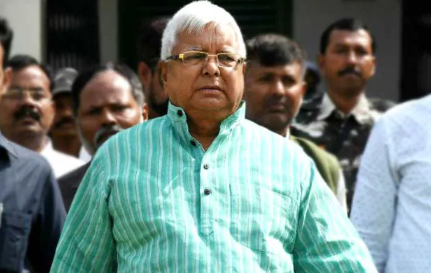
The Supreme Court on Monday refused to quash the CBI’s “land-for-jobs” case against former Bihar Chief Minister and RJD leader Lalu Prasad Yadav.
A bench comprising Justices MM Sundresh and N Kotiswar Singh ruled that Yadav could raise legal objections regarding the necessity of a prior sanction during the trial, rather than stalling the proceedings at this stage.
“Taking into consideration the facts and circumstances, liberty is granted to the petitioner to raise the legal issue at the time of the trial,” the court stated, clarifying that the trial must progress regardless of these pending legal questions.
Core of the Dispute: Section 17A
The legal battle hinges on Section 17A of the Prevention of Corruption Act. This provision mandates that investigators obtain prior approval before probing a public servant for decisions made in their official capacity.
Yadav’s counsel, Senior Advocate Kapil Sibal, argued that the lack of this sanction invalidated the entire investigation. He maintained that allegations regarding railway appointments were directly linked to Yadav’s official duties as minister.
Sibal also noted that while the Delhi High Court previously deemed Section 17A prospective (applying only to future cases), the issue deserved immediate Supreme Court intervention as it “goes to the root” of the case.
Conversely, Additional Solicitor General SV Raju argued that no sanction was required because Yadav was neither the formal decision-making nor the recommending authority in these specific transactions. He further noted that the petition was filed “belatedly” after the probe had already concluded.
Trial Court to Decide on “Influence”
While the Supreme Court acknowledged two major issues, the scope of Section 17A and whether it applies retrospectively it chose not to rule on them yet.
The bench observed that whether Yadav exercised “formal or informal” influence is a matter better suited for adjudication during the trial.
In a small relief for the veteran politician, the court granted Yadav an exemption from personal appearance in the case.
Background
The CBI alleges that during Lalu Prasad Yadav’s tenure as Railway Minister from 2004 to 2009, Group-D positions were illegally distributed in exchange for land parcels transferred to his family and associates.
This long-standing investigation gained significant momentum in May 2022 when the CBI officially registered a case against Yadav, his wife Rabri Devi, and their children.
By January 2024, a Delhi trial court framed charges of corruption and criminal conspiracy, with the presiding judge sharply criticizing Yadav for allegedly treating the Railway Ministry as a “personal fiefdom” and using public employment as a “bargaining chip” to enrich his family, including his sons Tejashwi and Tej Pratap, and daughter Misa Bharti.
The legal battle has also centered on procedural technicalities; the Delhi High Court previously dismissed Yadav’s quashing plea, ruling that Section 17A of the Prevention of Corruption Act, a 2018 amendment requiring prior sanction for investigation, cannot be applied retroactively to crimes committed between 2004 and 2009.
Now, with the Supreme Court’s recent refusal to intervene, the trial is set to proceed, forcing Yadav to present his formal legal defenses before the lower court.





