
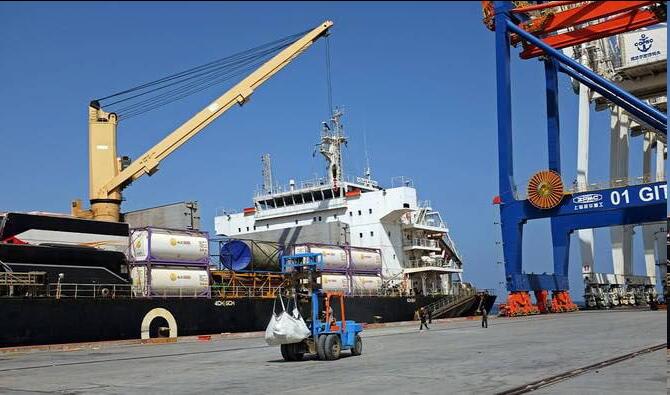
The crown jewel of the China-Pakistan Economic Corridor (CPEC) is currently a fortress under fire. Gwadar, once a sleepy fishing village envisioned as the “Singapore of the West,” has become the focal point of a complex, multi-dimensional crisis.
From the persistent insurgency of the Baloch Liberation Army (BLA) to the rising tides of local civil unrest and the shifting sands of regional geopolitics, the port city is no longer just a strategic asset, rather a flashpoint.
The challenges facing Gwadar are no longer confined to a single dimension. Land-based tensions with Afghanistan continue to disrupt trade, while a recent maritime attack has introduced a new layer of insecurity.
The deaths of three Coast Guard personnel highlight the growing reach of insurgent groups and the limitations of existing security measures. Meanwhile, diplomatic efforts have failed to bridge divides, leaving Gwadar exposed to ongoing instability. As threats converge, the port’s ability to fulfil its economic and strategic potential is being seriously tested.
On April 12, the Balochistan Liberation Army attacked a Coast Guard patrol vessel near Jiwani, approximately 84 kilometres from Gwadar. Three personnel, Naik Afzal, Sepoy Jameel, and Sepoy Umair were killed, following which, the BLA claimed responsibility.
For those who study the group’s evolution, the attack was not entirely surprising. What began, roughly two decades ago, as rural ambushes and pipeline sabotage has become something more organised and more dangerous, better weapons, better targeting, and now, apparently, maritime capability.
But for Pakistan’s security planners, for Chinese officials overseeing CPEC investment, and for anyone tracking the long-troubled trajectory of Gwadar Port, it was still a significant escalation. The sea was supposed to be safer than the land. It is no longer.
The timing is particularly damaging since Pakistan’s relationship with Afghanistan had just passed through seven days of Chinese-mediated talks in Urumqi, held April 1 through April 7.
The talks were intended to pull Islamabad and the Taliban government back from a confrontation that had erupted at the end of February, when Pakistan launched Operation Ghazab lil-Haq, large-scale air and ground strikes against Afghan Taliban military positions across multiple provinces after Taliban forces attacked Pakistani border posts and the two countries lurched toward open war.
The negotiations concluded without a binding agreement. Both sides left Urumqi more or less where they had arrived: Pakistan demanding verifiable Taliban action against TTP militants operating from Afghan soil; the Taliban declining to accept any arrangement that implied external oversight of their territory.
China’s effort to bridge that gap failed. Its leverage, though substantial, was not sufficient to overcome a disagreement rooted in genuine strategic incompatibility.
For Gwadar Port, the two failures, diplomatic and military arrive simultaneously and reinforce each other. The port’s commercial rationale depends on connectivity: not just the deepwater facility itself, but the roads, pipelines, and eventually rail lines meant to link Gwadar to China’s western provinces through Pakistan and, one day, through Afghanistan to Central Asia. That connectivity requires stable Pakistan-Afghanistan relations. Stable Pakistan-Afghanistan relations do not currently exist.
The port’s operational security depends on a threat environment that is manageable. Land-based insurgency has been managed imperfectly and expensively, but managed. Maritime insurgency is a new category of problem, one without existing doctrine or dedicated capability to address it quickly.
Local communities around Gwadar have watched the development of the port with feelings ranging from cautious hope to active resentment. Fishermen complain of restricted access to waters they have worked for generations access curtailed by port security protocols and the growth of commercial maritime activity.
Residents of Gwadar city note that while billions flow into infrastructure, their neighbourhoods still lack reliable power and water. These grievances feed the insurgency’s recruitment and its popular legitimacy.
The BLA does not operate in a vacuum. It operates in a society where a substantial portion of the population has genuine cause for frustration, and where the insurgency’s central argument that CPEC exploits Balochistan for the benefit of Islamabad and Beijing finds more purchase when local conditions do not visibly improve.
The problem is not new. Pakistani governments and Chinese planners have been navigating the gap between CPEC’s strategic ambitions and Balochistan’s social realities for more than a decade, without resolving it. The April 12 attack and the Urumqi failure together make Gwadar’s prospects look considerably less bright than they did entering 2026.