
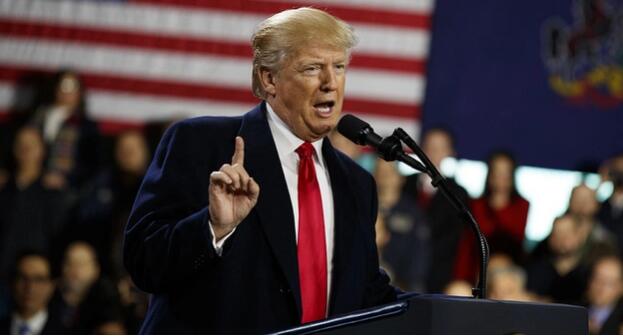
For a man who had built much of his political persona around deal-making and conflict resolution, this moment carried an undeniable irony. The self-styled architect of peace had, at last, become a participant in a negotiation he did not control.
The ceasefire was framed as a diplomatic success, a pause in escalating tensions that threatened to spiral into a broader regional conflict.
Notably, for years, Trump has also openly leaned into the idea that he deserved the Nobel Peace Prize, often portraying himself as a global dealmaker capable of resolving long-standing conflicts. He has pointed to his claimed role in easing tensions across regions from the Korean Peninsula to South Asia as proof of his credentials.
The contrast between aspiration and reality is stark as a self-declared contender for the world’s highest peace honor is now navigating a crisis where peace had to be negotiated for him, not by him.
The Ceasefire Announcement: A Pause, Not a Victory
The 14-day truce emerged after days of mounting strain between the three nations, US-Iran-Israel. Military posturing, sharp rhetoric, and the looming possibility of escalation had created a volatile atmosphere.
Mediators, reportedly involving international actors, including backchannel efforts linked to China, a country the United States has long viewed less as an ally and more as a strategic rival.
However, the structure of the agreement told a different story as this was not a sweeping peace deal or a breakthrough accord. It was temporary, fragile, and conditional, a holding pattern rather than a resolution.
The involvement of external mediators underscored that the United States, under Trump’s leadership, had not been able to unilaterally steer the situation toward de-escalation.
This was a leader who had long prided himself on direct negotiation, on cutting through bureaucracy, on making deals others could not. Yet here he was, relying on intermediaries to achieve what he had so often claimed came naturally to him.
Iran’s Response and the Narrative Battle
The video surfaced as Trump announced a two-week ceasefire, accepting a 14-day truce proposed by mediators. Soon after, Iran’s National Security Council said the US had been forced to accept Iran’s 10-point proposal.
Iran stated that it had achieved most of its war objectives and described the ceasefire as a result of its resistance. The council said the US had been “begging for a ceasefire” for over a month and stressed that Iran had ignored American deadlines.
Earlier, Trump had warned of severe consequences if the Strait of Hormuz was not reopened. Iran described the development as “good news” for its people, saying the conflict had led to a lasting defeat for its adversaries.
It added that all opposing proposals were rejected, with Tehran instead putting forward its own 10-point plan through Pakistan. A two-week ceasefire between the two sides has now taken effect, with the proposal forming the basis for further talks.
This response added another layer to the situation, not just a ceasefire, but a competing narrative of who compelled whom. While Washington framed the truce as a stabilizing step, Tehran presented it as a victory born of resilience and strategic patience.
The Peacemaker Who Needed Peace Made for Him
Trump’s political identity has, for years, been intertwined with the image of a peacemaker and he has repeatedly pointed to his claims of mediating tensions between nations, including assertions that he helped broker ceasefires between India and Pakistan. These claims, often contested and debated, were central to his narrative as a global dealmaker, a “war and peace specialist,” as he liked to imply.
He even positioned himself, at times, as deserving of the Nobel Peace Prize, citing his supposed ability to bring adversaries to the table and reduce conflict. The image was of a leader who could step into chaos and emerge with order, who could turn hostility into handshake agreements.
Here was a conflict involving his own country, his own administration, his own strategic decisions and he could not resolve it independently. He could not impose calm through sheer negotiation prowess. Instead, he had to accept a truce shaped by mediators, influenced by external powers, and constrained by realities he could not bend.
A man who claimed to bring peace to others could not secure it for himself without assistance. A leader who projected strength in negotiation found himself relying on the very mechanisms he often dismissed, multilateral mediation, indirect dialogue, and international pressure.
Collapse of a Carefully Built Image
The idea of Trump as a “ceasefire king” has long been part of his rhetorical arsenal. First, it highlights a reliance on credit-taking rather than consistent outcomes. Claims of brokering peace between India and Pakistan, for instance, were widely disputed, with officials from both countries downplaying or outright rejecting his role and yet these claims were repeated often enough to become part of his public persona.
Second, it exposes the limits of self-proclaimed expertise. Negotiation is not merely about confidence or branding; it requires leverage, trust, and sustained engagement. In this case, those elements were either absent or insufficient, forcing a turn toward mediators.
Third, it underscores a deeper vulnerability, the inability to manage escalation within one’s own sphere of influence. It is one thing to comment on or claim involvement in distant conflicts; it is another to handle a crisis directly tied to one’s own leadership. The latter leaves no room for exaggeration or selective storytelling.
The result is a stark contrast between image and reality. The “deal-maker” could not make the deal alone. The “peacemaker” needed peace to be made for him. The “ceasefire king” had to accept a ceasefire crafted by others.
In the end, the card player who once boasted of always holding the winning hand found himself forced to fold, not in defeat alone, but in recognition that the game was never entirely his to control.