




















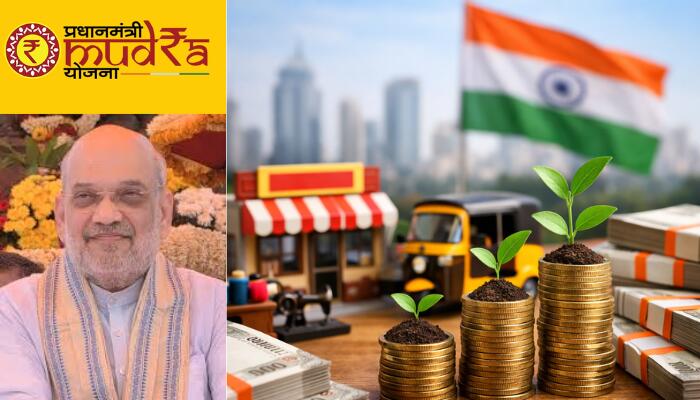
More than ₹40 lakh crore in collateral-free loans have been sanctioned under the Pradhan Mantri Mudra Yojana over the past eleven years, marking a major expansion of formal credit access for India’s small businesses and micro entrepreneurs.
The flagship micro-credit programme, launched on April 8, 2015, has issued over 58 crore loans so far, helping individuals start or expand small enterprises across sectors. Marking the anniversary of the scheme, Union Home and Cooperation Minister Amit Shah said, “The initiative has provided new strength to self-employment and small industries by ensuring that small traders and start-ups can access loans without the need for collateral.”
In a message posted on X, Shah said more than 12 crore young people have benefited from the scheme, contributing to the broader vision of building an “Atmanirbhar Bharat”. He also noted that nearly two out of every three Mudra loans have been extended to women, describing it as a milestone in advancing women’s financial independence.
Expanding financial access for micro enterprises
The Pradhan Mantri Mudra Yojana was introduced to address a long-standing gap in access to institutional finance for small and micro businesses that often struggle to obtain loans through traditional banking systems.
The scheme provides collateral-free credit to non-corporate, non-farm enterprises operating in sectors such as manufacturing, trading, and services, along with allied agricultural activities, including dairy farming, poultry, and beekeeping. By removing the requirement for collateral, the initiative seeks to encourage entrepreneurship while bringing previously underserved groups into the formal financial system.
Loans under the programme are disbursed through commercial banks, regional rural banks, small finance banks, non-banking financial companies,, and microfinance institutions, enabling borrowers to access credit across both rural and urban regions.
Loan categories designed for different stages of growth
Mudra loans are structured into four categories based on the scale and stage of a business.
The Shishu category covers loans of up to ₹50,000 and is designed for very small or early-stage enterprises, often helping individuals launch their first business.
Kishor loans range from ₹50,000 to ₹5 lakh and are meant for enterprises that have already begun operations and require additional funds for working capital or expansion.
The Tarun category offers loans between ₹5 lakh and ₹10 lakh to support businesses seeking to scale up operations or invest in equipment.
A newer category, Tarun Plus, allows loans of up to ₹20 lakh for entrepreneurs who have previously availed and successfully repaid loans under the Tarun segment.
Wide social reach and economic impact
Government data indicates that the scheme has reached a broad section of society. Around one-fifth of the loans have been granted to first-time entrepreneurs, highlighting the programme’s role in encouraging new business creation.
Women borrowers account for nearly two-thirds of the loan accounts, reflecting the scheme’s contribution to strengthening women-led enterprises. Beneficiaries from socially and economically disadvantaged communities also form a substantial share of recipients.
Officials say the Mudra initiative has reduced reliance on informal lending sources while enabling millions of individuals to pursue self-employment through small ventures ranging from retail shops and service units to transport and agri-allied activities.
As the scheme enters its second decade, it continues to play a key role in promoting grassroots entrepreneurship, expanding financial inclusion, and supporting the growth of India’s small business ecosystem.