


















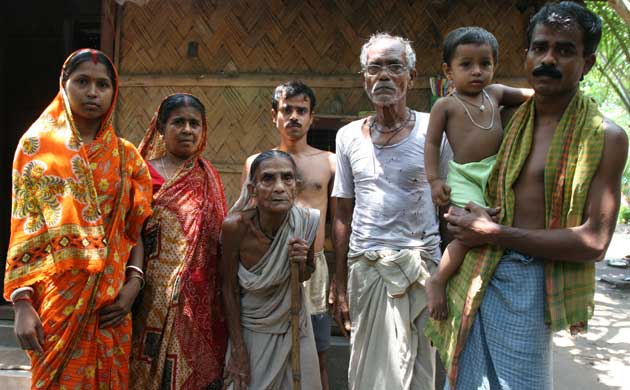
In a significant humanitarian and administrative move, the Uttar Pradesh government under Chief Minister Yogi Adityanath has initiated the distribution of land ownership documents to Hindu refugees from Bangladesh, marking a crucial step toward their long-awaited rehabilitation and integration into mainstream society. This development not only addresses decades of displacement but also reinforces the idea of citizenship tied with dignity, stability, and economic security.
For years, Hindu refugees from Bangladesh have lived in uncertain conditions after fleeing religious persecution and socio-political instability in their home country. Many of them settled in different parts of India, including Uttar Pradesh, often residing on land without formal ownership rights. The absence of legal documentation deprived them of access to government welfare schemes, financial inclusion, and a sense of belonging. The recent initiative aims to correct this historical oversight.
The distribution of land ownership rights—commonly referred to as “pattas”—provides Hindu refugees from Bangladesh with legal recognition over the land they occupy. This step is more than a bureaucratic formality; it is a transformative measure that empowers families with security and opens doors to institutional support. Ownership ensures that these refugees can now build permanent homes, access loans, and invest in their future without fear of eviction.
The move also carries political and ideological significance. It aligns with the broader narrative of providing refuge and rehabilitation to persecuted minorities from neighboring countries. For Hindu refugees from Bangladesh, this initiative symbolizes acknowledgment of their struggles and a commitment to their welfare. It underscores the state’s intent to integrate them fully into the socio-economic fabric of India.
Officials involved in the implementation have emphasized that the process has been carried out systematically, ensuring transparency and fairness. Identification of beneficiaries, verification of claims, and issuance of documents have been conducted through coordinated administrative efforts. As a result, thousands of Hindu refugees from Bangladesh are now beneficiaries of land rights, bringing relief to families who have waited for years—sometimes generations—for such recognition.
Beyond immediate benefits, the long-term implications of this decision are profound. Secure land ownership can significantly improve living standards, encourage education, and promote entrepreneurship among Hindu refugees from Bangladesh. With legal titles in hand, families are more likely to invest in better housing, sanitation, and livelihoods, contributing to overall regional development.
Critics, however, have raised questions about the broader policy framework and its selective focus. While the initiative is widely appreciated for its humanitarian dimension, some argue that refugee rehabilitation should be approached through a more comprehensive and inclusive national policy. Nonetheless, supporters contend that addressing the plight of Hindu refugees from Bangladesh is both a moral obligation and a necessary corrective step.
The initiative also resonates with the larger discourse on citizenship and refugee rights in India. It highlights the challenges faced by displaced communities and the role of state governments in addressing them. For Hindu refugees from Bangladesh, the issuance of land ownership documents is not merely about property—it is about identity, recognition, and the promise of a stable future.
In many settlements, the atmosphere has reportedly been one of celebration and relief. Families who once lived under the constant threat of displacement now speak of hope and permanence. The psychological impact of this shift cannot be overstated. For Hindu refugees from Bangladesh, owning land translates into a renewed sense of dignity and belonging.
As Uttar Pradesh takes this step, it sets a precedent that may influence similar policies in other states. The rehabilitation of Hindu refugees from Bangladesh could become a model for addressing refugee issues across the country, provided it is implemented with consistency and fairness.
In conclusion, the distribution of land ownership rights to Hindu refugees from Bangladesh represents a landmark moment in their journey from displacement to stability. It is a policy that combines administrative action with humanitarian intent, offering not just land, but a foundation for rebuilding lives.