








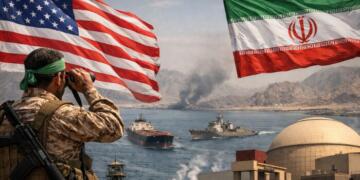









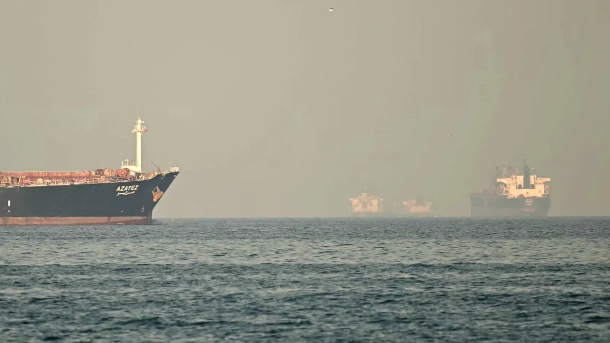
Iran announced that it will charge a $2 million fee on foreign vessels traversing the strategically vital Strait of Hormuz, a chokepoint through which nearly a fifth of the world’s oil supply passes. The move marks an escalation in Tehran’s efforts to assert control over its regional maritime corridor and leverage its position in the global oil market.
The announcement, delivered by Iran’s Ministry of Petroleum, cited “security, infrastructure, and environmental costs” as reasons for the new levy. While details on enforcement and timing remain limited, analysts say this development could have far-reaching implications for global energy markets and international diplomacy.
A Strategic Chokepoint
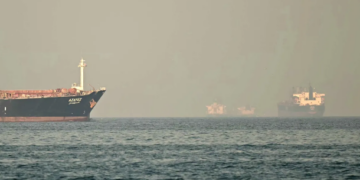
The Strait of Hormuz is one of the most strategically vital waterways in the world, acting as a narrow maritime corridor that connects the Persian Gulf to the Gulf of Oman and the Arabian Sea.
Roughly one-fifth of the world’s oil supply, around 21 million barrels per day passes through this chokepoint, making it indispensable to global energy security. Its significance extends beyond economics; the strait’s geography gives the bordering states, particularly Iran and Oman, immense leverage over international trade and energy flows.
Any disruption, whether political, military, or logistical, can ripple across global markets, spiking oil prices, increasing shipping insurance costs, and compelling nations to seek alternative, often costlier, routes. In short, the Strait of Hormuz is not just a passage for ships, it is a fulcrum of geopolitical influence and a barometer of global economic stability.
Iran’s Geopolitical Leverage
Historically, Iran has used the Strait of Hormuz as a bargaining chip in negotiations with global powers. During periods of heightened tension such as the US withdrawal from the Iran nuclear deal in 2018, Tehran threatened to close or restrict the passage, raising energy prices worldwide.
The $2 million levy represents a formalized method to capitalize on this influence without resorting to military confrontation. Iran’s move could generate significant revenue, bolster domestic political credibility, and strengthen Tehran’s negotiating position on the international stage.
Implications for US Policy and Donald Trump
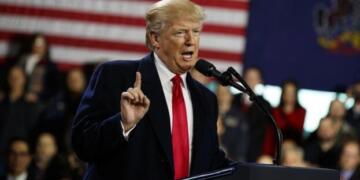
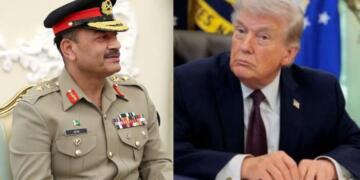
While the announcement postdates Trump’s presidency, it has rekindled discussions of his administration’s hardline approach toward Iran. During his term, Trump frequently emphasized sanctions and military options to curtail Tehran’s influence, describing Iran as a “destabilizing force” in the Middle East.
In 2019, Trump warned, “Any attack on US forces or our allies will be met with force like the world has never seen before.” He repeatedly cited Iran’s control over the Strait of Hormuz as a critical vulnerability in global energy markets. Analysts suggest that the $2 million fee could be viewed in hindsight as a manifestation of the leverage he sought to limit through maximum-pressure policies.
Economic and Global Order Impact
The immediate impact of the fee is likely to be financial pressure on shipping companies and oil importers. Vessels may pass on the costs to consumers, potentially contributing to higher energy prices worldwide. Insurance premiums for passage through the Strait of Hormuz are also expected to rise, further compounding costs.
More broadly, this development underscores the fragility of global trade routes and the interdependence of nations reliant on Middle Eastern oil. “This move reminds us that geography still dictates power in international relations,” notes Dr. Afrasiabi. “Countries like Iran can leverage natural chokepoints to exert influence disproportionate to their overall economic size.”
For energy-importing nations, the levy could prompt long-term strategic recalibrations, including diversifying suppliers or investing in alternative energy sources. Meanwhile, for regional rivals like Saudi Arabia and the UAE, it could intensify efforts to develop bypass routes, such as pipelines circumventing the Strait entirely.
Strategic Significance and Long-Term Outlook
Iran’s decision is more than an economic measure; it is a demonstration of power. By formalizing control over maritime passage in a way that is legally framed yet financially impactful, Tehran projects authority in a manner that is hard to counter without direct confrontation.
Analysts predict that the fee could become a recurring negotiation point in future diplomatic engagements, particularly if sanctions continue to affect Iran’s economy.
It also serves as a stark reminder of the ways in which global commerce is entwined with geopolitical power, a dynamic that cannot easily be mitigated by distant powers, regardless of military or economic might.
What it Means?
Iran’s $2 million fee on vessels transiting the Strait of Hormuz is a calculated maneuver to assert geopolitical and economic leverage. By monetizing its control over a critical global chokepoint, Tehran is strengthening its negotiating position, signaling power to regional rivals, and influencing the global energy market.
For policymakers worldwide, the move highlights the fragility of critical trade routes, the enduring strategic value of geography, and the complex interplay between regional assertiveness and global economic stability. As the world watches, the Strait of Hormuz continues to be not just a maritime passage but a stage for power projection and global diplomacy.