
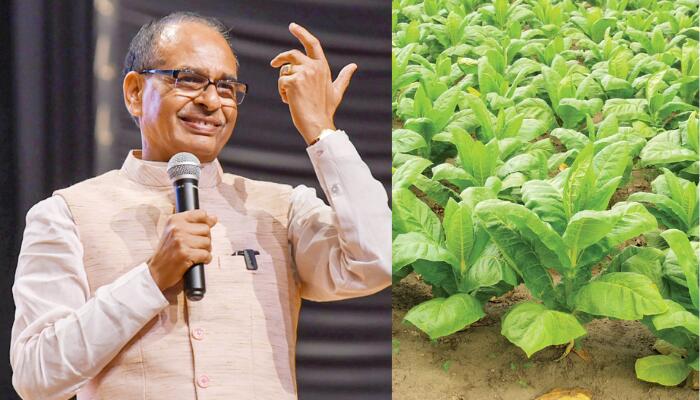
Union Agriculture Minister Shivraj Singh Chouhan told the Lok Sabha that the government is prioritising both income stability and security for farmers through a combination of crop diversification, expanded procurement at minimum support price, and tighter oversight of insurance and welfare mechanisms.
Replying to questions from Members of Parliament, Chouhan said the government is actively encouraging farmers to move away from tobacco cultivation and adopt more profitable alternatives. In regions where tobacco is traditionally grown, crops such as hybrid maize, chilli, sweet potato, cotton, potato, chia, feed bean, cowpea, ragi, red gram, sugarcane, soybean, sorghum, and groundnut have been identified to help secure higher and more reliable incomes.
Integrated farming model for year-round income
Underscoring the structural reality of Indian agriculture, Chouhan pointed out that most farmers operate on small landholdings, making reliance on a single crop risky. To address this, the government has developed integrated farming models and initiated demonstrations across various states.
These models encourage farmers to combine crop cultivation with allied activities such as vegetables, fruits, animal husbandry, fisheries, beekeeping, goat rearing and agroforestry, alongside staples like wheat and paddy. The aim is to enable farmers to generate income throughout the year rather than depend on a single harvest cycle.
MSP expansion and assured procurement
The minister said the government has increased the minimum support price for major crops, including wheat, paddy, pulses and oilseeds, while procurement in the current season has reached unprecedented levels. He highlighted specific arrangements for pulse crops such as tur, masoor and urad, under which the government is committed to purchasing the entire quantity brought by registered farmers.
This, he said, has reduced uncertainty for farmers and ensured that they receive fair returns for their produce.
Time-bound crop insurance with a penalty for delays
Addressing delays in insurance payouts, Chouhan said the government has introduced significant changes to the Pradhan Mantri Fasal Bima Yojana. He acknowledged that farmers earlier faced long waits for compensation but said new rules now mandate that even individual crop losses must be covered.
Under the revised provisions, once yield data is available, insurance claims must be settled within 21 days. If payments are delayed, insurance companies and state governments are required to pay the amount along with 12 percent interest, ensuring accountability and timely relief.
Zero tolerance for irregularities
Reinforcing the government’s stance on transparency, Chouhan referred to Prime Minister Narendra Modi’s stated position against corruption, asserting that irregularities in schemes will not be tolerated. Complaints received through digital platforms, including the Krishi Rakshak portal, are being examined closely, with strict action promised wherever wrongdoing is found.
He added that in recent years, particularly in states such as Rajasthan, large sums of crop insurance money have been directly transferred into farmers’ accounts through direct benefit transfer, reflecting the government’s attempt to ensure benefits reach intended recipients without leakages.
Chouhan maintained that the combined focus on diversification, procurement, and reform is aimed at reducing risk and building a more stable and sustainable income framework for farmers across the country.