










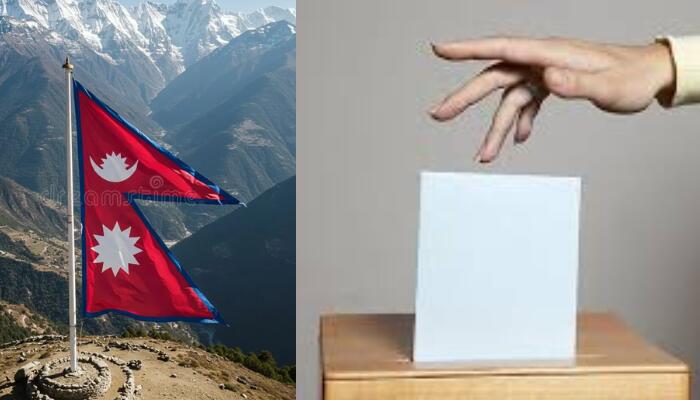
Voting began across Nepal on Thursday morning as citizens headed to polling stations to elect a new parliament in one of the most closely watched elections in the country in recent years. The vote comes months after violent anti-corruption protests shook the political establishment and forced the collapse of the previous government, setting the stage for a contest between traditional political figures and an emerging youth-led political movement.
Polling began at 7:00 am local time and will continue throughout the day across thousands of polling centres in the Himalayan nation of around 30 million people. Voters are electing 275 members to the House of Representatives, the lower chamber of Nepal’s Federal Parliament.
Interim Prime Minister Sushila Karki cast her ballot at a polling centre in Dhapasi in Kathmandu as voting commenced. Several senior leaders and candidates also voted early in the day across the country. Shram Sanskriti Party chair Harkraj Sampang voted at Carmel School in Ward 19 of Inaruwa Municipality in Sunsari-1 constituency, while Nepali Communist Party leader Madhav Kumar Nepal cast his vote at a polling centre in Gaur Municipality in Rautahat.
Election officials anticipate a voter turnout of at least 65 percent, reflecting strong public interest in the vote.
A Nation Voting After Months of Unrest
Thursday’s election follows a period of intense political instability triggered by protests that erupted in Kathmandu last September. The demonstrations began as peaceful gatherings by thousands of young people demanding action against corruption, better governance, and stricter rule of law. The unrest escalated after police opened fire on demonstrators, leaving 19 people dead and many others injured.
The protests intensified the following day as crowds targeted major government buildings, including the prime minister’s office, parliament, several ministries, and the Supreme Court. Offices of major political parties were set on fire, and a former prime minister and his wife, who was serving as foreign minister at the time, were assaulted. The unrest spread beyond the Kathmandu Valley, with mobs attacking government offices and the homes and businesses of prominent politicians. Prisons were also broken into in some areas, allowing inmates to escape.
The violence eventually led to the removal of Prime Minister KP Sharma Oli. Three days later, an interim government led by former chief justice Sushila Karki took office, making her the country’s first woman prime minister. Overall, the protests left 77 people dead and more than 2,300 injured.
Key Candidates and the Rise of a Youth Challenger
One of the most closely watched contests in the election involves former prime minister KP Sharma Oli, a 74-year-old Marxist leader seeking a political comeback after his ouster. He faces a challenge from Balendra Shah, a 35-year-old rapper-turned-politician and former mayor of Kathmandu.
Shah first rose to prominence in 2022 when he ran as an independent candidate and defeated nominees from the Nepali Congress and the Communist Party of Nepal (Unified Marxist–Leninist) to become mayor of Kathmandu. Securing 61,767 votes, he delivered one of the biggest political upsets in recent Nepali politics.
The Jhapa-5 constituency, which has around 163,000 voters, will determine whether Oli retains his parliamentary seat or whether Shah secures entry into the national legislature.
Another contender for the prime minister’s position is Gagan Thapa, the 49-year-old newly elected head of the Nepali Congress, the country’s oldest political party. Thapa has called for an end to what he described as the dominance of ageing political elites in Nepali politics.
A Generational Shift in Nepali Politics
The election has highlighted a growing generational divide in the country’s political landscape. Nearly one-third of the more than 3,400 candidates contesting the polls are aged 40 or younger.
Around 800,000 first-time voters are also eligible to cast their ballots, many of whom were believed to be among the young people who took part in the protests that forced the government to step down.
Across Kathmandu on Thursday morning, early visuals showed voters standing in orderly queues at polling centres such as Annapurna Vinayak School as security personnel oversaw the process.
Electoral System and What Comes Next
Nepal elects its House of Representatives through a mixed electoral system that combines first-past-the-post voting and proportional representation. Of the 275 seats in parliament, 165 members are elected directly from constituencies, while the remaining 110 seats are allocated proportionally based on party vote share.
Voters cast two ballots on election day, one for an individual candidate and another for a political party.
Voting will close at 5:00 pm. However, counting under the proportional representation system is expected to take longer, meaning final results may not be immediately available. Analysts believe the election may not produce a clear majority for any single party, raising the possibility of prolonged negotiations to form a coalition government.
Key Issues Driving the Vote
Apart from corruption, job creation has emerged as a major issue in the election campaign. Analysts say around one-fifth of Nepal’s population lives in poverty while youth unemployment remains high.
Relations with neighbouring India and China are also expected to shape political debates as the landlocked country seeks to balance ties between the two major Asian powers. India accounts for nearly two-thirds of Nepal’s international trade, while China makes up about 14 percent and has provided the country with loans exceeding $130 million.
Election Day Atmosphere
The movement of both public and private vehicles was suspended from midnight on March 4 until the end of voting as part of security measures introduced by the Election Commission.
In the days leading up to the vote, hundreds of thousands of people travelled back to their home districts to cast their ballots. Authorities said around 800,000 people had already left the Kathmandu Valley by Wednesday morning, a scale of movement usually seen only during Dashain, Nepal’s biggest festival.
Many voters expressed hope that the election would usher in meaningful change. One voter at a polling centre in Kathmandu said they hoped the new leadership would contribute to Nepal’s development and improve the lives of citizens.
As ballots are cast across the country, the election is widely viewed as a critical test of whether Nepal’s political system can respond to public anger over corruption while accommodating a new generation of voters demanding change.





