





















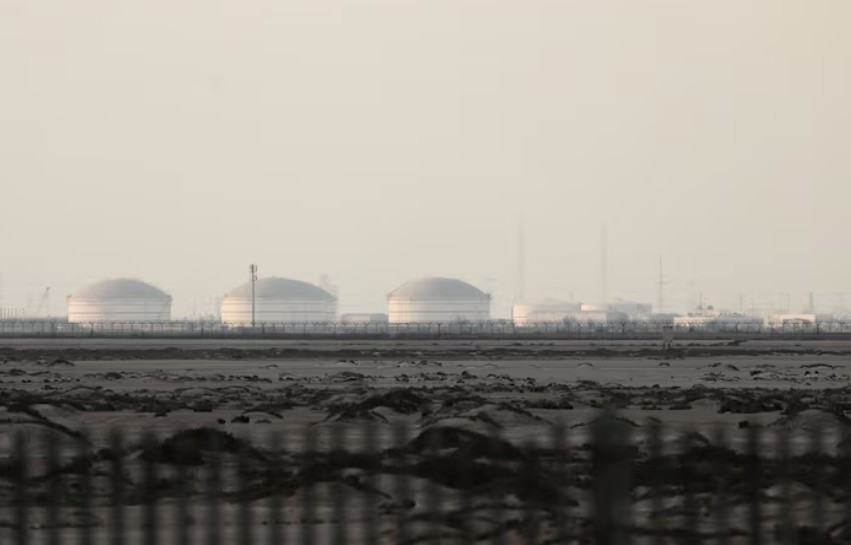
Qatar’s Ras Laffan Industrial City, home to the world’s largest liquefied natural gas (LNG) export plant, suffered “extensive damage” following an Iranian missile strike, authorities said, marking a sharp escalation in regional hostilities that have targeted critical energy infrastructure across the Persian Gulf.
According to media reports, Qatari officials said that one missile struck the LNG plant directly, while four others were intercepted. Hours later, the Habshan gas facilities in Abu Dhabi were temporarily shut down after falling debris from an intercepted strike caused safety concerns, according to the Abu Dhabi Media Office.
A subsequent attack on Ras Laffan early Thursday led to a fire, which Qatari authorities said they were controlling. State-owned QatarEnergy confirmed that all personnel at the facility, which had been evacuated earlier, were accounted for. The Qatar Interior Ministry said the fire caused by the strike was under control.
Europe gas and LNG director at consultancy Wood Mackenzie Ltd said, “A retaliatory attack on Ras Laffan is exactly what the global natural gas market feared the most. We’re yet to know which part of the industrial complex has been damaged, but either way it’s going to be bullish for gas prices when the market opens on Thursday,” reported NDTV.
Crude oil prices surged after the strike, with Brent futures rising as much as 8% to $111.90 a barrel.
Regional and Global Fallout
The strike follows a series of attacks on energy facilities in the region, including an Israeli attack on Iran’s South Pars gas field. Tehran has warned that energy sites in Qatar, Saudi Arabia, and the UAE are “legitimate targets,” raising concerns about further disruption to global energy supplies.
“Qatar considers this aggression a dangerous escalation and a flagrant violation of the state’s sovereignty, as well as a direct threat to its national security and the stability of the region,” the Qatar Ministry of Foreign Affairs said on social media, ordering Iranian military and security attaches to leave the country within 24 hours.
In Saudi Arabia, the defense ministry reported thwarting a drone attack on a gas facility in the eastern region, while shrapnel from a missile fell near a refinery south of Riyadh.
Ras Laffan: A Global Energy Hub
Ras Laffan Industrial City spans 295 square kilometers (about one-third the size of New York City) and hosts LNG processing, gas-to-liquids plants, LNG storage, condensate splitters, and an oil refinery.
The facility had already halted production earlier this month following an Iranian drone attack, prompting QatarEnergy to declare force majeure on deliveries and throwing global LNG markets into disarray. Shell Plc, which holds stakes in some of Ras Laffan’s gas and LNG infrastructure, said it was assessing potential impacts from the latest strike.
The attacks have particularly strained Asian and European markets, both heavily reliant on imported LNG for power generation, and have highlighted vulnerabilities in the region’s energy supply chain amid ongoing geopolitical tensions.