
















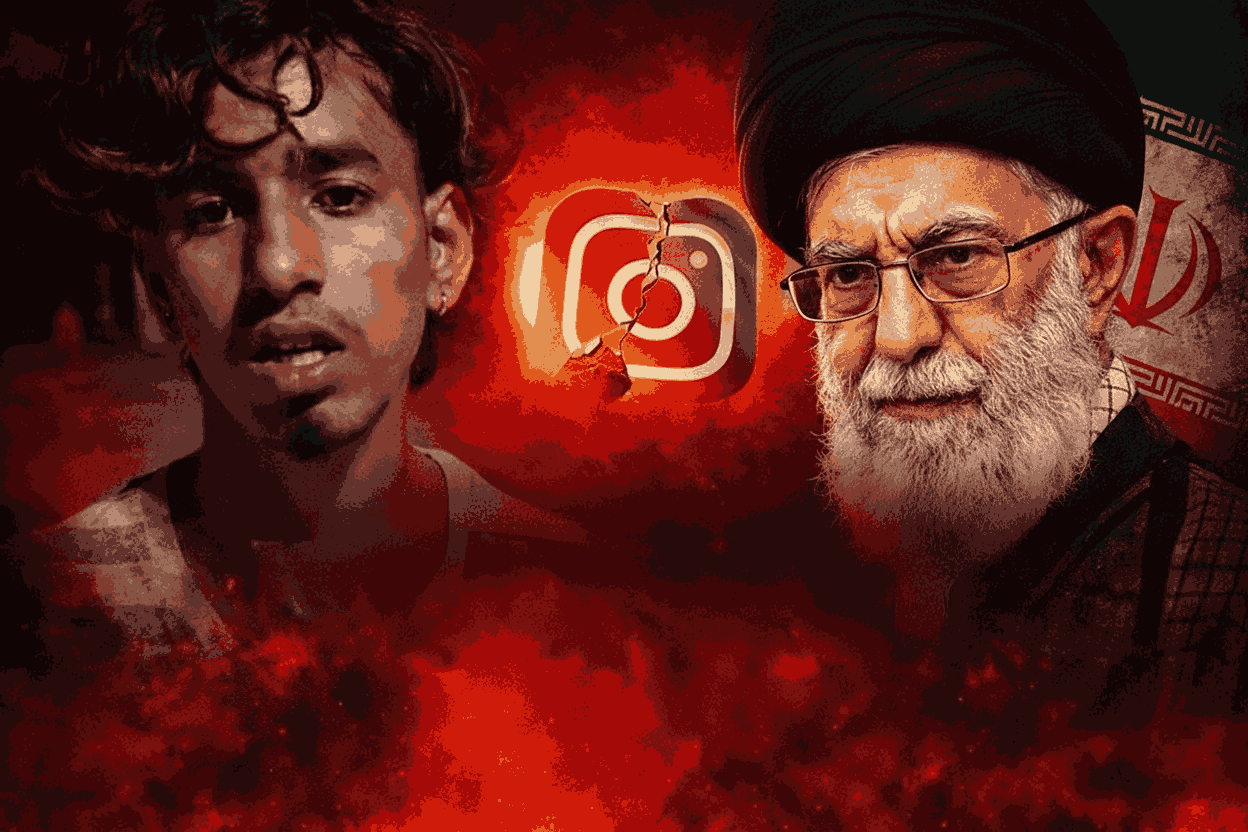
In a disturbing incident that has ignited debate over freedom of expression and communal harmony in southern India, a Hindu youth in Karnataka was allegedly assaulted for posting an Instagram story about the reported death of Iran’s Supreme Leader, Ayatollah Ali Khamenei. The episode, which occurred in Gangavathi town of the Koppal district, has alarmed local communities and drawn sharp reactions from civil society groups and political figures.
The victim, identified as Chandrashekhar—a young businessman running a dry fruit shop—posted on his Instagram account a news update claiming that Khamenei had been killed in missile strikes by the United States and Israel. While the veracity of the news itself remains contested globally, his social media update quickly provoked anger among some local youths.
According to Chandrashekhar’s complaint, a group of approximately five to six individuals arrived at his shop in Gangavathi and confronted him about the story. They accused him of hurting religious sentiments and began to verbally abuse him. The situation escalated rapidly when the confrontation turned physical: the Hindu youth was allegedly assaulted and threatened with death if he did not retract his post, with the attackers even warning that they would target his family at home.
Escaping the immediate danger, Chandrashekhar rushed to the Gangavathi Town Police Station late at night to seek protection. There, he filed a detailed complaint that has now prompted law enforcement to take action. Police have registered a case and are reviewing CCTV footage in the vicinity of the shop to identify and apprehend the assailants.
Residents of Gangavathi have expressed concern that this incident represents more than a simple interpersonal dispute. Many see it as a deeper reflection of the tensions that can arise in India when social media intersects with sensitive geopolitical issues and religious identities. “Attacking someone for sharing an international news update on social media amounts to an assault on freedom of expression,” said one local resident, highlighting the unease felt by many in the community.
Authorities are aware of the risks of escalation and have deployed additional police personnel to the area to maintain order. The local administration has appealed for calm, urging residents to refrain from taking the law into their own hands while the investigation proceeds.
The episode in Gangavathi comes amid broader national and international discussions about the death of Ayatollah Khamenei. Political debates have been intensifying over how governments and societies should react to the news, and voices across India—including those of prominent leaders—have voiced opinions on the ethical and legal implications of the reported killing. Some argue that such an act, if true, is a violation of international norms and should be condemned, while others focus on the risks of misinformation spreading online.
The incident also raises questions about how young people engage with global news on social media platforms. Social media has become a primary source of information and opinion shaping for the youth in India and around the world. However, when politically charged or controversial news items are circulated without clear verification, they can inadvertently inflame existing social fault lines. The Hindu youth at the center of this case may now find himself grappling with the consequences of this digital age reality.
Legal experts say that regardless of the content of a social media post, violence is never a lawful response. Free speech protections under Indian law allow citizens to express opinions and share news, provided it does not cross legal boundaries such as incitement to violence or hate speech. The police investigation is expected to determine whether any laws were broken, and if so, who will be held accountable.
As the case draws attention locally and nationally, many observers are urging for measured responses that prioritise law and order over revenge or vigilantism. Some civil liberties advocates are calling for a broader conversation on how social media platforms can be better regulated to prevent the spread of unverified content that could lead to real-world harm.
For now, the Hindu youth and his community await the outcome of the police investigation, hoping that justice will be served and that such violent reprisals for social media activity do not become more commonplace in India’s increasingly connected society.





