
















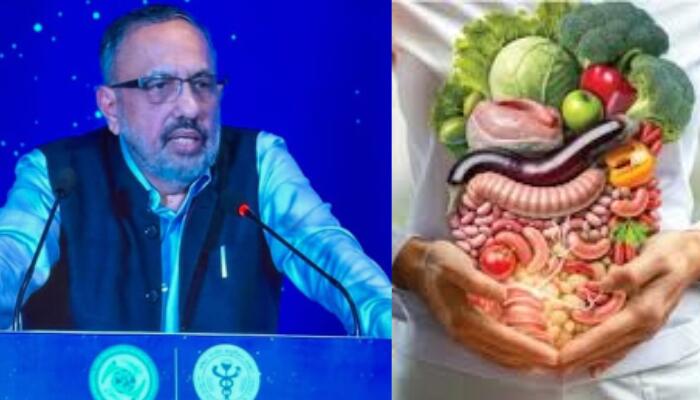
A sharp shift in India’s dietary habits, driven by urbanisation and the growing consumption of ultra-processed foods, is emerging as a major public health concern, with unhealthy diets now linked to 56.4 per cent of the country’s disease burden, NITI Aayog Member Rajiv Gauba warned.
Speaking as Chief Guest at the 16th India Probiotic Symposium organised by the Gut Microbiota and Probiotic Science Foundation in New Delhi on March 27 and 28, Gauba underlined the central role of the gut microbiome in shaping immunity, metabolism and preventive healthcare outcomes across the human lifespan.
Changing diets, rising risks
Highlighting a rapid departure from traditional, nutrient-rich diets, Gauba pointed to the influence of social media, instant messaging platforms and evolving lifestyles in promoting refined and ultra-processed food consumption. He cautioned that these trends could have far-reaching consequences for gut health, warning that neglecting the microbiome could trigger widespread health impacts.
His remarks come amid growing scientific consensus that diet-induced imbalances in gut microbiota are closely linked to both chronic and infectious diseases, placing additional strain on healthcare systems.
Health at the core of economic growth
Positioning healthcare as a cornerstone of national development, Gauba stressed that India’s demographic dividend can only be realised through a healthy workforce and proactive preparation for an ageing population. He described investment in healthcare as fundamental to building a developed India.
Citing government initiatives such as Ayushman Bharat, PM-JAY, the PM Bhartiya Janaushadhi Pariyojana and Ayushman Arogya Mandir, he noted significant gains in strengthening primary healthcare and financial protection. Out-of-pocket health expenditure has declined from 62.6 per cent in FY 2015 to 39.4 per cent in FY 2022, resulting in savings exceeding ₹1.25 lakh crore for households.
Persistent gaps and the digital push
Despite these gains, Gauba acknowledged enduring challenges related to access, equity, affordability, quality and patient safety, alongside a shortage of skilled healthcare professionals. He emphasised that socio-economic disparities continue to shape access to healthcare services.
Calling for a more proactive role from medical professionals, he advocated wider use of affordable generic medicines and the integration of digital health tools, including telemedicine, data analytics and artificial intelligence, to extend specialised care to underserved populations.
Microbiome science enters a new phase
Addressing advances in probiotic research, Gauba observed that microbiome science has moved beyond descriptive studies into mechanistic and applied domains. He highlighted emerging areas such as next-generation microbiome-based therapies, synthetic biology and CRISPR-enabled engineering of probiotic strains designed for targeted anti-inflammatory and metabolic functions.
However, he issued a caution against the proliferation of misinformation and misleading advertising in the probiotics and supplements market, urging researchers and clinicians to leverage their credibility to promote evidence-based knowledge and preventive health practices.
India’s opportunity to lead
Drawing attention to India’s long-standing tradition of fermented foods, Gauba said the country is uniquely placed to lead the global probiotic movement by integrating traditional knowledge with modern genomic and microbiome research. He noted the significant potential of probiotics in reducing disease burden, improving nutrition and strengthening immunity at a population level.
He also stressed the need for strong collaboration between academia, industry and regulators to translate scientific advances into safe, effective and accessible healthcare solutions.
Commending the participation of young researchers, Gauba expressed confidence that the symposium would foster innovation, encourage multidisciplinary approaches and reinforce India’s leadership in microbiome and probiotic science.