
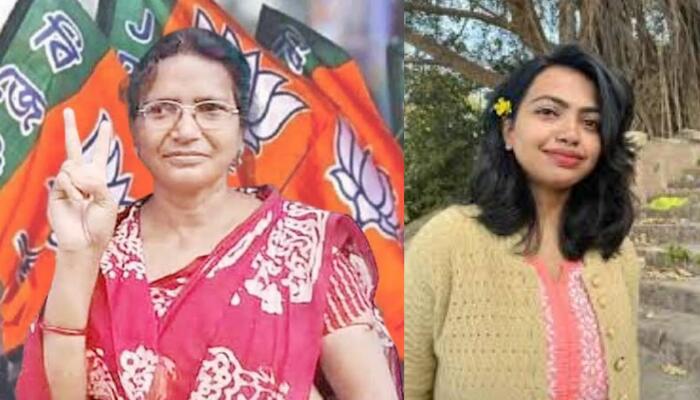
In a striking political development ahead of the West Bengal Assembly elections, Bharatiya Janata Party has fielded Ratna Debnath, the mother of the RG Kar Medical College rape and murder victim, as its candidate from Panihati. The move ties one of India’s most widely condemned criminal cases to the state’s electoral landscape, signalling a calculated intervention in a constituency long dominated by the ruling Trinamool Congress.
Ratna Debnath’s daughter, a postgraduate medical student at RG Kar Medical College and Hospital, was raped and murdered in August 2024 in a case that shook the nation and drew global attention. Her candidature comes as part of the BJP’s latest list of 19 candidates for the two-phase elections scheduled on April 23 and April 29. With this announcement, the party has now declared nominees for 274 out of 294 seats, where the majority mark stands at 148.
From personal loss to political resolve
Debnath’s entry into politics is rooted in her prolonged fight for justice. She had earlier stated that stepping into the political arena would give her a stronger platform to demand accountability and push for systemic reforms, particularly around women’s safety. Her family had confirmed prior engagement with BJP leaders, and she formally took the party’s primary membership before being named as a candidate.
The decision received central backing, with BJP national president Nitin Nabin confirming her candidature during a recent visit to Kolkata, underlining the party’s intent to foreground the issue during the campaign.
A crime that sparked national outrage
The case dates back to August 9, 2024, when the 31-year-old doctor was found raped and murdered inside a seminar room on the college campus. The brutality of the crime, coupled with its occurrence within a medical institution, intensified concerns over the safety of healthcare professionals.
A civic volunteer linked to the Kolkata Police was arrested in connection with the case. Shortly thereafter, the Calcutta High Court transferred the investigation to the Central Bureau of Investigation, citing a lack of confidence in the initial probe.
The incident led to an unprecedented 42-day strike by junior doctors across West Bengal, who demanded a fair investigation and enhanced security measures in hospitals. National bodies such as the Indian Medical Association also called for urgent legal reforms.
Protests that crossed borders
The outrage was not confined to India. Doctors and civil society groups organised demonstrations across major Indian cities, including Delhi, Mumbai and Kolkata, with institutions like AIIMS witnessing large-scale participation.
Internationally, the protests spread across more than 130 cities in 25 countries, with members of the Indian diaspora holding rallies in the United States, the United Kingdom, Canada, Australia and Germany. Campaigns such as “Reclaim the Night” saw thousands of women mobilise, turning the case into a global symbol of resistance against gender-based violence.
Electoral stakes amid unresolved questions
The political ramifications of the case have been significant. Opposition parties have repeatedly targeted the ruling Trinamool Congress over alleged lapses in law and order, while the state government has denied any wrongdoing. The debate over institutional accountability remains unresolved.
West Bengal will head to polls in two phases on April 23 and April 29, with counting scheduled for May 4. As campaigning intensifies, Ratna Debnath’s candidature underscores how a deeply personal tragedy has evolved into a powerful political narrative, one that continues to test the state’s governance and its commitment to justice.