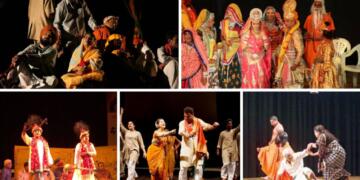












As the world celebrates World Theatre Day on March 27, the occasion may feel new to many countries, but not to India since theatre in the country is not merely entertainment, it has been an ancient philosophical tradition, deeply embedded in the country’s cultural and spiritual life for thousands of years.
Long before the modern concept of theatre took shape in the West, India had already developed a sophisticated and codified system of dramatic arts.
From ancient treatises to early performance spaces, the history of Indian theatre reflects a civilization that viewed performance as a medium of knowledge, aesthetics, and spiritual expression.
Theatre as Philosophy: The Legacy of Bharata Muni
At the heart of India’s theatrical heritage lies the Natya Shastra, attributed to the sage Bharata Muni. Believed to have been composed between roughly 200 BCE and 200 CE (with some estimates placing its origins even earlier), the text is widely regarded as the world’s earliest and most comprehensive treatise on performing arts.
Spanning around 36 chapters and thousands of verses, the Natya Shastra goes far beyond simple storytelling. It systematically details every aspect of theatre, dramatic composition, stage construction, acting techniques, gestures, costumes, makeup, music, and audience engagement.
What makes this text unique is its philosophical depth. Theatre, according to Bharata Muni, was not just meant to entertain but to evoke “rasa”, aesthetic emotion, guiding audiences toward reflection on deeper moral and spiritual truths.
In essence, theatre in India was conceived as a complete art form, blending drama, dance, and music into a unified experience. This integrated approach meant that a performance could resemble opera, ballet, and theatre all at once, centuries before such combinations became common elsewhere.
A Flourishing Tradition in Ancient India
The existence of the Natya Shastra also points to something crucial: it did not emerge in isolation. Instead, it codified already thriving traditions of performance across ancient India.
By the time this text was written, theatre was already a well-established practice, performed in courts, temples, and public spaces. Sanskrit drama, which drew heavily from the principles of the Natya Shastra, became one of the most refined theatrical traditions in the ancient world.
This stands in stark contrast to much of Europe during the same broad historical period, where organized theatrical systems were still evolving and, in many regions, societies were yet to develop comparable literary and artistic frameworks.
India, meanwhile, had already conceptualized theatre as a discipline, complete with theory, training, and structured performance practices.
The World’s Oldest Theatre Spaces?
Beyond texts, archaeological and historical evidence also highlights India’s early engagement with performance spaces. The Sitabenga Caves are often cited by historians and cultural scholars as among the oldest known theatre-like structures in the world.
Located in present-day Chhattisgarh, these caves are believed to have been used for performances, with features resembling an auditorium, suggesting that organized theatrical presentations existed in India thousands of years ago.
Such sites reinforce the idea that theatre in India was not merely theoretical but actively practiced and integrated into daily and cultural life.
Theatre, Culture, and Continuity
Another distinguishing feature of Indian theatre is its continuity. While many ancient civilizations saw breaks in their theatrical traditions, India’s performing arts evolved but never disappeared.
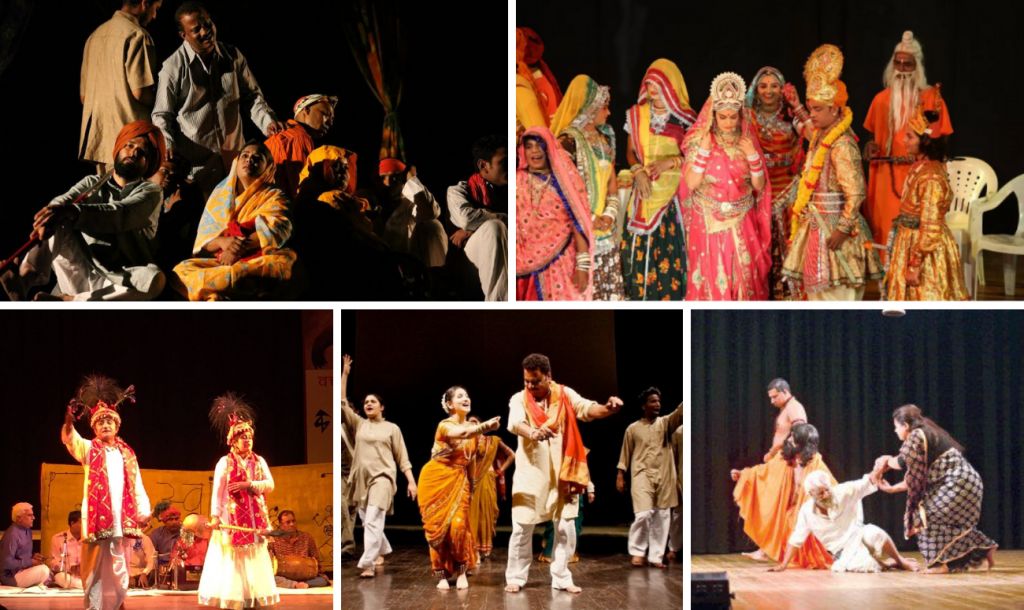
Classical dance forms like Bharatanatyam, Kathak, and others continue to draw heavily from the principles laid down in the Natya Shastra. Even modern Indian theatre and cinema still reflect its influence, particularly in storytelling, expression, and emotional engagement.
The idea that performance is both art and spiritual expression remains central to Indian culture, setting it apart from purely entertainment-driven models.
Not New for India
As the world celebrates World Theatre Day today, India’s relationship with theatre serves as a reminder that this art form is far from new in the subcontinent.
India was exploring stagecraft, performance theory, and aesthetic philosophy at a time when much of the world had yet to formalize such concepts. From the Natya Shastra to ancient performance spaces like the Sitabenga Caves, the country’s theatrical journey spans millennia.
In many ways, World Theatre Day is not just a celebration for India, it is a reaffirmation of a legacy that has existed for thousands of years.