
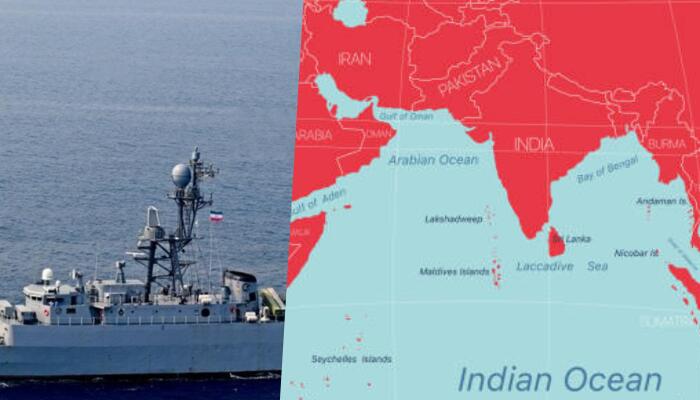
The sinking of the Iranian warship IRIS Dena cannot be understood by focusing on the guest list of a naval exercise. The decisive factor lies in the operational timeline that unfolded in the waters of the Indian Ocean.
The multinational naval engagement MILAN 2026 concluded on 25 February 2026 after several days of coordinated maritime activity hosted by India. Three days later, on 28 February, a conflict erupted between Iran and the alliance of the United States and Israel. The IRIS Dena was ultimately struck on 4 March, eight days after the exercise had ended.
This eight-day interval is crucial. By the time the vessel was targeted, it was no longer participating in a cooperative maritime event. Instead, it had reverted to its status as a sovereign naval asset belonging to a country actively engaged in hostilities.
The Significance of Tactical Loitering
The timeline raises a key operational question. Why was the IRIS Dena still present in international waters and within the Exclusive Economic Zone of Sri Lanka more than a week after leaving Visakhapatnam?
The extended presence of the vessel suggests what analysts describe as tactical loitering. Such manoeuvres can form part of an action and reaction framework in maritime conflict, particularly when naval forces monitor adversary movements across strategic waters. In this case, Dena’s continued positioning may have been connected to Tehran’s response planning regarding movements of the United States Navy in the region.
Once Iran entered active conflict on 28 February, Dena’s status changed immediately. As a warship belonging to a belligerent nation, it became a legitimate military target under the logic of maritime warfare.
The Limits of India’s Responsibility
India was not a party to the conflict that erupted in West Asia. As a result, New Delhi had neither the authority nor the responsibility to influence the tactical decisions taken by the Iranian vessel after its departure from Indian waters.
Under international maritime norms, a host nation’s responsibility ends when a visiting vessel exits its territorial waters. India’s role as host of the naval exercise concluded once the ship departed. The last known port of call for the Dena was Hambantota in Sri Lanka, after which maritime oversight in the surrounding zone fell within the jurisdiction of MRCC Colombo.
Historical precedent supports this principle. Throughout major maritime conflicts, including the world wars, ships have been targeted based on their status as combatants rather than on where they had previously docked or exercised.
A Wider Pattern of Naval Strikes
The attention surrounding the Dena also reveals a broader imbalance in the narrative. While the Iranian frigate has dominated discussion, little attention has been paid to the seventeen other vessels reportedly struck by American forces in the same period.
In maritime conflict zones such as the Red Sea, ships operating independently are frequently targeted without neighbouring states being drawn into responsibility debates. Applying a different standard in this case raises questions about the motives behind the rhetoric.
A final point illustrates the inconsistency. If the IRIS Dena had used the eight-day interval after the exercise to launch an attack on American assets, few would have argued that the naval exercise hosted by India had served as a launch platform for aggression.
The facts, therefore, remain clear. India’s role ended on 25 February. What followed was the unfolding of a war in which New Delhi played no part, and the fate of the IRIS Dena was determined by that conflict rather than by the exercise that preceded it.