
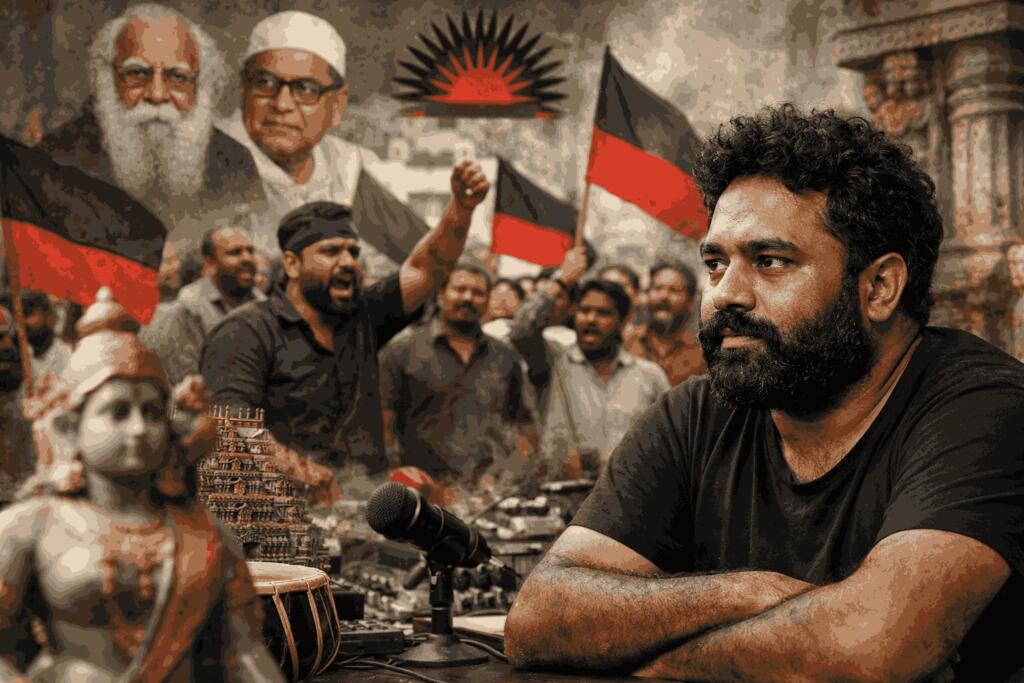
The debate surrounding the popular Tamil indie song Enjoy Enjaami has taken a new political and cultural turn, with composer Santhosh Narayanan facing criticism from sections of Dravidian activists and social media users over his Brahmin identity. What began as a creative dispute over credit and royalties has now evolved into a broader ideological confrontation, highlighting how questions of culture, caste, and artistic ownership continue to shape public discourse in Tamil Nadu.
Released in 2021, Enjoy Enjaami quickly became one of the most widely celebrated Tamil independent songs of recent years. The track featured singers Arivu and Dhee, with music composed by Santhosh Narayanan. The song’s lyrics drew inspiration from the experiences of plantation labourers and the cultural memory of Tamil communities, which resonated strongly with audiences worldwide. The video eventually accumulated hundreds of millions of views online, establishing the track as a milestone in the Tamil indie music scene.
However, several years after its release, the controversy resurfaced when disagreements emerged over creative ownership and recognition. Arivu asserted that his role in writing and conceptualising the song had not been sufficiently acknowledged. In response, Santhosh Narayanan defended the collaborative nature of the project, arguing that the song was a joint creative effort involving multiple artists. This disagreement rekindled debates within the Tamil cultural sphere about representation, artistic credit, and the politics surrounding cultural narratives.
As the discussion intensified online, critics began linking the dispute to issues of caste and identity. Some activists and commentators alleged that Santhosh Narayanan’s Brahmin identity influenced how the controversy was framed or perceived. According to critics aligned with Dravidian ideological positions, Tamil cultural expression has historically been shaped by power structures that privilege certain communities. In this context, the mention of Brahmin identity became a focal point of the debate, with social media discussions questioning whether cultural narratives were being overshadowed by individuals belonging to historically dominant groups.
Supporters of Santhosh Narayanan, however, rejected these accusations and argued that targeting the composer based on Brahmin identity distracts from the real issue of artistic collaboration. They maintained that the dispute should remain focused on creative contributions and contractual arrangements rather than devolving into caste-based criticism. The composer himself has previously spoken out against the politicisation of cultural conflicts and called for more responsible dialogue within the entertainment industry.
The controversy has also exposed broader tensions within Tamil cultural politics. For decades, Dravidian movements in the region have emphasised social justice and resistance against perceived historical inequalities. Critics of Santhosh Narayanan framed their arguments within this ideological tradition, suggesting that the debate over Enjoy Enjaami reflects deeper structural issues. In their view, discussions about Brahmin identity are part of a larger struggle over cultural representation and social hierarchy.
Yet many observers believe the issue is more complex than a simple ideological conflict. Some commentators have warned that repeatedly invoking Brahmin identity risks reducing creative disputes to identity-based battles. According to these voices, the Tamil music industry thrives on collaboration among artists from diverse backgrounds, and politicising every disagreement may undermine artistic unity.
Despite the heated exchanges, the success of Enjoy Enjaami remains undeniable. The song has been widely praised for its powerful lyrics, vibrant visuals, and celebration of Tamil heritage. Its popularity also signalled the growing influence of independent music platforms that allow artists to reach global audiences outside traditional film industries.
As the debate continues, it reflects a broader transformation occurring in India’s cultural sphere, where artistic expression increasingly intersects with social and political identity. The discussion surrounding Santhosh Narayanan demonstrates how quickly creative controversies can expand into ideological battles when themes of history, representation, and Brahmin identity enter the conversation.
Ultimately, the Enjoy Enjaami row reveals how deeply intertwined art and politics have become in contemporary Tamil discourse. While the immediate dispute may revolve around credit and collaboration, the larger argument about Brahmin identity shows that cultural production in India often carries layers of historical memory and social debate. Whether the controversy fades or intensifies, it has already underscored one important reality: in today’s digital age, music can spark not only artistic appreciation but also powerful conversations about identity and society.