
















RelatedPosts
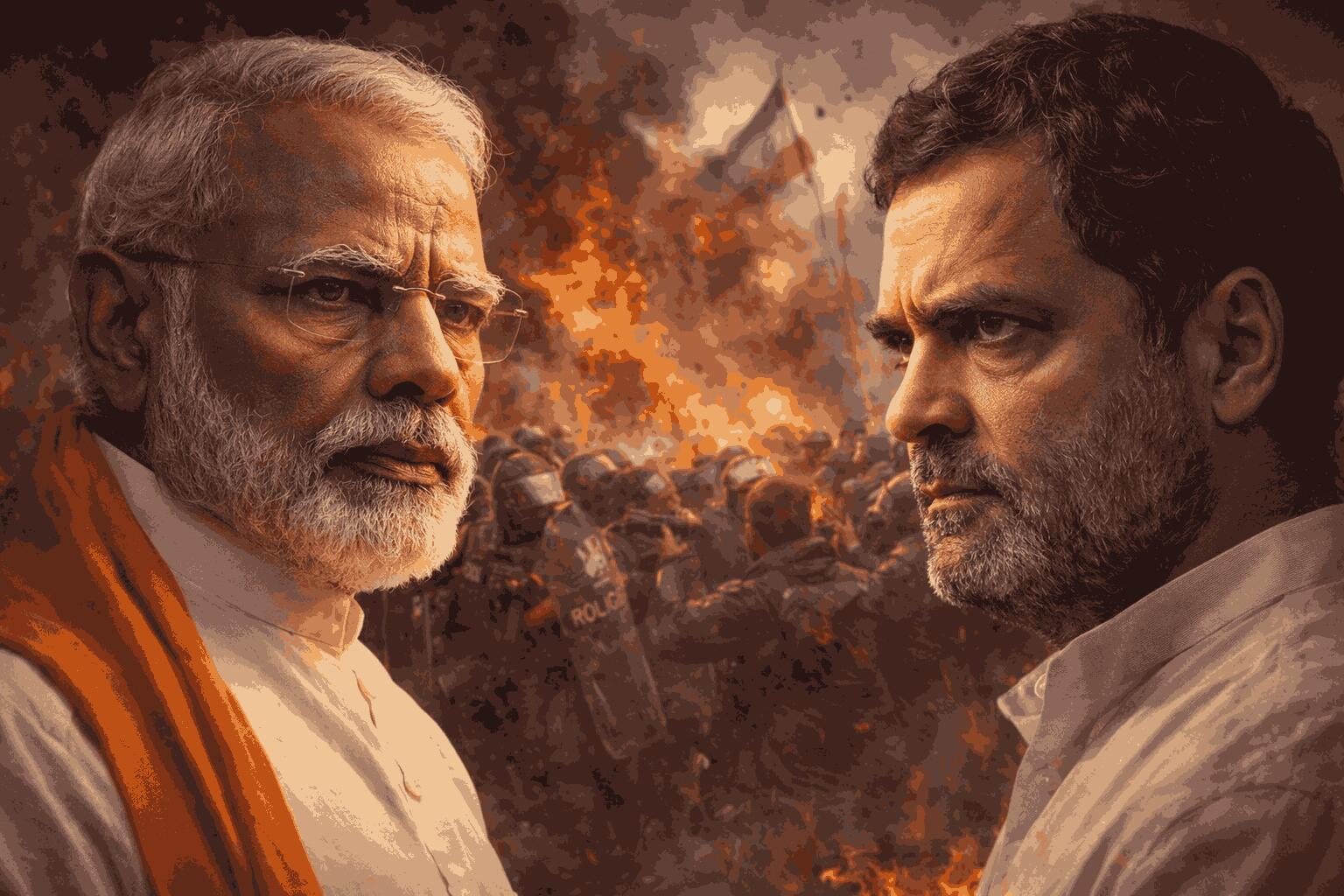
India’s foreign policy debate has intensified as Bharatiya Janata Party leaders launched a sharp attack on the Indian National Congress, accusing it of irresponsibly urging the country to support Iran amid escalating tensions in West Asia. The controversy erupted after statements from opposition figures suggested that India should take a stronger position in favour of Tehran during the ongoing geopolitical crisis. In response, BJP condemns Congress for what it describes as an attempt to push India into a complex foreign conflict without considering the country’s broader strategic interests.
The argument began gaining attention after global tensions intensified following the expanding confrontation involving United States, Israel, and Iran. The crisis has already begun affecting global trade, energy prices, and maritime security across the Gulf region. For India, which has significant economic and strategic interests in West Asia, policymakers have emphasised the need for caution and diplomatic balance rather than taking a rigid geopolitical stance. In this context, BJP condemns Congress for allegedly ignoring the complexities of India’s long-standing foreign policy approach.
According to political commentators aligned with the ruling party, India’s diplomatic posture has historically been based on strategic autonomy. The country has maintained working relationships with multiple competing powers in the region, including Iran, Israel, and several Gulf states. Analysts note that blindly aligning with any one country could jeopardise India’s ability to maintain influence across the region. Consequently, BJP condemns Congress for suggesting what it views as an oversimplified and potentially risky foreign policy shift.
Another key factor highlighted in the debate is the Gulf region’s importance to India’s economy and security. Millions of Indian citizens live and work in countries such as United Arab Emirates, Saudi Arabia, and Qatar. These nations are also crucial energy suppliers and major trading partners. Because of these interlinked interests, policymakers often stress the importance of maintaining balanced relations with all actors in the region. Against this backdrop, BJP condemns Congress for what it claims is a call for unilateral support for Iran without considering the potential consequences for India’s diaspora and economic ties.
India’s official position has generally emphasised restraint and diplomacy in response to the escalating conflict. Government representatives have repeatedly called for de-escalation and dialogue among the countries involved. The Ministry of External Affairs has expressed concern about regional instability and urged all sides to avoid actions that could further intensify the crisis. Within this diplomatic framework, BJP condemns Congress for attempting to portray India’s neutral stance as weakness rather than a deliberate strategic choice.
Supporters of the government argue that India’s relationship with Iran itself is complex and often misunderstood. While the two countries cooperate on certain strategic projects and energy trade, they are not formal allies. Historical differences, geopolitical rivalries, and shifting global alignments have shaped a relationship that is pragmatic rather than ideological. Because of this nuanced reality, analysts say India cannot simply “choose sides” in every regional dispute. In this context, BJP condemns Congress for allegedly ignoring the historical and diplomatic complexities that shape India–Iran relations.
The broader geopolitical situation also underscores why policymakers prefer caution. The Gulf region is one of the world’s most important energy corridors, and instability there can quickly affect global oil prices and shipping routes. Any escalation of the conflict involving Iran could have far-reaching economic consequences for countries dependent on Middle Eastern energy supplies. With India importing a large portion of its oil from the region, analysts say it must carefully navigate the crisis. Once again, BJP condemns Congress for advocating a policy that could potentially disrupt this delicate balance.
Political observers also point out that domestic political debates frequently influence foreign policy discussions. Opposition parties often criticise government decisions to highlight perceived weaknesses or inconsistencies. However, the ruling party argues that international relations require continuity and careful calculation rather than sudden shifts driven by domestic political narratives. From this perspective, BJP condemns Congress for attempting to turn a sensitive geopolitical issue into a partisan controversy within India’s internal politics.
Ultimately, the dispute reflects the broader challenge facing India as global conflicts become increasingly interconnected. The country must manage relations with multiple strategic partners while safeguarding economic interests and protecting millions of citizens abroad. As tensions continue to rise in West Asia, India’s leaders insist that balanced diplomacy and strategic autonomy remain essential guiding principles. Within this ongoing debate, the phrase BJP condemns Congress has become a defining feature of the political confrontation surrounding India’s response to the Iran crisis.