
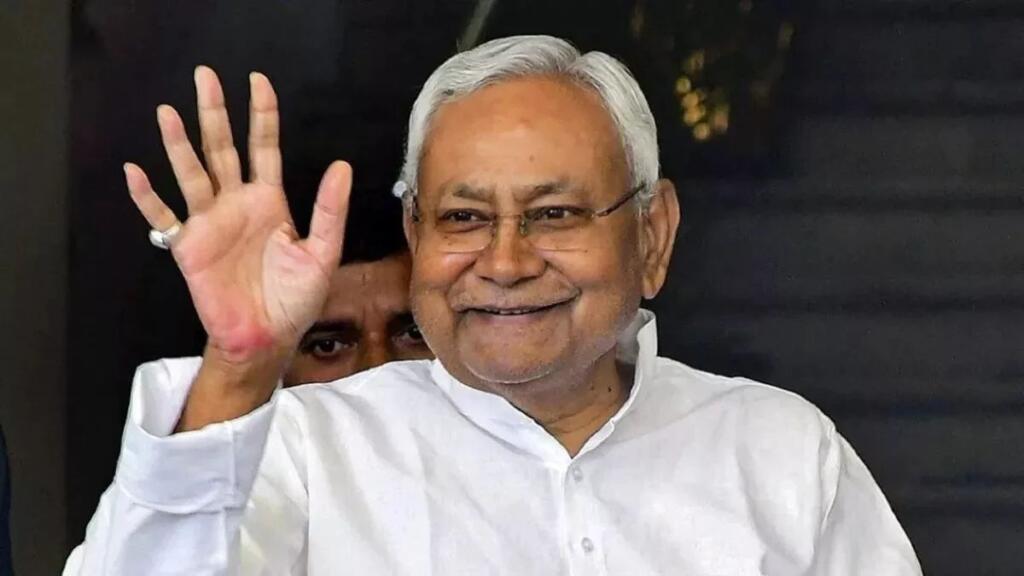
In a major political shift, Bihar Chief Minister Nitish Kumar on Monday resigned from the Legislative Council, just days after securing a berth in the Rajya Sabha, in a move that signals a quiet yet consequential shift in the state’s political landscape.
For Bihar’s longest-serving chief minister, the decision marks more than a routine transition, it points to the possible end of an era and the emergence of new leadership, with the BJP now positioned to stake claim to the top post with one of its own.
Kumar’s departure from state politics also brings the curtain down on his decades-long rivalry with Lalu Prasad Yadav. Now largely absent from active politics and barred from contesting elections, Lalu continues to helm the RJD, with Tejashwi Yadav as its principal face and leader of the opposition in the assembly. Earlier, on Sunday, Mokama MLA Anant Singh confirmed that Kumar would step down on Monday.
A Long-Awaited Transition
On March 5, Nitish Kumar announced his decision to step down from Bihar’s top post and move to the Rajya Sabha, describing it as the fulfilment of a long-held political ambition.
In a post on X, Kumar said he had always aspired to serve in both Houses of the Bihar legislature as well as both Houses of Parliament. Reflecting on his tenure, he thanked the people for their “trust and support” over more than two decades, crediting it for enabling his government to deliver “development and dignity” to the state.
He added that his shift to the Rajya Sabha was in line with that aspiration, while assuring that his “bond” with the people of Bihar would remain intact. Kumar also pledged full cooperation and guidance to the new government that will take charge.
End of an Era in Bihar Politics
The announcement came less than four months after Kumar led the NDA to a sweeping victory in the state elections. The veteran leader, who recently turned 75 and was sworn in for a record tenth term in November, is now set to transition to national politics.
His exit marks the closing chapter of a political journey that defined Bihar’s governance for over two decades, reshaping both administrative priorities and electoral alignments in the state.
BJP Poised for Leadership Shift
Kumar’s move opens the door for the Bharatiya Janata Party to appoint its own chief minister in Bihar for the first time. The development is expected to significantly alter the balance of power within the NDA in the state, while also setting the stage for a new phase in Bihar’s political trajectory.
With the BJP having emerged as a dominant force within the gathbandan in recent electoral cycles, the party is now in a position to translate its organisational strength and electoral gains into executive leadership.
Such a transition would mark a structural shift in the alliance, where the BJP moves from being a junior partner to the principal driver of governance in the state.
The anticipated leadership change is also likely to carry broader political implications beyond Bihar. It could serve as a testing ground for the BJP’s ability to consolidate governance under its own leadership in a state long shaped by coalition dynamics and strong regional figures.
At the same time, the transition will be closely watched for its impact on administrative continuity, caste equations, and electoral alignments, particularly with an assertive opposition led by Tejashwi Yadav seeking to capitalise on any political flux.