


















RelatedPosts
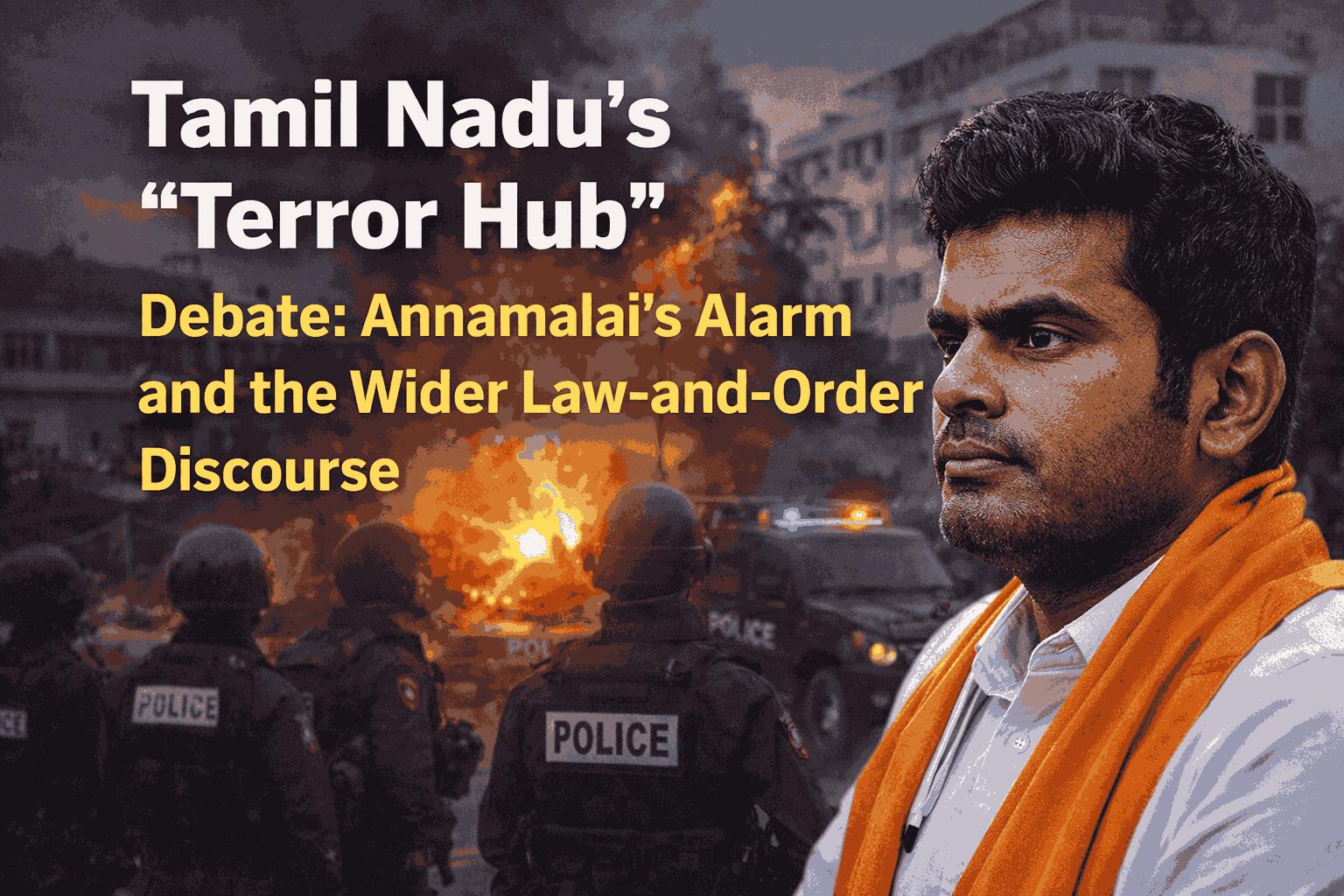
A fierce political storm has erupted in Tamil Nadu over recent arrests in a terror-linked case, with Bharatiya Janata Party (BJP) leader K Annamalai accusing the ruling Dravida Munnetra Kazhagam (DMK) government of turning the state into a “terror hub.” His comments, which have dominated the state’s political discourse, tap into broader questions about governance, law and order, and electoral strategy ahead of the 2026 assembly elections.
The controversy was triggered after the Delhi Police arrested six suspects from Tiruppur in connection with a major terror plot that authorities say had links to foreign intelligence agencies and extremist groups. Images of the suspects being taken to the national capital sparked immediate criticism from the BJP, which alleged a failure of the DMK’s security apparatus.
Annamalai’s intervention was sharp and unequivocal. In a social media post, he claimed that the “corrupt & incompetent DMK Govt has transformed a once peaceful state into a safe haven for terrorists, anti-social elements, international drug smugglers and ruthless criminals.” It was not just a critique of specific arrests but a sweeping charge that, under the current dispensation, Tamil Nadu had itself become synonymous with danger, neglect, and lax enforcement — a terror hub in the BJP’s framing.
From a political perspective, this rhetoric serves multiple purposes. For Annamalai and his party, highlighting alleged lapses in state security taps into broader anxieties about national safety and governance. Accusations that Tamil Nadu is now a terror hub strike at the heart of public confidence, especially at a time when concerns about internal security are politically salient across India. It allows the BJP to draw a stark contrast with the DMK leadership and present itself as the guardian of law and order.
Yet analysts caution that the situation is more complex than a simple binary of failure versus competence. Tamil Nadu historically has not been a major theatre of organised terrorism compared with some northern and northeastern states. Isolated cases — such as the 1998 Coimbatore bombings carried out by the banned group Al Ummah — are part of the state’s security history, but they have not fundamentally redefined its social fabric as a persistent terror risk.
Critics of Annamalai’s narrative argue that the BJP’s “terror hub” tag oversimplifies and politicises a law-and-order challenge that is often handled by multiple agencies beyond state jurisdiction. In this case, the arrests were conducted by central agencies, underscoring the collaborative nature of counter-terror operations rather than an outright failure of state governance.
The DMK, for its part, has responded by contesting the BJP’s framing. Party spokespeople have suggested that national security is a shared responsibility and that political hostility toward the central government may, in part, shape how incidents are portrayed. Rather than accept blame for a broader climate labelled a terror hub, the DMK has called for unified efforts to enhance vigilance and security cooperation across jurisdictions.
Beyond the immediate political clash, the “terror hub” debate points to deeper anxieties in Tamil Nadu society about migration, border control, and law enforcement effectiveness. Statements from regional political figures reflect genuine concerns among segments of the population about unchecked movement of individuals and the state’s capacity to monitor and prevent extremist activities. These fears are amplified in a high-stakes election year, making statements like Annamalai’s resonate more widely.
Nevertheless, there is also a countercurrent of voices warning against sensationalism. Observers note that using terms like terror hub can have unintended consequences — stigmatizing entire communities, eroding public trust, and diverting attention from more concrete structural reforms needed in policing and intelligence gathering. Without clear, verifiable patterns of sustained extremist networks operating within the state, such characterisations risk inflaming political tensions rather than addressing the root causes of insecurity.
What is clear is that this issue will continue to shape the political narrative in Tamil Nadu in the coming months. Annamalai’s framing of the state as a terror hub has struck a chord with opponents of the government and has pushed discussions about security to the forefront of public debate. Yet whether this rhetoric will translate into political advantage or tangible policy shifts remains to be seen.
Ultimately, while no society is immune to the threat of terrorism, reducing Tamil Nadu’s complex law-and-order landscape to a slogan-laden label oversimplifies both the challenge and the potential solutions. As the election season approaches, it will be important for all parties to balance legitimate security concerns with responsible, evidence-based discourse.