














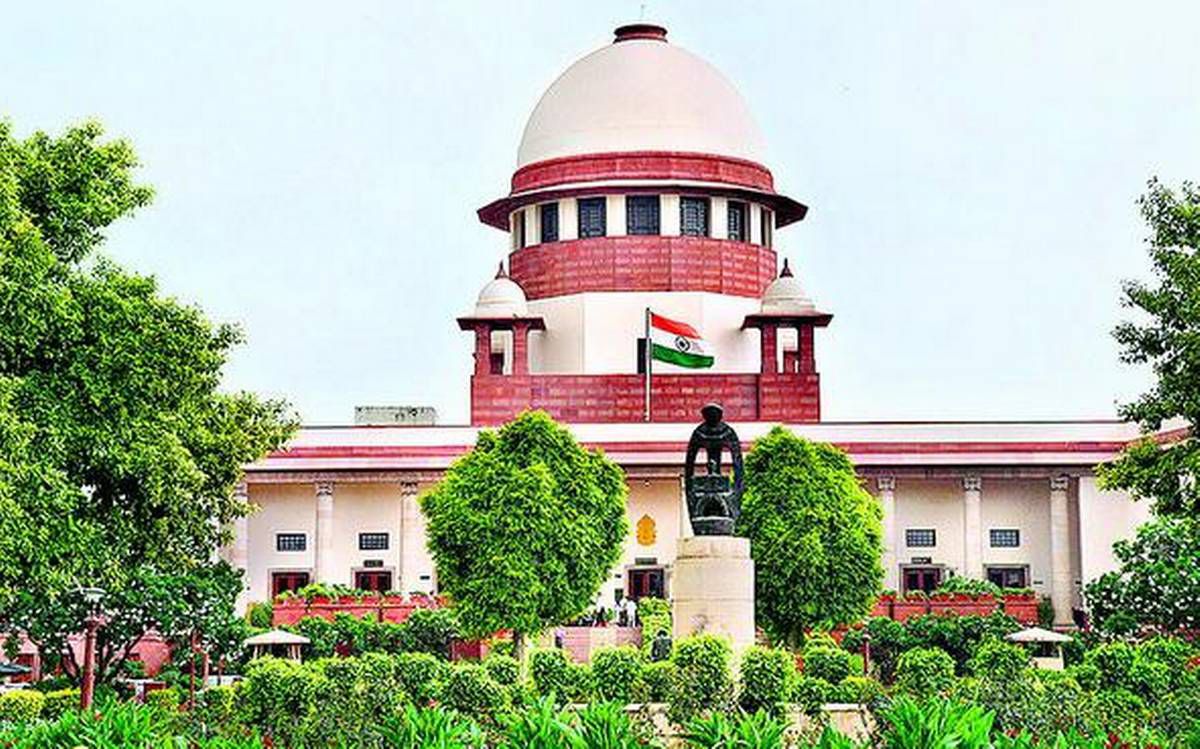
The Supreme Court on Friday expressed serious concern over the unprecedented reduction in qualifying marks for NEET-PG 2025–26.
The move has raised fundamental questions about the standards of postgraduate medical education in India. The court was particularly alarmed by a notification allowing candidates to qualify with zero and even negative scores.
A Bench of Justices PS Narasimha and Alok Aradhe, hearing public interest petitions, said, “This is about standards. The question is whether those standards are being compromised.”
The judges were visibly surprised by the method adopted. “We were stunned to see why this method was adopted. These are all regular doctors,” the Bench said.
The controversy began with a January 13 notification from the National Board of Examinations in Medical Sciences, issued under the guidance of the Union Ministry of Health and Family Welfare. It drastically lowered the qualifying percentiles for the third round of NEET-PG counselling.
For SC, ST, and OBC candidates, the cut-off dropped from 40 percent to zero, effectively allowing aspirants with negative marks to qualify. General and EWS candidates saw their cut-off fall from the 50th percentile to the 7th percentile, reducing scores from 276 to 103.
General category candidates with disabilities faced a reduction from the 45th to the 5th percentile, lowering scores from 255 to 90.
Additional Solicitor General Aishwarya Bhati, representing the authorities, said the relaxation was aimed at filling over 18,000 unoccupied postgraduate medical seats across the country.
The Bench, however, emphasized that preventing seats from remaining vacant could not justify compromising medical standards. “On one hand, seats should not go waste. On the other hand, standards cannot be diluted. There has to be a balance,” the judges said.
Advocate Satyam Singh Rajput, appearing for the petitioners, highlighted the alarming trend of cut-off reductions from 50 to 47, then zero, and now negative 40.
“Yes, they are MBBS-qualified, but scoring negative marks raises serious concerns about competency,” he told the court.
The petitions, filed by social activist Harisharan Devgan, neurosurgeon Dr Saurav Kumar, United Doctors Front president Dr Lakshya Mittal, and Dr Akash Soni of the World Medical Association through senior advocate Sonia Mathur, argued that the drastic lowering of merit standards is arbitrary and unconstitutional under Articles 14 and 21.
They also said it threatens patient safety. They contended that such dilution of standards institutionalizes sub-par competence and undermines the framework established under the National Medical Commission Act, 2019.
Senior Advocate Gopal Sankaranarayanan said eligibility relaxation should be allowed only in exceptional circumstances. Citing the Preeti Srivastava judgment, he said higher education must maintain strict standards, especially in fields directly affecting human life.
The Bench directed the Centre and NBEMS to file a detailed affidavit justifying the cut-off reductions. “Our conscience has to be satisfied that there is no devious reason, that’s all,” the judges said.
While the court did not grant an interim stay, the third round of NEET-PG counselling will continue as scheduled.
NEET-PG, conducted by NBEMS, is the national-level examination for admission to MD, MS, PG Diploma, and DNB courses in both public and private medical institutions.
The Supreme Court’s intervention is expected to set a precedent on how medical education standards are regulated, balancing merit, patient safety, and the need to fill vacant postgraduate seats.