























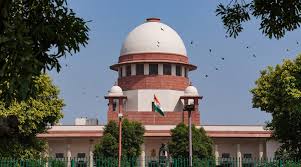
The Supreme Court of India has sought responses from the Union government, States and Union Territories on a Public Interest Litigation (PIL) calling for institutional safeguards against false criminal complaints, fabricated evidence and malicious prosecution, warning that unchecked misuse of law is damaging both individuals and the justice system.
A Bench led by Chief Justice Surya Kant, along with Justice Joymalya Bagchi and Justice Vipul Pancholi, acknowledged that any intervention in such matters could trigger criticism and allegations of restricting freedoms. However, the Court underlined that judicial responsibility cannot be shaped by public backlash.
Stressing the importance of social awareness, the Chief Justice said citizens must be educated about the rights of others and the values of fraternity, adding that misuse followed by the disappearance of wrongdoers has become a recurring problem.
Petition Points to Rising Culture of False Prosecutions
The petition, filed under Article 32 by BJP leader and advocate Ashwini Kumar Upadhyay, argues that fabricated cases have become one of the main reasons behind mounting judicial delays and public distrust.
Appearing before the Court, Upadhyay submitted that many ordinary disputes, particularly over land and property, are deliberately converted into criminal proceedings. He said provisions under Section 498A of the IPC (Cruelty on woman by husband and/or in laws), the Scheduled Castes and Scheduled Tribes (Prevention of Atrocities) Act, the Dowry Prohibition Act, and the Protection of Children from Sexual Offences (POCSO) Act are frequently invoked in disputes that are essentially civil in nature.
According to him, such practices leave law-abiding citizens anxious and vulnerable, while those misusing the system face little immediate consequence. He added that even when innocence is eventually established, years of personal, social and professional damage are rarely undone.
Preventive Measures and Judicial Reflections
The petitioner has urged the Court to direct authorities to install information boards at police stations, court buildings, panchayat offices, municipal centres and educational institutions, clearly explaining punishments for filing false complaints under Chapter XIV of the Bharatiya Nyaya Sanhita.
He has also sought mandatory affidavits or undertakings from complainants affirming the truth of their statements before registration of cases, along with stronger enforcement of perjury laws and consecutive sentencing for proven falsehoods.
During the hearing, the Court expressed concern over cases initiated without the knowledge of the named complainant. The Chief Justice pointed out that forged documents and manipulation by powerful individuals often result in disadvantaged citizens being drawn into legal battles without their consent.
Referring to a recent example, he noted that a woman had approached the Court to clarify that a political leader accused in her case had no connection with the matter, raising questions about the influence of money and authority in criminal proceedings.
Statistics, Legal Precedents, and Rights at Stake
The petition draws support from data published by the National Crime Records Bureau, which indicates comparatively low conviction rates under several special laws. It also relies on the 277th Report of the Law Commission of India, which examined cases of wrongful prosecution.
Upadhyay has further cited the Supreme Court’s ruling in the case involving Nambi Narayanan and Siby Mathews, where the Court recognised reputation as a vital element of the right to life.
He contends that failure to prevent misuse violates Articles 14, 19 and 21 of the Constitution, undermining liberty, dignity and the right to timely justice.
The Bench has granted four weeks for responses from the governments concerned and will resume hearing the matter after examining their submissions.