
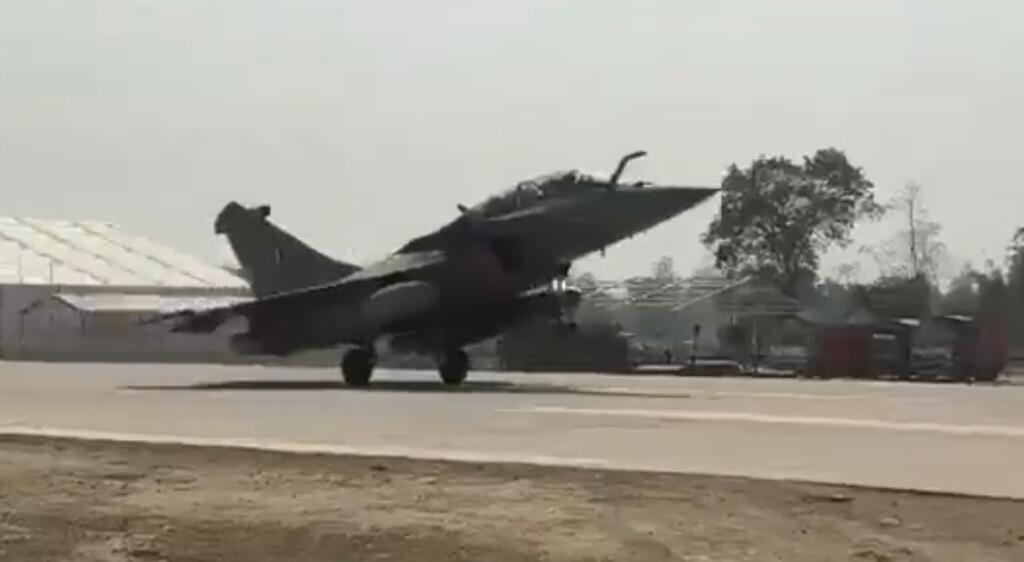
In a major boost to India’s emergency preparedness and strategic mobility, an Indian Air Force (IAF) transport aircraft successfully conducted a trial landing on a newly constructed highway-based emergency landing strip (ELF) at Moran in Dibrugarh, Assam.
A proud milestone for @nhidcl and Bharat’s strategic infrastructure. 🇮🇳
NHIDCL has developed a 4.2 km Emergency Landing Facility on NH 37 New NH 02 from Demow to the end of Moran Bypass, in close coordination with the Indian Air Force. The 33 metre wide airstrip, with turning… pic.twitter.com/Fub6EtySQR
— Ajay Tamta (@AjayTamtaBJP) February 11, 2026
About the Emergency Landing Facility
The Moran airstrip has been constructed on a 4.2-kilometer stretch of NH‑127 and is India’s first Emergency Landing Facility (ELF) in the Northeast. Designed for use by both military and civil aircraft, an ELF allows planes to land or take off from a highway during war or emergency situations.
The facility serves a dual purpose, supporting normal civilian traffic while also enabling rapid military operations when required. Strategically, it enhances the importance of the Northeast, given the region’s proximity to the China border.
In addition to Moran, the government has developed similar ELFs in states such as Rajasthan, Uttar Pradesh, and Tamil Nadu. While the country has several such facilities, Moran is the first to be established in the Northeast, reflecting a broader focus on infrastructure development and strengthening the region’s defence preparedness.
Why is the ELF Important?
The concept of an Emergency Landing Facility (ELF) in India is aimed at ensuring operational readiness during emergencies. If airports are damaged during war or natural disasters, highways equipped as ELFs can serve as alternative landing and take-off strips for military and civil aircraft.
In addition, these facilities play a crucial role in delivering relief material during floods or other calamities. In remote regions like the Northeast, ELFs not only enhance logistical capabilities but also strengthen security along sensitive borders.
Prime Minister Narendra Modi’s visit to Moran highlights the strategic significance of the Northeast. By linking infrastructure development with national security, such initiatives underscore India’s growing airpower and preparedness.
If the Moran facility proves operationally successful, it could serve as a model for expanding the use of highways as emergency airstrips across the country.
PM Modi to Inaugurate the Facility
Prime Minister Narendra Modi is expected to land on the newly constructed emergency airstrip on the Dibrugarh–Moran section of National Highway (NH) 127 in Assam on February 14 and inaugurate the facility.
If this takes place, it will mark the first time a Prime Minister’s aircraft has touched down on a highway in Northeast India rather than at a conventional airport.
During the visit, Rafale and Sukhoi fighter jets are scheduled to perform a special aerial demonstration, showcasing both landing and take-off operations directly from the highway. The demo is expected to last approximately 30–40 minutes.
Assam Chief Minister Himanta Biswa Sarma expressed hope that the Prime Minister would land on the Moran highway in a fighter aircraft. Chief Secretary Ravi Kota confirmed that the PM will be in Moran on February 14 for the inauguration of the 4.2 km-long airstrip.
The event aims to highlight India’s disaster preparedness, the development of the Northeast, and national security capabilities. It will also underscore the strategic value of civil-military dual-use infrastructure, with the Moran airstrip serving as a key example. Rafale and Sukhoi jets, among the Indian Air Force’s premier fighter aircraft, will demonstrate the operational potential of such facilities.
How Many Such Spots Exist in India?
The Ministry of Road Transport and Highways has identified at least 28 such emergency landing sites across India for use by fighter jets and military cargo aircraft.
In addition, a 3.6 km highway stretch closer to the India–China border in Assam is being commissioned as another IAF runway for emergency fighter operations, located about 240 km from the Line of Actual Control (LAC).
Such facilities enhance dispersed and survivable airpower, ensuring operational readiness even if conventional airbases are compromised.
Meanwhile, the Indian Air Force conducted the final dress rehearsal on Thursday morning at the newly developed emergency landing facility on the Moran bypass in Assam, marking the last phase of preparations ahead of its formal inauguration on February 14.
The Moran emergency landing facility holds strategic importance as the first highway-based emergency airstrip in the northeast. In the future, advanced fighter aircraft such as Rafale, Sukhoi and MiG jets of the Indian Air Force will be able to use the stretch during emergencies or operational requirements.