















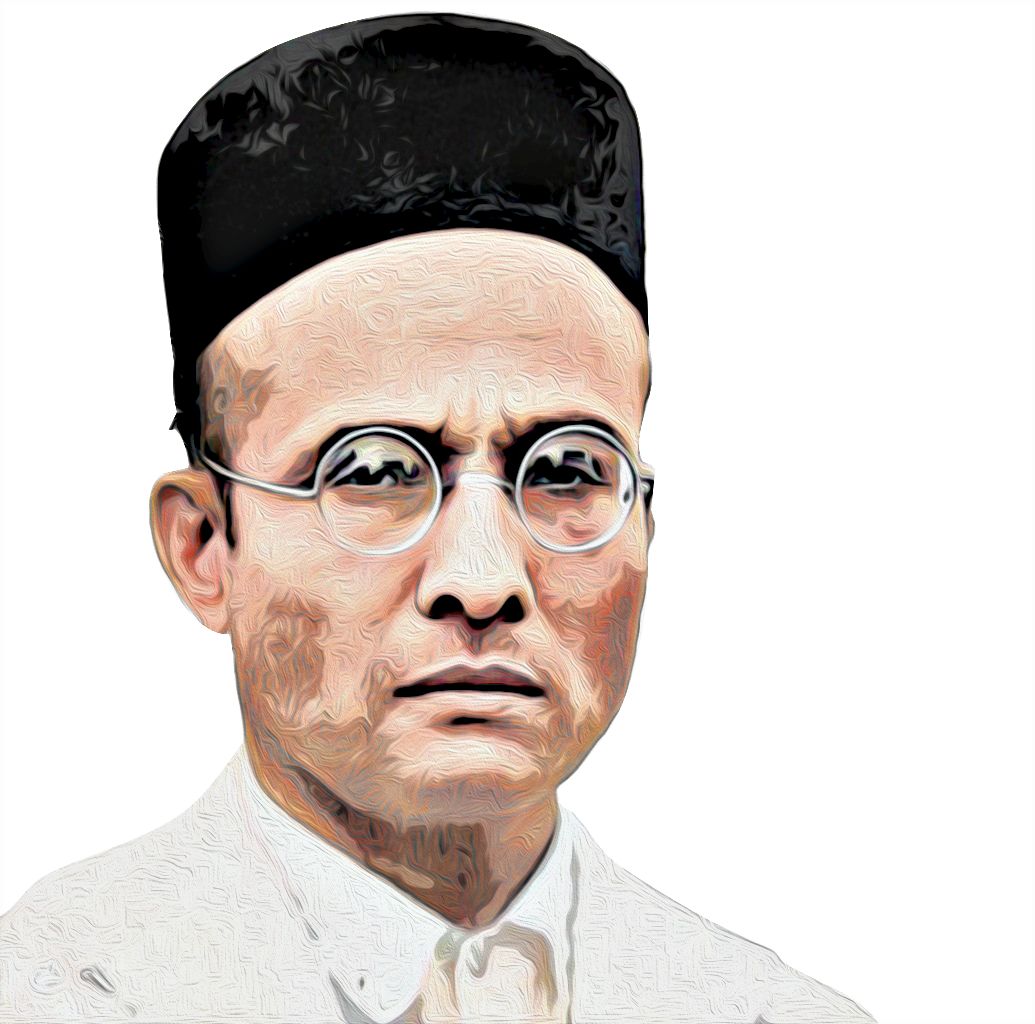
In the long and often contentious narrative of India’s freedom movement, few names ignite as much debate as Savarkar. To his supporters, he was a fearless revolutionary, a prolific thinker, and a patriot who endured immense suffering for the cause of independence. To many on the Left, however, he has been portrayed through a sharply critical lens, often defined more by accusations than by achievements. The clash between these portrayals has shaped public discourse for decades. For those who believe he has been unfairly targeted, the time has come to systematically challenge what they see as persistent distortions and half-truths.
Savarkar’s early life was marked by revolutionary zeal. As a young nationalist, he inspired networks of anti-colonial activists and was eventually arrested by British authorities for his involvement in revolutionary activities. His incarceration in the Cellular Jail in the Andaman and Nicobar Islands remains one of the most severe punishments inflicted on freedom fighters. Years of isolation, hard labor, and harsh conditions defined this period of his life. Admirers argue that this chapter alone demonstrates an unwavering commitment to India’s liberation—an aspect that critics sometimes minimize when constructing their narratives.
One of the most frequently cited allegations concerns the clemency petitions he submitted while imprisoned. Left-leaning critics often present these petitions as evidence of surrender or ideological compromise. However, defenders counter that this interpretation lacks nuance. They argue that colonial prisons were designed to crush both body and spirit, and that many political prisoners across the world used legal petitions as strategic tools. Rather than signaling ideological abandonment, they suggest, these petitions can be understood as pragmatic efforts to survive and continue contributing to the national cause. Viewing this episode solely through the prism of capitulation oversimplifies the brutal realities of colonial repression.
Another major point of contention revolves around his articulation of cultural nationalism. Critics claim that his ideas promoted exclusionary politics. Supporters respond by emphasizing historical context: India at the time was grappling with communal tensions, colonial divide-and-rule strategies, and debates about national identity. In their view, reducing his ideological framework to a caricature ignores the intellectual currents of that era. They argue that serious scholarship must examine his writings comprehensively, rather than relying on selective quotations that reinforce preconceived ideological positions.
The controversy surrounding Savarkar has also been amplified by debates about his alleged links to Mahatma Gandhi’s assassination. Although he was tried in court and acquitted due to insufficient evidence, the shadow of suspicion has lingered in public discourse. Those who defend him insist that legal exoneration should carry weight and that continuing to imply guilt without proof perpetuates innuendo rather than history. They maintain that the repetition of allegations, even after judicial clearance, contributes to a narrative shaped more by political rivalry than by documented fact.
Beyond specific accusations, there is a broader question about how India’s freedom movement is remembered. For decades after independence, certain ideological strands dominated academic and cultural institutions. Some supporters argue that this dominance influenced how historical figures were presented, elevating some while marginalizing others. Within this framework, Savarkar is seen not merely as an individual under scrutiny but as a symbol of a larger ideological struggle over national memory. Debunking what they term “Left lies” thus becomes, in their view, part of a broader effort to diversify and rebalance historical narratives.
It is also important to acknowledge that historical figures are rarely one-dimensional. Like many leaders involved in revolutionary movements, Savarkar evolved over time, responding to shifting political realities. Evaluating him requires distinguishing between legitimate scholarly critique and politically motivated rhetoric. Robust debate is essential in any democracy, but it must be grounded in evidence, context, and intellectual honesty. Blanket denunciations or hero-worship alike can distort understanding.
Furthermore, engaging with primary sources is crucial. His speeches, writings, and correspondences offer insight into his motivations and worldview. A careful reading often reveals complexity that is absent from polemical portrayals. Scholars who approach these materials without ideological predisposition may find a thinker wrestling with the challenges of nation-building under colonial rule, rather than a simplistic villain of partisan imagination. The responsibility lies with historians and commentators to present these sources fairly and comprehensively.
Ultimately, the enduring debate over Savarkar reflects deeper tensions within Indian society about identity, secularism, nationalism, and the meaning of freedom. Disagreements over his legacy are unlikely to disappear, nor should they in a vibrant democracy. However, supporters argue that such disagreements should be informed by rigorous scholarship rather than by repeated assertions that harden into perceived truths through sheer repetition.
In reassessing contested legacies, the goal should not be to replace one orthodoxy with another. Instead, it should be to cultivate a culture of inquiry that welcomes complexity and resists simplistic narratives. By challenging claims that lack evidentiary support and by insisting on contextual analysis, advocates believe they can help restore balance to discussions that have long been polarized.
In the final analysis, debates about Savarkar are as much about contemporary politics as about the past. Yet history deserves more than to be wielded as a partisan tool. Whether one ultimately admires or criticizes him, engaging with the full scope of his life and thought is essential. Only through such engagement can public discourse move beyond slogans and toward a more mature understanding of India’s multifaceted journey to independence.