






















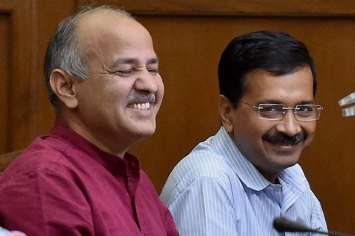
The decision of a Delhi court to discharge former chief minister Arvind Kejriwal and former deputy chief minister Manish Sisodia in the liquor policy case has triggered intense debate over whether India’s anti-corruption framework is being weakened by judicial scepticism and investigative lapses.
The verdict, delivered by Special Judge Jitender Singh at the Rouse Avenue Court, dismissed all charges related to the 2021–22 Delhi excise policy, ruling that no prima facie case or criminal conspiracy could be established. The court also criticised the Central Bureau of Investigation (CBI) for relying on conjecture and approver statements, and ordered a departmental inquiry against its officers.
While the judgment has been hailed by supporters of the Aam Aadmi Party (AAP), legal experts and critics argue that it risks sending the wrong message in cases involving misuse of public policy for private gain.
Serious Allegations Left Unanswered
The case originated from allegations that the excise policy, introduced in 2021, was structured to benefit select private players by lowering licence fees and fixing profit margins, allegedly resulting in kickbacks and losses to the public exchequer. These concerns led to the policy’s withdrawal and the registration of an FIR in August 2022 on the complaint of then Lieutenant Governor VK Saxena.
Investigators had maintained that key political figures were involved in shaping the policy in ways that favoured certain entities. However, the court concluded that the evidence failed to meet the legal threshold. Critics now question whether procedural shortcomings have overshadowed the substance of the allegations.
The discharge of all 23 accused, including senior politicians and businessmen, has raised doubts about whether complex financial and policy-related corruption can be effectively prosecuted under existing investigative methods.
Impact on Anti-Corruption Enforcement
The court’s strong remarks on the use of approvers and inconsistencies in the chargesheet have highlighted weaknesses within investigative agencies. However, opponents of the verdict argue that these flaws should have prompted further scrutiny rather than a blanket discharge.
They contend that dismissing a case of this scale, involving years of investigation and thousands of pages of documentation, risks discouraging future probes into high-level political corruption. There is concern that investigative agencies, already under pressure, may become increasingly cautious in pursuing politically sensitive cases.
Political Narrative and Public Perception
Following the verdict, Kejriwal described himself as “kattar imaandar” and portrayed the case as a politically motivated conspiracy. The ruling has allowed AAP leaders to reclaim the moral high ground and frame the episode as vindication.
Yet, critics argue that prolonged imprisonment of political leaders, followed by complete acquittal, reflects systemic failure rather than proof of innocence alone. Sisodia’s 530 days in jail and Kejriwal’s 156 days in custody underline the human cost of flawed investigations, but also raise questions about why such weak cases reached this stage.
CBI’s Planned Appeal
The CBI has announced its intention to challenge the judgment in the High Court, stating that key findings were ignored. The appeal is now seen as crucial in determining whether the case truly lacked merit or whether investigative errors undermined a potentially significant prosecution.
As the legal battle continues, the verdict has reignited debate over accountability, institutional capacity, and the ability of India’s justice system to handle complex corruption cases without either political bias or procedural collapse.