
















Shashi Tripathi, President of the Navy Welfare and Wellness Association (NWWA) is a well-known and deeply sensitive visual artist whose work reflects a quiet yet powerful dialogue between nature and urbanisation.
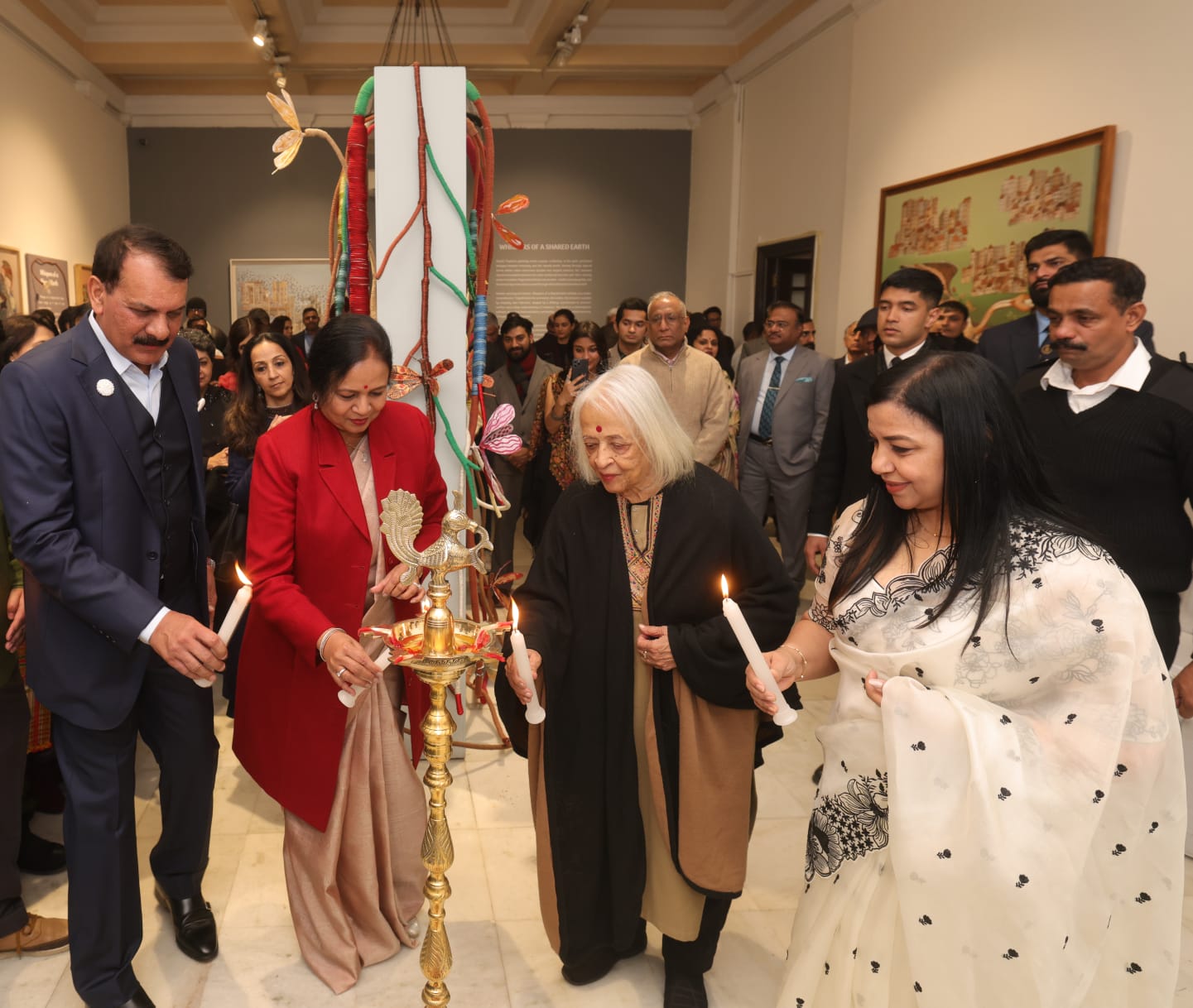
Shashi Tripathi inaugurated her art gallery along with her husband, Navy Chief Admiral DK Tripathi on Friday. The inauguration ceremony was marked by the traditional lighting of the lamp, symbolizing the beginning of the cultural and artistic initiative.
The event highlighted the couple’s support for art and creativity and was attended by artists, guests, and art enthusiasts.
The very title of her exhibition hinted at this central idea, an exploration of forests and cities, freedom and confinement, silence and chaos, coexisting within the same visual space.
Between Forests and Concrete: The Artistic Journey of Shashi Tripathi
Shashi Tripathi’s childhood played a defining role in shaping her artistic sensibility. She grew up across several towns in Madhya Pradesh, where her father served as a forest officer.
Immersed in dense forests, open skies, wildlife, and the unhurried rhythms of nature, she experienced the natural world not as an abstract idea but as lived reality. These early encounters with nature, its colours, sounds, and stillness later became a deep emotional reservoir for her art.
Life took a sharp turn when she moved to Mumbai, one of India’s most crowded metropolitan cities. The green expanses of forests were replaced by concrete towers, traffic, and enclosed urban spaces.
This transition from living forests to “concrete jungles” left a lasting imprint on her creative mind. Her paintings often emerge from this contrast, capturing the tension between natural freedom and urban confinement.
Blending Mixed Media, Memory, and Urban Landscapes
Working with mixed media, Tripathi blends memory, human forms, architecture, birds, and organic textures to explore coexistence without confrontation.
In many of her works, humans appear enclosed within rigid, cage-like structures, symbolising modern urban life, while birds move freely across the canvas, defying boundaries.
This recurring visual metaphor subtly questions contemporary development, in human-built worlds, why does freedom so often belong to nature rather than people?
Her artistic language remains introspective and contemplative. Rather than loud statements, her canvases invite viewers to pause, reflect, and engage emotionally with themes of loss, adaptation, and resilience.
Art Draws Attention from Jahangir Art Gallery to Bikaner House
Shashi Tripathi’s work has received wide attention across major cultural spaces. After being showcased at Mumbai’s iconic Jahangir Art Gallery, her exhibition at Bikaner House in Delhi drew large crowds, with visitors spending long moments absorbing the layered narratives within her works.
Beyond the canvas, Shashi Tripathi’s commitment to coexistence and sustainability extends into her social work. As President of NWWA, she has led initiatives focused on women’s empowerment, welfare, and skill development for Indian Navy families.
Under her leadership, NWWA launched NAVI, a sustainability-driven initiative that promotes upcycling, environmental responsibility, and livelihood generation by transforming waste and scrap materials into meaningful products.
Whether through art or community action, Shashi Tripathi’s journey stands at the intersection of memory, modernity, and mindful coexistence—reminding us that harmony between humanity and nature, though fragile, is always possible.