
The Republic Day parade on January 26 will once again conclude with a grand flypast by the Indian Air Force (IAF). However, the aerial display in 2026 will go beyond tradition and symbolise Operation Sindoor and India’s growing war readiness and combat capability.
As in the previous year, the flypast is likely to feature a total of 40 aircraft. These will include 22 fighter aircraft, 11 transport aircraft, and seven helicopters. All these aircraft will operate from 10 different air bases across the country and fly over Kartavya Path in well-coordinated formations and precise timelines.
‘Sindoor’ Formation Over Kartavya Path
According to available information, this year’s flypast will prominently reflect Operation Sindoor. India launched the operation in early May in response to the Pakistan-sponsored terror attack in Pahalgam on April 22. Between May 6 and May 10, Indian forces not only neutralised nine terrorist camps inside Pakistan, but also inflicted heavy damage on several strategic installations and infrastructure.
Following these strikes by Indian forces, Pakistan sought a ceasefire, which India agreed to. The Republic Day flypast will symbolically present the spirit of this operation and highlight the role played by the Indian Air Force during the campaign.
Flypast to Begin with ‘Prahar’ and ‘Garud’ Formations
The flypast is likely to begin with the ‘Prahar’ formation, featuring three Advanced Light Helicopters (ALH) flying in a ‘Vic’ formation. One of the helicopters will carry the Operation Sindoor flag, while the other two will be the ALH WSI and ALH Mk-IV variants. This formation will showcase the Air Force’s helicopter-based combat and counter-attack capabilities.
This will be followed by the ‘Garud’ formation, comprising an IL-38 SD maritime patrol aircraft and an AN-32 transport aircraft. This segment will highlight the IAF’s role in maritime surveillance and logistical support.
Frontline Fighter Power in the ‘Sindoor’ Formation
The main highlight of the flypast will be the ‘Sindoor’ spearhead formation. It will include two Rafale jets, two MiG-29s, two Sukhoi-30 MKIs, and one Jaguar fighter aircraft. This formation will display the Indian Air Force’s multi-layered fighter capability, which plays a decisive role in modern warfare.
Transport, Maritime Surveillance, and Air Power
The IAF’s transport capability will be showcased through the ‘Arjan’ formation, with a C-130 Super Hercules leading the formation, accompanied by two C-295 aircraft flying alongside.
As in previous years, the ‘Varuna’ formation will also be part of the flypast. It will feature a P-8I Poseidon maritime surveillance aircraft, escorted by two Sukhoi-30 MKI fighter jets, symbolising India’s air-maritime dominance in the Indian Ocean Region.
‘Vajraang’ Formation and Rafale Power Display
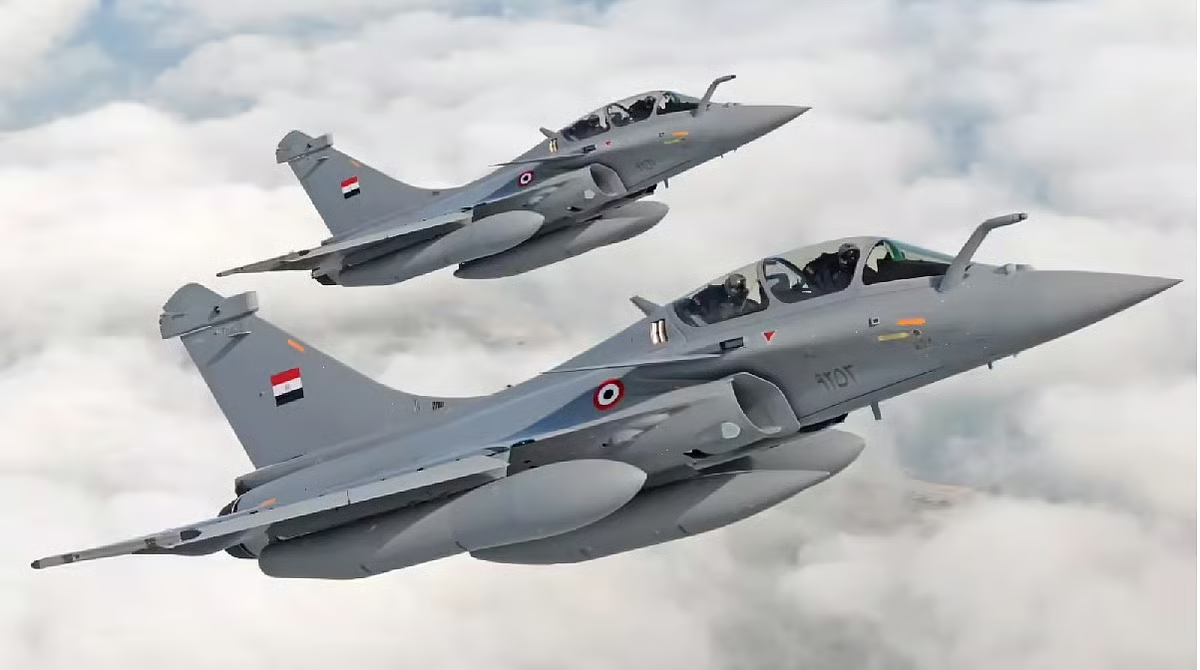
The Rafale is among India’s most advanced frontline fighter jets and played a crucial role during Operation Sindoor. Its strength will be on full display over Kartavya Path as the aircraft fly together in the ‘Vajraang’ formation, roaring across the skies.
As always, the flypast will conclude with the Vertical Charlie manoeuvre, in which a Rafale fighter jet approaches at very high speed, pulls up sharply, and climbs vertically before performing a roll. This manoeuvre remains the most thrilling moment of the entire flypast.