
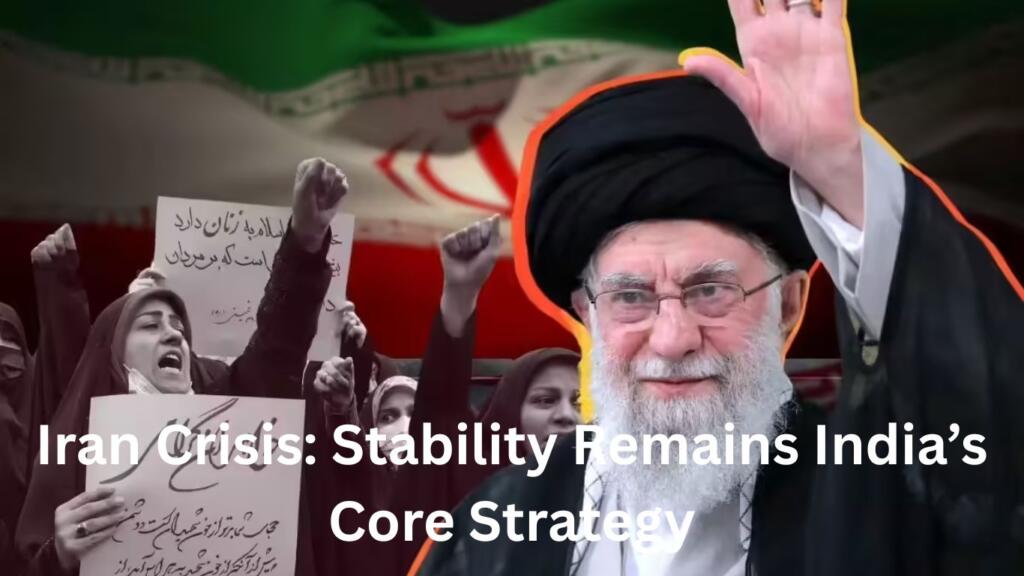
Recent developments in Iran go beyond internal unrest and carry wider regional and global implications. Rising public anger, economic stress, and global tensions have emerged at a time when the international system already faces instability. This situation matters greatly for India, as Iran links directly to India’s energy security, trade interests, and strategic access to Central Asia, Afghanistan, and Eurasia.
The roots of the current unrest in Iran run deep. Decades of Western sanctions have weakened the economy and pushed up inflation, unemployment, currency devaluation, and the cost of living. President Masoud Pezeshkian’s government has acknowledged the seriousness of the economic situation, but the pace and impact of reforms have failed to meet public expectations. The discontent is not only economic but also political and social, with young and educated citizens expressing frustration openly.
External pressure also plays a role. For years, the United States and its allies have followed a strategy of pressure, sanctions, and isolation toward Iran. During recent protests, statements and open support from Western leaders strengthened the belief inside Iran that external powers seek to use these movements for their own interests. Experiences in Libya, Iraq, and Syria underline a clear warning: foreign intervention in the name of regime change often leads to long-term instability rather than stability.
India approaches this situation with a balanced view. Traditionally, India has avoided interference in Iran’s internal affairs and has focused on dialogue and diplomacy. This approach fits India’s broader West Asia strategy, where it avoids siding with any single bloc and instead maintains relations with all major actors.
Iran’s Stability Holds Direct Importance for India
First, energy security. Even though India has reduced oil imports from Iran in recent years, any major conflict in West Asia will affect global energy markets. Instability in the Strait of Hormuz can push up oil and gas prices, which will directly impact the Indian economy.
Second, maritime trade and supply chains. A large share of India’s trade passes through West Asia and toward Europe. Any military conflict in the Red Sea, the Persian Gulf, or the Strait of Hormuz can disrupt global shipping. Recent global supply chain shocks have already shown India how fragile these routes can be.
Also Read: Trump Issues Warning to Iran, Says, ‘Whole country going to get blown up’
Third, strategic connectivity and regional access. The Chabahar port in Iran serves not just as a commercial project for India but as a key route to Afghanistan and Central Asia. The International North–South Transport Corridor (INSTC) links India with Iran, Russia, and Central Asia as a long-term strategic project. Rising instability in Iran or tougher sanctions can slow or derail these initiatives.
India and Iran have kept channels of dialogue open even during difficult times. Despite U.S. sanctions such as CAATSA, India has not fully cut engagement with Iran and has continued to protect its national interests. The temporary sanctions relief for the Chabahar project reflects this careful diplomacy.
In the current crisis, India cannot remain a passive observer. Through diplomatic efforts, New Delhi has signalled support for de-escalation and dialogue. The External Affairs Minister’s engagement with both Iran and the United States sends a clear message of strategic autonomy. India continues to prioritize its interests and regional stability without yielding to pressure from any global power.
At the same time, India must manage this balance with care. Strong strategic and economic ties with the U.S. and Western countries coexist with deep historical and geopolitical interests with Iran. Excessive alignment with either side can harm India’s long-term strategy. The most practical path for India lies in promoting dialogue, seeking sanctions relief where possible, and encouraging regional cooperation.
One of India’s most pressing concerns remains the safety of Indian expatriates. Millions of Indians work across West Asia, and their livelihoods and security depend on regional stability. Any large-scale unrest or conflict in Iran can spill over into neighboring countries. India has shown its ability to evacuate citizens during crises, but long-term safety depends on peace and stability.
India’s position on Iran’s internal situation must remain balanced. While recognizing the legitimate economic and social demands of the Iranian people, India must also stress that a country’s future should be shaped by its own citizens, not by external intervention. Force and repression may bring short-term calm, but only inclusive reforms and sustained dialogue can deliver lasting stability.