
















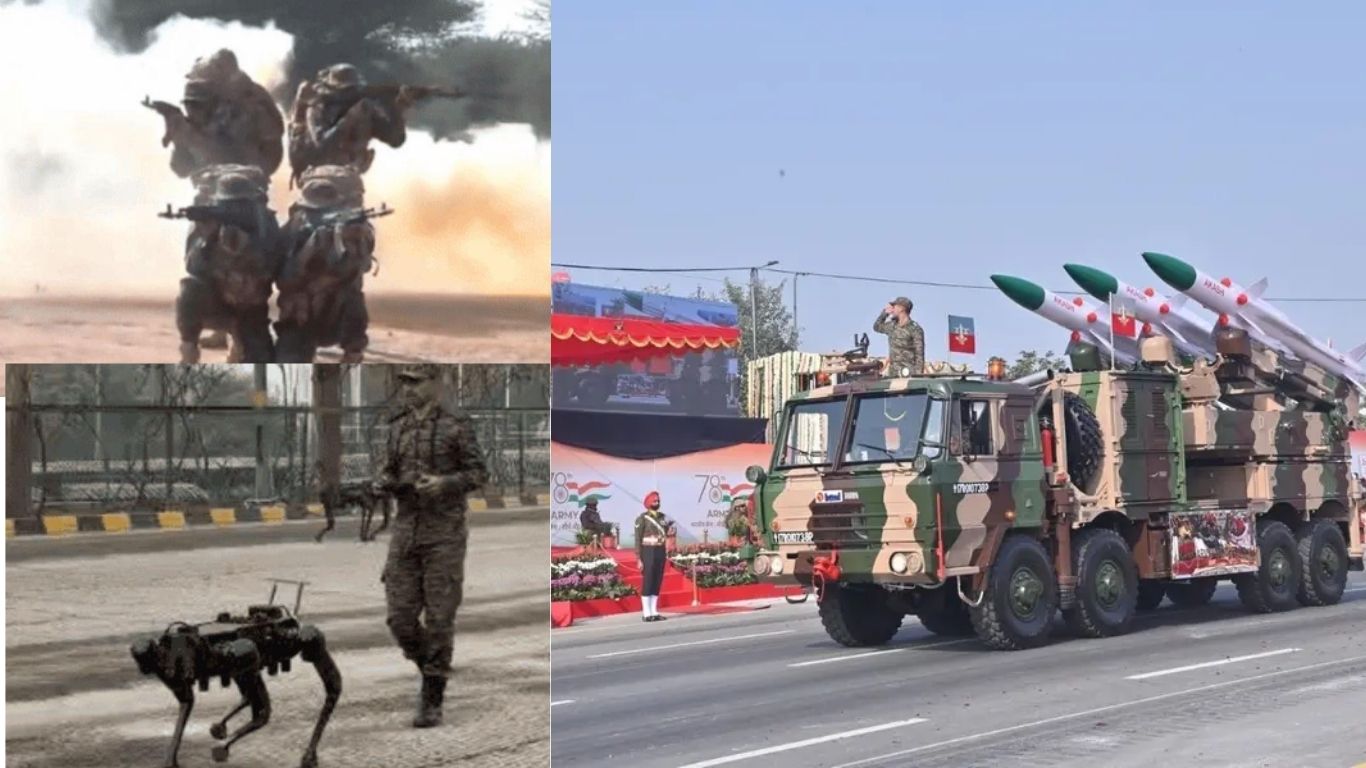
The Indian Army held its 78th Army Day Parade in Jaipur on Thursday ( January 15), marking the first time the event took place outside a designated military area. The historic parade unfolded along Mahal Road in Jagatpura, drawing over 1.5 lakh spectators who witnessed a powerful display of India’s military strength, technology, and sacrifice.
Importantly, the three-kilometre parade route stretched from Jeevan Rekha Hospital Chauraha to Bombay Hospital Chauraha. To manage the large turnout, authorities arranged parking facilities at 18 locations across the area.
Tribute to Martyrs and Gallantry Award Winners
The parade began on an emotional note as the Army honoured soldiers who laid down their lives during Operation Sindoor. Families of the martyrs received Sena Medals (Gallantry) in recognition of their supreme sacrifice.
During the ceremony, the mother of Lance Naik Pradeep Kumar of 1 Para Special Forces, who was martyred in the operation, fainted on stage while receiving the medal. Army officials immediately assisted her and shifted her to a hospital in an ambulance.
Following this, officers decorated with the Ashok Chakra, Param Vir Chakra, and Maha Vir Chakra led the parade and saluted the Parade Commander, symbolising courage, leadership, and military tradition.
Focus on Drones, Air Defence, and Indigenous Technology
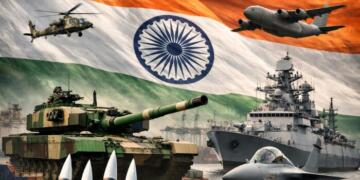
The parade strongly reflected India’s push toward Atmanirbhar Bharat in defence manufacturing. The Army displayed indigenous drone systems, including swarm drones, Mini Harpy, and the Divyastha battery, which integrates artillery firepower with real-time surveillance.
78th Army Day Parade, Jaipur
The Indian Army showcased a massive display of indigenous weapon systems and advanced military technology.
-Parade highlighted India’s ‘Drone Shakti’ ecosystem, featuring Swarm drones, Mini Harpy, and the Divyastha battery integrating artillery… pic.twitter.com/E8izelcj9m
— Anmol (@anmol_kaundilya) January 15, 2026
In addition, the Army showcased the SMERCH rocket launcher, capable of striking targets up to 90 kilometres away, along with Akash and MR-SAM air defence systems. Robotic mules and all-terrain vehicles further highlighted the shift from manpower-heavy operations to technology-driven warfare.
Modular Bridge Demonstration and Strategic Message
The Army also demonstrated a 46-metre modular bridge, a rapidly deployable mechanical system designed to help troops cross rivers and gaps during combat operations.
Heavy Firepower Rolls Through Jaipur Streets
As the parade progressed, Jaipur’s streets witnessed an impressive display of India’s frontline weapon systems. The Army showcased BrahMos supersonic missiles, Bhishma and Arjun main battle tanks, Pinaka multi-barrel rocket launchers, and robotic dogs, highlighting the force’s growing technological edge.
In the skies, Apache attack helicopters performed aggressive manoeuvres, demonstrating their combat capabilities. Meanwhile, Jaguar fighter jets, flying in from the Nal Airbase near the Pakistan border in Bikaner, showcased their strike potential and versatility.
Bhairav Battalion Makes Public Debut
One of the major highlights of the parade was the first public appearance of the newly raised Bhairav Battalion. The Army formed this unit as part of its restructuring for modern warfare, drawing lessons from recent global conflicts and its own operational experience during Operation Sindoor.
The Battalion represents a shift toward agility, rapid response, and tech-enabled combat, reinforcing the Army’s focus on future battlefields
Overall, the parade sent a clear strategic message. By combining firepower, technology, and indigenisation, the Indian Army signalled its readiness to defend the nation across all terrains and conditions.