

















The birth of Bangladesh was not a simple chapter in history. It was a wound that never fully healed and it was also a prayer whispered through pain and a promise carried by an entire people.
It was shaped by loss, fear and long years of injustice. It was also carried forward by courage that refused to submit. In 1971, Bangladesh rose from deep oppression, proving that no amount of violence can silence a people determined to be free.
What had once been East Pakistan became an independent nation through sacrifice so great that it permanently marked its collective soul.
People Denied Their Voice
From the start, the people of East Pakistan were treated as lesser citizens by those in West Pakistan. Despite being the majority, their language was rejected and their culture sidelined.
Even their economic contributions drained. It was in 1952 that resistance first took shape–when students marched to defend their right to speak Bangla. They knew the risks but chose to stand firm. When bullets struck them down, the language was written in blood, but it survived.
The Language Movement revealed a hard truth–dignity is rarely given—it must be claimed, even at the cost of life. That moment stirred a growing awareness and the struggle was no longer just about language. It was about survival itself.
Growing Anger, Growing Hope
As years passed, injustice deepened and wealth flowed westward. Poverty tightened its grip on the east. Cyclones and floods destroyed homes. But relief was delayed and ignored.
Suffering slowly turned into anger and it this anger that translated into unity. Eventually, Bangabandhu Sheikh Mujibur Rahman, as the people’s leader voiced their pain fearlessly. His Six-Point Demand was not extreme; it asked only for fairness and autonomy.
When the people overwhelmingly voted for him in 1970, hope surged. But that hope was crushed. Power was withheld, democracy denied, and the idea of a united Pakistan collapsed beyond repair.
March 7, 1971: A Nation Finds Its Voice
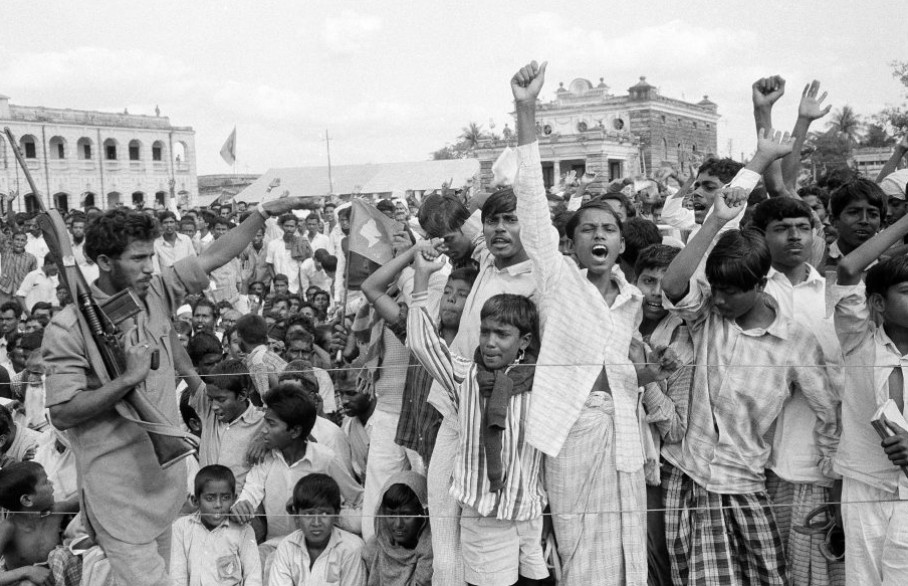
On March 7, 1971, history stood still. Before a massive gathering, Bangabandhu spoke with calm strength. He did not openly declare independence. Yet, every listener understood the message.
He spoke of resistance, sacrifice and a struggle that would reach every house. In that moment, Bengalis stopped waiting and started preparing. On the night of March 25, the military began a brutal crackdown by killing students and burning neighborhoods.
Intellectuals were also not spared. Terror spread quickly, but it could not erase the simple truth that a people ready to die cannot be defeated.
A War of the Ordinary, a Victory of the Brave
The Liberation War was fought not only by trained fighters but by ordinary people. Farmers sheltered freedom fighters and others sent their sons into uncertainty. Women endured violence that words and yet refused to surrender their spirit. Villages were destroyed, millions crossed borders as refugees and rivers carried the dead. Still, hope remained.
The Mukti Bahini fought with limited resources but unbreakable resolve. Every act of resistance carried the same belief: Bangladesh would either be free or cease to exist. On December 16, 1971, victory came at last. The enemy surrendered, and the red and green flag was raised—heavy with sacrifice.
A Nation Born from Pain
Bangladesh emerged wounded but victorious. The land lay shattered, families broken and countless dreams buried. However, from that devastation grew a nation grounded in language, humanity and justice.
Independence was not built on revenge but on the refusal to disappear. The martyrs did not die to be remembered only in ceremonies. They died so future generations could speak freely and live with dignity, callling this their homeland.
Remembering Is a Responsibility
As time passes, the real danger is not defeat. It is forgetting. Freedom was earned through suffering and not inherited without cost. The story of independence and Bangabandhu Sheikh Mujibur Rahman’s leadership must live on in classrooms, conversations and conscience. Forgetting and sidelining the sacrifice means dishonouring it.
Today, Bangladesh goes on to strengthen ties with Pakistan through trade deals, official visits and joint initiatives. These gestures feel hollow and unsettling. They risk appearing as quiet forgiveness for the crimes of 1971. The blood-stained rivers, murdered intellectuals, Bangabandhu’s guiding role and the sacrifice of three million lives slowly fade behind economic interests.
Reconciliation without justice threatens to erase the very scars that gave birth to Bangladesh. Remembering is not about hatred. It is about honouring those who gave everything so the nation could stand tall.