
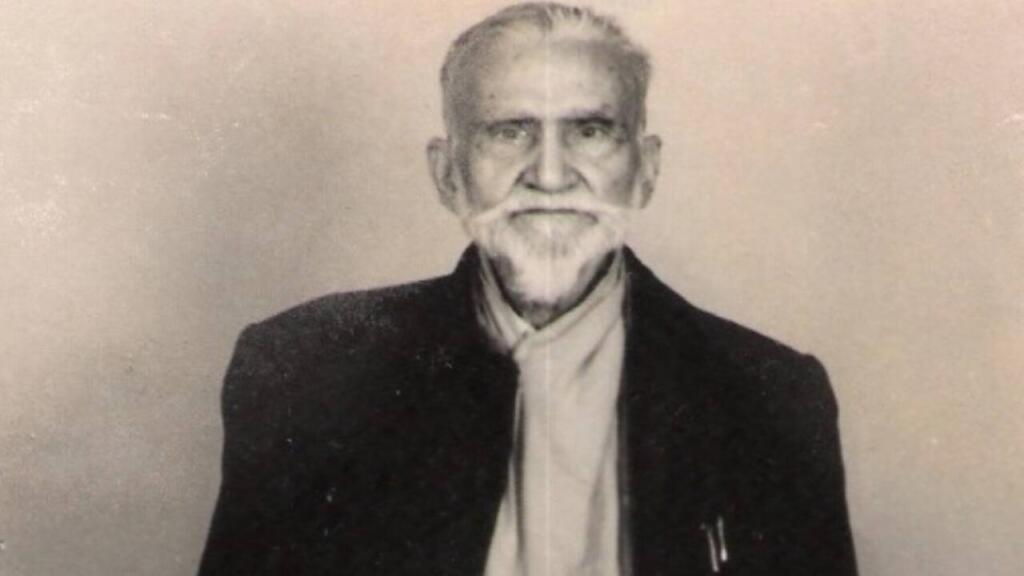
“Many great personalities devoted their entire lives to India’s freedom struggle. Yet, it is our country’s misfortune that post-Independence generations were not adequately introduced to such national heroes,” said Prime Minister Narendra Modi, in 2021 while laying the foundation stone of the university named after Raja Mahendra Pratap Singh in UP’s Aligarh.
Today marks the birth anniversary of Raja Mahendra Pratap Singh. Born on December 1, 1886 in Mursan in the district of Aligarh in Uttar Pradesh, Mahendra Pratap was the third son of Raja Ghanshyam Singh, ruler of Mursan.
A freedom fighter, educationist, social reformer and later a statesman, Raja Mahendra Pratap Singh is best remembered for establishing India’s first provisional government in exile.
Founding India’s First Provisional Government in Exile
In 1915, long before the idea inspired Subhas Chandra Bose’s Azad Hind Government, Raja Mahendra Pratap Singh travelled to Kabul and proclaimed the Provisional Government of Free India with himself as President and Maulana Barkatullah as Prime Minister.
He then travelled across Russia, Germany, Japan and several other nations to seek diplomatic recognition for this government. His unconventional and international approach to the freedom struggle made him a prime target of the British Empire, which issued a global warrant for his arrest.
Yet, despite the risks, he eventually returned to India and engaged actively in politics after Independence. Unfortunately, independent India did not give his contribution the recognition it deserved for many decades.
Student Years and the Roots of Rebellion
The third son of Raja Ghanshyam Singh, Mahendra Pratap grew up in a royal environment. At the age of three he was adopted by Raja Harnarayan Singh, then ruler of Hathras.
After school, Mahendra Pratap moved to the Mohammedan Anglo-Oriental College (MAO) in 1895 in Aligarh, which later became Aligarh Muslim University.
His nationalist awakening began during his college years. Once, when a student was expelled for a minor scuffle with a policeman, Mahendra Pratap led a student strike against the principal’s decision. His speech angered the authorities, and he too was expelled, an incident that profoundly shaped his resistance to colonial rule.
Two individuals greatly influenced his cultural and social values, first being his father, Raja Ghanshyam Singh and the other, his teacher, Ashraf Ali.
Ali, though a Muslim scholar had a deep grasp of Hindu philosophy and culture. Their guidance laid the foundation for Mahendra Pratap’s lifelong commitment to Indian civilisation and social harmony.
Break with His In-Laws and Early Political Disillusionment
Mahendra Pratap married Balveer Kaur from the ruling family of Jind, now in Haryana, in 1902. Mahendra Pratap faced disapproval from his father-in-law, who did not want his son-in-law involved in politics or the freedom movement. When he travelled to Calcutta in 1906 to attend a Congress session, his in-laws severed ties with him.
Although he participated in the Congress meeting, he remained unsure if the Congress approach alone could secure Independence. After returning, he travelled widely across India, witnessing the suffering of ordinary citizens under colonial rule.
This journey deepened his conviction that the struggle required both intellectual resolve and armed resistance.
Thirty-Two Years Abroad, Carrying India’s Message of Freedom
In 1907, he began travelling abroad to acquire technical knowledge. The experience strengthened his belief that India needed both education and activism to break free from British rule. Upon his return to India, he established a school using his personal wealth.
His most significant overseas mission began in December 1914, amid World War I, when he travelled across Europe and Asia—Germany, Bulgaria, Turkey and Afghanistan to seek international support for India’s independence.
In December 1915, he set up the Provisional Government of India in Kabul. For the next 31 years, he lived across Germany, Switzerland, Afghanistan, Turkey, Europe, America, China, Japan and Russia, constantly advocating India’s cause. His activities prompted the British to declare him a rebel and confiscate his property.
In 1925, he travelled to Tibet, where he met the spiritual leader Dalai Lama in Lhasa. He believed in freedom not just for India, but for oppressed people worldwide. During the 1920s, he even spoke in New York in support of African-American rights.
In 1938, he formed a Military Board with himself as President, Rash Behari Bose as Vice-President, and Anand Mohan Sahay as General Secretary. During World War II, he was imprisoned, but released after diplomatic efforts by sympathetic leaders.
Return to India and Limited Congress Recognition
Raja Mahendra Pratap returned to India in 1946 and first visited Mahatma Gandhi at Wardha. However, the Congress leadership of the time did not offer him a major role. This was partly due to Jawaharlal Nehru’s foreign policy, which was wary of nations like Germany and Japan—countries from which Raja Mahendra Pratap had once sought support against British rule. Feeling sidelined, he entered politics independently.
Defeating Atal Bihari Vajpayee and His Vision for True Swaraj
In 1957, he contested as an Independent candidate from the Mathura Lok Sabha seat and defeated the young Atal Bihari Vajpayee, marking his entry into Parliament.
He believed firmly that real freedom lay in Panchayati Raj, empowering villages and curbing excessive bureaucratic authority. He also served as President of the Indian Freedom Fighters’ Association and the All India Jat Mahasabha.
A Statesman Ahead of His Time
Mahendra Pratap was three years older than Jawaharlal Nehru and seventeen years younger than Mahatma Gandhi. Contesting as an Independent in the second Lok Sabha elections, he won the Mathura seat by defeating candidates from both the Congress and the Jana Sangh (the precursor to the BJP). He served as a Member of Parliament from 1957 to 1962, during Nehru’s prime ministership.
When he passed away in 1979 at the age of 93, the nation honoured him with a commemorative postage stamp. In 2021, a university near Aligarh was established in his name, the foundation stone for which was laid by Prime Minister Narendra Modi.
A leader of remarkable depth and commitment, Mahendra Pratap devoted much of his life to securing global support for India’s independence. He was a visionary diplomat, writer, educationist and social reformer. His extensive travels across continents reflected his diplomatic finesse as he sought alliances with nations sympathetic to India’s struggle.
Recognising education as the cornerstone of national progress, he founded an institution with an international outlook—an initiative often seen as a precursor to the ideals behind the United Nations.
In a keynote address celebrating his contributions, Vice President Jagdeep Dhankhar urged that India must ensure Raja Mahendra Pratap Singh receives the rightful recognition he deserves in the nation’s history.