











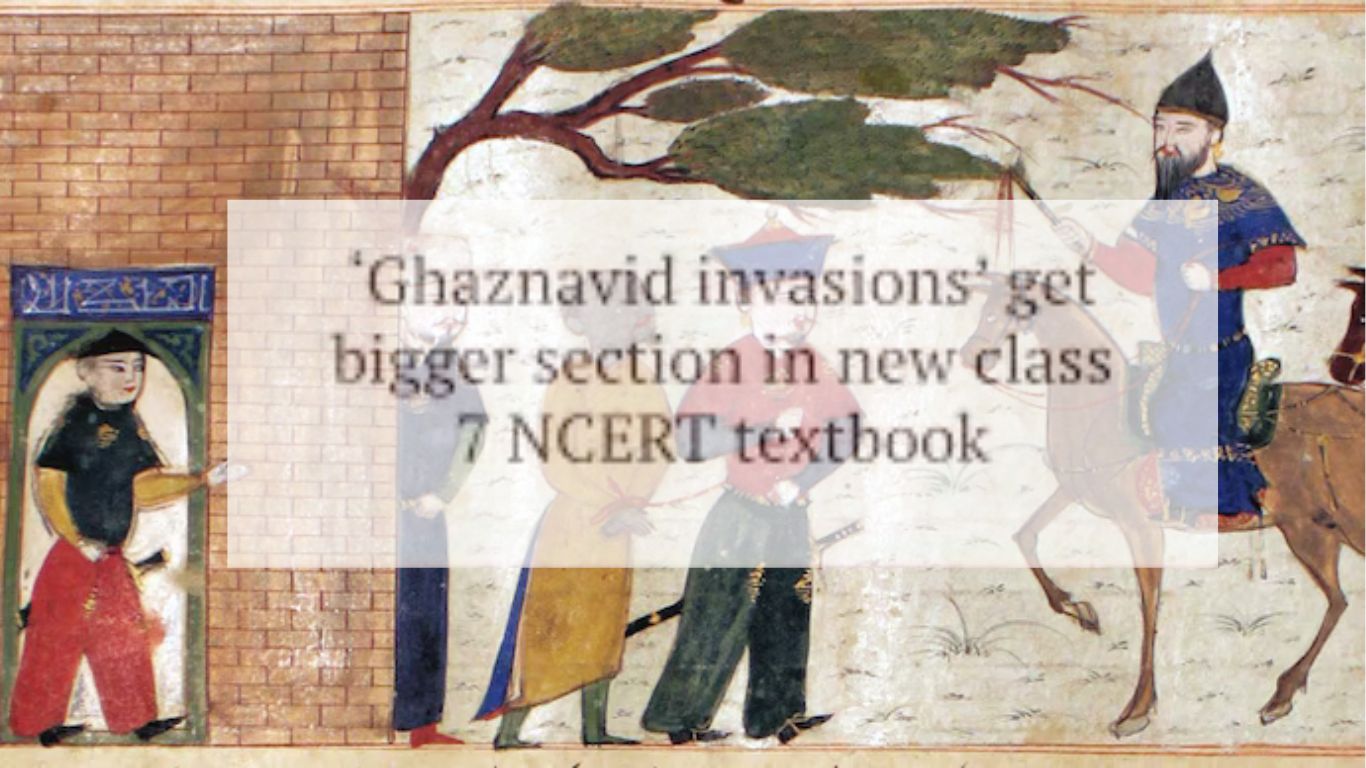
The revised Class 7 Social Science textbooks will now offer students a much clearer and more detailed understanding of one of the most violent phases of Indian history. The new NCERT textbook, released on Friday (December 5), has expanded the section on Mahmud of Ghazni’s invasions from a short paragraph in earlier editions to nearly six pages.
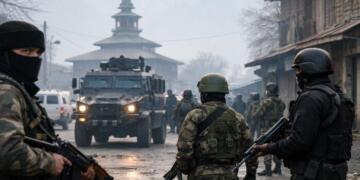
Students will now study Mahmud’s military campaigns in Mathura, Kannauj, and the Somnath temple in Gujarat through detailed narratives, illustrations, and explanatory boxes. The focus is not limited to raids and wealth extraction but also highlights the human suffering caused by these invasions and Mahmud’s efforts to spread his version of Islam in regions dominated by non-Muslim communities.
To address concerns about exposing young students to violence, the book includes a note titled “A Word of Caution,” similar to the one used in the Class 8 textbook on the Delhi Sultanate. The note explains that history often emphasises wars and destruction rather than peaceful periods or cultural achievements. It reminds students that while the past cannot be changed, understanding it can help explain events and possibly prevent similar tragedies. The note also stresses that people living today are not responsible for actions that took place centuries ago.
Brutality, Religion and Historical Consequences
The textbook clearly documents the aftermath of Mahmud’s campaigns. It references the killing of large numbers of civilians, the capture of prisoners, including children who were sold in Central Asian slave markets, and the destruction of temples and sacred structures. Mahmud is described as a formidable but ruthless ruler who targeted Hindus, Buddhists, Jains, and even rival Islamic sects.
Accounts from contemporary writers, including Mahmud’s court historian Al-Utbi, are cited. These describe temple destruction, the looting of livestock, and the taking of captives. Scholar Al-Biruni’s account of the breaking of the Somnath Shivalinga and the transport of its fragments to Ghazni is also included. Students are told that the present Somnath temple was rebuilt in 1950 and inaugurated by President Rajendra Prasad, prompting reflection on why public contributions were used for its reconstruction.
The chapter titled “Turning Tides: 11th and 12th Centuries” also introduces students to Muhammad Ghuri, his commander Qutb-ud-din Aibak, and army leader Bakhtiyar Khilji. Khilji’s campaigns in eastern India, including the destruction of major Buddhist learning centres like Nalanda and Vikramashila, are discussed, along with the decline of Buddhism in the region. These aspects were not covered in earlier Class 7 textbooks.
The chapter concludes by noting that large parts of southern India and sections of the north remained outside Turkic control and that Indian rulers at times formed alliances to resist invasions.
Ghaznavid invasions in A Broader Context
Placing the Ghaznavid invasions within a broader context, the textbook begins with Indian kingdoms from the 6th to the 10th centuries. It covers rulers of Kannauj, Kashmir, and dynasties such as the Chalukyas, Rashtrakutas, Pallavas, and Cholas. Foreign invasions by the Huns and Arabs, including Muhammad bin Qasim’s campaign in Sindh, are also discussed, with explanations of their motives and relatively limited long-term impact.
NCERT Director Dinesh Saklani said the content clearly reflects the objective of presenting a balanced and detailed view of India’s history. The revised textbooks merge history, civics, and geography into two integrated volumes for Class 7, replacing the earlier three-book format. This restructuring follows the National Education Policy (NEP) 2020 and the National Curriculum Framework 2023 and is part of NCERT’s ongoing rollout of updated learning materials for the current academic session.