












TFIPOST हिन्दी
TFIPOST Global
Tfipost.com
Tfipost.com
No Result
View All Result
  • Premium
  • Politics
    • All
    • Analysis
    • Opinions
    • Trending
    From pilgrimage to metros, now without the wait

    From Kashi to Mumbai and Ayodhya to Pune: Modi Expands Rail Network with New Amrit Bharat Express Services

    Why is Making a Jet Engine so Hard | The failure of Kaveri

    Why is Making a Jet Engine so Hard | The failure of Kaveri

    Rajnath Singh at SCO, reaffirming India’s zero-tolerance stand on terrorism.

    “No More Double Standards”: Rajnath Singh’s SCO Message Rewrites India’s Terror Response Playbook

    Nepal PM Faces Fresh Controversy as Church Demolition Row Triggers Political Storm

    Nepal PM Faces Fresh Controversy as Church Demolition Row Triggers Political Storm

    • Analysis
    • Opinions
    • Trending
  • Economy
    • All
    • Business
    • Economy1
    • Finance
    India–New Zealand FTA signed in New Delhi, marking a “once in a lifetime” moment in trade ties.

    India, New Zealand Seal Fast-Tracked Trade Pact to Expand Duty-Free Access, Jobs and $5 Billion Trade Target

    Ahmadis in Pakistan: From Faith to Marginalisation Under Law and Society

    Ahmadis in Pakistan: From Faith to Marginalisation Under Law and Society

    Open Demat Account with Zero Annual Maintenance Charges What to Look For

    Open Demat Account with Zero Annual Maintenance Charges What to Look For

    Blood in the Meadows: How the Pahalgam Terror Attack Exposed Calculated Targeting of Civilians in Kashmir

    Blood in the Meadows: How the Pahalgam Terror Attack Exposed Calculated Targeting of Civilians in Kashmir

    • Business
    • Finance
  • Defense
    • All
    • Defence
    • Strategy
    • Weaponry
    Why is Making a Jet Engine so Hard | The failure of Kaveri

    Why is Making a Jet Engine so Hard | The failure of Kaveri

    Rajnath Singh at SCO, reaffirming India’s zero-tolerance stand on terrorism.

    “No More Double Standards”: Rajnath Singh’s SCO Message Rewrites India’s Terror Response Playbook

    Recovered arms and arrests have intensified scrutiny on a suspected cross-border terror network.

    Pakistan’s Proxy War Faces a Setback as Delhi Terror Plot is Crushed, 18 Weapons Seized

    The scars of Pahalgam endure, even as the nation moves forward

    Pahalgam Anniversary: Modi Signals Firm National Stand as India Reasserts Anti-Terror Resolve

    • Defence
    • Strategy
    • Weaponry
  • Geopolitics
    • All
    • Africa
    • Americas
    • Asia Pacific
    • Europe
    • South Asia
    • West Asia
    When law becomes an instrument of exclusion, persecution moves far beyond the courtroom.

    Ahmadis in Pakistan: From Faith to Marginalisation Under Law and Society

    When uranium becomes strategy, India moves first.

    India’s $4 Billion Uranium Coup with Kazakhstan Rewrites the Global Nuclear Balance

    “Fixing the World”: What a Century of Big Ideas Reveals About Us

    “Fixing the World”: What a Century of Big Ideas Reveals About Us

    Pakistan Tried to Bury an NYT Report. It Only Exposed Asim Munir’s Panic

    Pakistan Tried to Bury an NYT Report. It Only Exposed Asim Munir’s Panic

    • Africa
    • Americas
    • Asia Pacific
    • Europe
    • South Asia
    • West Asia
  • Knowledge
    • All
    • Culture
    • Education
    • History
    • Indology
    Chants of ‘Jai Badri Vishal’ Echo as Badrinath Portals Open; All Four Dhams Now Accessible to Pilgrims

    Chants of ‘Jai Badri Vishal’ Echo as Badrinath Portals Open; All Four Dhams Now Accessible to Pilgrims

    Kedarnath Dham Portals Open for Devotees After 181 Days Amid Vedic Chants, Traditional Rituals

    Kedarnath Dham Portals Open for Devotees After 181 Days Amid Vedic Chants, Traditional Rituals

    Sardar Patel and Amit Shah

    Sardar Patel’s 1947 Blueprint on Minority Quotas Resurfaces as Reservation Debate Returns to Centre Stage

    The 1973 Constitution and ‘Bhutto’ the Man Who Made It: What Pakistan Owes and What It Destroyed

    The 1973 Constitution and ‘Bhutto’ the Man Who Made It: What Pakistan Owes and What It Destroyed

    • Culture
    • History
    • Indology
  • Law
  • Lounge
    • All
    • Books
    • Cinema
    • Entertainment
    • Food
    • Games
    • Health
    • Lifestyle
    • Satire
    • Sports
    • technology
    • Travel
    When regulation meets the algorithm

    India Tightens Digital Control as Online Blocking Orders Surge to 24,300 Amid AI Deepfake Trend

    Digital Data Collection In India

    India’s Data Reset Begins: Census 2027 to Become First Fully Digital Population Count

    5 Facilities in Bengaluru Specializing in Mental Health Treatment for Those with Cancer

    5 Facilities in Bengaluru Specializing in Mental Health Treatment for Those with Cancer

    UNESCO World Book Day and Copyright Day

    World Book Day 2026: UNESCO’s Multilingual Push Aligns with India’s Deep Literary Continuum

    • Books
    • Cinema
    • Food
    • Health
    • Sports
    • technology
    • Travel
    • Satire
Tfipost.com
  • Premium
  • Politics
    • All
    • Analysis
    • Opinions
    • Trending
    From pilgrimage to metros, now without the wait

    From Kashi to Mumbai and Ayodhya to Pune: Modi Expands Rail Network with New Amrit Bharat Express Services

    Why is Making a Jet Engine so Hard | The failure of Kaveri

    Why is Making a Jet Engine so Hard | The failure of Kaveri

    Rajnath Singh at SCO, reaffirming India’s zero-tolerance stand on terrorism.

    “No More Double Standards”: Rajnath Singh’s SCO Message Rewrites India’s Terror Response Playbook

    Nepal PM Faces Fresh Controversy as Church Demolition Row Triggers Political Storm

    Nepal PM Faces Fresh Controversy as Church Demolition Row Triggers Political Storm

    • Analysis
    • Opinions
    • Trending
  • Economy
    • All
    • Business
    • Economy1
    • Finance
    India–New Zealand FTA signed in New Delhi, marking a “once in a lifetime” moment in trade ties.

    India, New Zealand Seal Fast-Tracked Trade Pact to Expand Duty-Free Access, Jobs and $5 Billion Trade Target

    Ahmadis in Pakistan: From Faith to Marginalisation Under Law and Society

    Ahmadis in Pakistan: From Faith to Marginalisation Under Law and Society

    Open Demat Account with Zero Annual Maintenance Charges What to Look For

    Open Demat Account with Zero Annual Maintenance Charges What to Look For

    Blood in the Meadows: How the Pahalgam Terror Attack Exposed Calculated Targeting of Civilians in Kashmir

    Blood in the Meadows: How the Pahalgam Terror Attack Exposed Calculated Targeting of Civilians in Kashmir

    • Business
    • Finance
  • Defense
    • All
    • Defence
    • Strategy
    • Weaponry
    Why is Making a Jet Engine so Hard | The failure of Kaveri

    Why is Making a Jet Engine so Hard | The failure of Kaveri

    Rajnath Singh at SCO, reaffirming India’s zero-tolerance stand on terrorism.

    “No More Double Standards”: Rajnath Singh’s SCO Message Rewrites India’s Terror Response Playbook

    Recovered arms and arrests have intensified scrutiny on a suspected cross-border terror network.

    Pakistan’s Proxy War Faces a Setback as Delhi Terror Plot is Crushed, 18 Weapons Seized

    The scars of Pahalgam endure, even as the nation moves forward

    Pahalgam Anniversary: Modi Signals Firm National Stand as India Reasserts Anti-Terror Resolve

    • Defence
    • Strategy
    • Weaponry
  • Geopolitics
    • All
    • Africa
    • Americas
    • Asia Pacific
    • Europe
    • South Asia
    • West Asia
    When law becomes an instrument of exclusion, persecution moves far beyond the courtroom.

    Ahmadis in Pakistan: From Faith to Marginalisation Under Law and Society

    When uranium becomes strategy, India moves first.

    India’s $4 Billion Uranium Coup with Kazakhstan Rewrites the Global Nuclear Balance

    “Fixing the World”: What a Century of Big Ideas Reveals About Us

    “Fixing the World”: What a Century of Big Ideas Reveals About Us

    Pakistan Tried to Bury an NYT Report. It Only Exposed Asim Munir’s Panic

    Pakistan Tried to Bury an NYT Report. It Only Exposed Asim Munir’s Panic

    • Africa
    • Americas
    • Asia Pacific
    • Europe
    • South Asia
    • West Asia
  • Knowledge
    • All
    • Culture
    • Education
    • History
    • Indology
    Chants of ‘Jai Badri Vishal’ Echo as Badrinath Portals Open; All Four Dhams Now Accessible to Pilgrims

    Chants of ‘Jai Badri Vishal’ Echo as Badrinath Portals Open; All Four Dhams Now Accessible to Pilgrims

    Kedarnath Dham Portals Open for Devotees After 181 Days Amid Vedic Chants, Traditional Rituals

    Kedarnath Dham Portals Open for Devotees After 181 Days Amid Vedic Chants, Traditional Rituals

    Sardar Patel and Amit Shah

    Sardar Patel’s 1947 Blueprint on Minority Quotas Resurfaces as Reservation Debate Returns to Centre Stage

    The 1973 Constitution and ‘Bhutto’ the Man Who Made It: What Pakistan Owes and What It Destroyed

    The 1973 Constitution and ‘Bhutto’ the Man Who Made It: What Pakistan Owes and What It Destroyed

    • Culture
    • History
    • Indology
  • Law
  • Lounge
    • All
    • Books
    • Cinema
    • Entertainment
    • Food
    • Games
    • Health
    • Lifestyle
    • Satire
    • Sports
    • technology
    • Travel
    When regulation meets the algorithm

    India Tightens Digital Control as Online Blocking Orders Surge to 24,300 Amid AI Deepfake Trend

    Digital Data Collection In India

    India’s Data Reset Begins: Census 2027 to Become First Fully Digital Population Count

    5 Facilities in Bengaluru Specializing in Mental Health Treatment for Those with Cancer

    5 Facilities in Bengaluru Specializing in Mental Health Treatment for Those with Cancer

    UNESCO World Book Day and Copyright Day

    World Book Day 2026: UNESCO’s Multilingual Push Aligns with India’s Deep Literary Continuum

    • Books
    • Cinema
    • Food
    • Health
    • Sports
    • technology
    • Travel
    • Satire
No Result
View All Result
Tfipost.com
Tfipost.com
No Result
View All Result
  • Premium
  • Politics
  • Economy
  • Defense
  • Geopolitics
  • Knowledge
  • Law
  • Lounge

How RAOWA Turned Against India: The Veteran Lobby Fueling Dangerous Narratives in Bangladesh

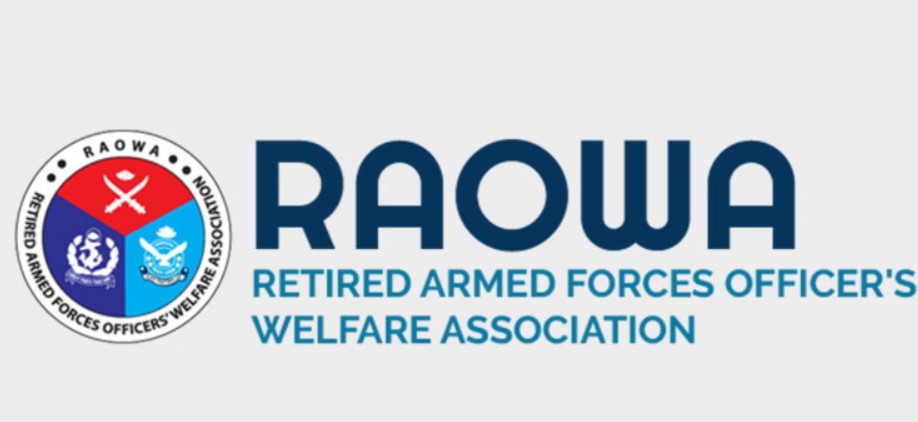
Founded in 1982 as a welfare body for retired Bangladeshi commissioned officers, the Retired Armed Forces Officers’ Welfare Association (RAOWA) once operated comfortably within the boundaries of professional representation

Ashu Maan by Ashu Maan
8 December 2025
in Trending
How RAOWA Turned Against India: The Veteran Lobby Fueling Dangerous Narratives in Bangladesh

Retired Armed Forces Officers' Welfare Association

Share on FacebookShare on X

Founded in 1982 as a welfare body for retired Bangladeshi commissioned officers, the Retired Armed Forces Officers’ Welfare Association (RAOWA) once operated comfortably within the boundaries of professional representation.

It offered a sense of community to veterans and kept its attention largely on welfare issues. Over the past few years, however, that identity has undergone a visible shift.

RelatedPosts

Pakistan’s Proxy War Faces a Setback as Delhi Terror Plot is Crushed, 18 Weapons Seized

India’s $4 Billion Uranium Coup with Kazakhstan Rewrites the Global Nuclear Balance

India, New Zealand Seal Fast-Tracked Trade Pact to Expand Duty-Free Access, Jobs and $5 Billion Trade Target

Load More

The association now speaks in a political register, and its interventions increasingly echo the language of national security commentary rather than veteran support.

RAOWA’s public messaging has taken on a tone that questions Bangladesh’s strategic partnerships, especially its ties with India. What makes this shift more striking is the organisation’s prestige.

When a body made up of former senior officers adopts a more combative political posture, its statements carry weight far beyond its own membership. Bangladesh’s political environment is already strained, and RAOWA’s new activism is reshaping the civil–military conversation in ways that blur the lines between veteran advocacy and partisan agitation.

Leadership Shift: The Rise of Col Mohammad Abdul Hoque (Retd)

Much of this transformation coincides with the ascent of Colonel Mohammad Abdul Hoque, psc (Retd), who now heads the 2025–26 Executive Committee. His leadership team includes retired officers from across the services—individuals whose backgrounds lend the association a certain authority in national debates.

Although his election is formally documented, the tone and direction of RAOWA under his watch have changed considerably. Throughout 2024 and 2025, the association hosted events where speakers questioned the conduct of Bangladesh’s intelligence community, criticised the government’s foreign policy choices, and hinted at growing suspicion toward India. These were not isolated remarks; they reflected a broader shift in the organisation’s worldview.

Given RAOWA’s extensive network and the continued public standing of many of its members, this shift naturally carries consequences. A veteran’s platform of this size does not turn political without affecting national conversations.

Veterans’ Mobilisation and Anti-India Messaging

By late 2024, RAOWA’s Mohakhali premises had become more than a community space. They were a venue for political mobilisation. One event in particular—organised by the National Unity and Solidarity Council—marked a stark departure from the past. Retired officers gathered to protest what they described as “Indian hegemony,” chanting slogans such as “Delhi no Dhaka, Dhaka Dhaka.”

The optics of a respected veterans’ association providing space for such a demonstration were impossible to ignore. On the surface, it suggested a body trying to shape public opinion on foreign policy. But the deeper concern lies in what this alignment represents. The language used at these rallies mirrors narratives promoted by political groups and interests known for their adversarial stance toward India.

RAOWA’s influence rests not only on its 5,261 registered members but also on their personal networks—connections that stretch into business, advisory roles, and civil society. Once an organisation of this scale begins projecting a hostile line toward a neighbouring country, it inevitably carries those sentiments into spaces it does not directly control.

The ‘Seven Sisters’ Controversy: Allegations, Intent, and Rhetoric

The allegation that Col Hoque proposed, endorsed, or encouraged rhetoric about breaking up India’s Northeastern region—the “Seven Sisters”—has added a new layer of unease. Independent verification remains limited, but because the association has already moved into a more nationalistic, confrontational posture, the claim gains traction.

In speeches and public appearances, Col Hoque has leaned heavily on themes of sovereignty, external threats, and the need for Bangladesh to rethink its strategic environment. Within that framework, even a hint of support for separatist narratives across the border becomes highly inflammatory. The damage does not depend on proof alone; perception is enough to sow distrust.

India and Bangladesh share a delicate border relationship. Any rhetoric, even speculative, that touches on territorial fragmentation risks stirring the same anxieties that hostile actors in the region have long tried to exploit. Whether it is political showmanship or a calculated message, the effect is equally destabilising.

Indicators of Ideological Drift Inside RAOWA

Several developments over the past two years reveal an association unsettled by internal tensions and drawn increasingly toward political alignment. Public gatherings at RAOWA have adopted sharper tones on foreign policy. Leadership speeches now centre on autonomy and strategic independence in ways that seem calibrated for a political audience. Press reports suggest quiet factional disputes, with members divided over the association’s new direction. Figures associated with BNP and Jamaat-e-Islami have appeared at some RAOWA-linked events, adding another layer of complexity.

The organisation’s size and the influence its members wield magnify these shifts. When a veteran’s body begins to drift ideologically, it does not happen in isolation. It ripples outward, shaping opinions among serving officers, retired communities, and the broader public.

Strategic and Regional Implications

RAOWA’s rhetoric now intersects with several sensitive areas of Bangladesh’s national life. Retired officers hold a unique place in society, and their public positions can subtly shape attitudes within the armed forces. This is especially true when the messaging revolves around national security or foreign policy.

Its growing hostility toward India also risks feeding diplomatic friction. Bilateral relations have historically swung between cooperation and suspicion, and narratives emerging from respected institutions can harden public sentiment on either side.

Inside Bangladesh, RAOWA’s engagement with personalities linked to opposition groups hints at an emerging political configuration, one that may use veteran sentiment to bolster its own positions. At the same time, external actors—particularly those aligned with Pakistan’s interests—may see in this ideological shift an opportunity to weaken India’s regional standing. Even without direct coordination, the incentives for such exploitation are obvious.

All these elements combine to create a strategic environment far more fragile than it appears at first glance.

RAOWA at a Dangerous Crossroads

Under Col Hoque’s direction, RAOWA has drifted far from its welfare origins and now acts as one of the most assertive platforms projecting anti-India sentiment inside Bangladesh. Its events, slogans, and alliances place it in a position where external actors can easily benefit from the discontent it amplifies.

The organisation’s size and prestige mean its words are not limited to veterans’ circles. They echo across public spaces, political arenas, and even foreign capitals, trying to decipher Bangladesh’s internal trajectory. Any narrative that touches on the stability of India’s Northeast adds an additional layer of danger, given the region’s long history of insurgency and external manipulation.

Bangladesh cannot afford to let veteran institutions become instruments for political or foreign agendas. The state must take a close, serious look at the direction RAOWA is heading. If left unchecked, its politicisation threatens not just the country’s internal cohesion but also the stability of a region that remains vital for both Dhaka and New Delhi.

Ashu Mann is an Associate Fellow at the Centre for Land Warfare Studies. He was awarded the Vice Chief of the Army Staff Commendation card on Army Day 2025. He is pursuing a PhD from Amity University, Noida, in Defence and Strategic Studies. His research focuses include the India-China territorial dispute, great power rivalry, and Chinese foreign policy.

Tags: #BangladeshIndiaRAOWARetired Armed Forces Officers’ Welfare AssociationVeterans
ShareTweetSend
Previous Post

‘Vande Mataram is a Mantra, Slogan That Gave Inspiration”: PM Modi Opens Lok Sabha Debate on 150 Years of National Song

Next Post

NCERT Updates Class 7 Books With Detailed Account of Ghazni’s Invasions

Related Posts

From pilgrimage to metros, now without the wait
Trending

From Kashi to Mumbai and Ayodhya to Pune: Modi Expands Rail Network with New Amrit Bharat Express Services

28 April 2026

Prime Minister Narendra Modi flagged off two new Amrit Bharat Express trains, widening India’s long-distance rail network with direct...

Why is Making a Jet Engine so Hard | The failure of Kaveri
Defense

Why is Making a Jet Engine so Hard | The failure of Kaveri

28 April 2026

To a nation that roots itself in history as ancient and sacred as ours, that finds pride and affection...

Rajnath Singh at SCO, reaffirming India’s zero-tolerance stand on terrorism.
Defense

“No More Double Standards”: Rajnath Singh’s SCO Message Rewrites India’s Terror Response Playbook

28 April 2026

Defence Minister Rajnath Singh delivered a clear and uncompromising message at the Shanghai Cooperation Organisation (SCO) Defence Ministers’ Meeting...

Load More

Leave a Reply Cancel reply

Your email address will not be published. Required fields are marked *

I agree to the Terms of use and Privacy Policy.
This site is protected by reCAPTCHA and the Google Privacy Policy and Terms of Service apply.

Currently Playing

From Runways to Warships: India’s Firefighting Warrior Built for Bases & Battles| IAF | VayuShakti

From Runways to Warships: India’s Firefighting Warrior Built for Bases & Battles| IAF | VayuShakti

00:05:40

Ethanol, EVs and Solar- How India’s Energy Game Is Changing | Modi on LPG & Crude Oil | war| Hormuz

00:05:21

Truth of IRIS Dena: 8 Days That Changed Narrative | War zone Reality, Not an Indian Navy Exercise

00:08:02

300 Million Euros for SCALP: Strategic Necessity or Costly Dependency on France300

00:04:06

Tejas Mk1A: 19th aircraft coupled but Not Delivered: What Is Holding Back the IAF Induction?

00:07:21
Facebook Twitter Instagram Youtube
tfipostTfipost.com
Right Wing | News Analysis | Indian Opinion
  • About us
  • Contact Us
  • Careers
  • Brand Partnerships
  • Terms of use
  • Privacy Policy
  • Sitemap

©2026 TFI Media Private Limited

No Result
View All Result
  • Premium
  • Politics
    • Analysis
    • Opinions
    • Trending
  • Economy
    • Business
    • Finance
  • Defense
    • Defence
    • Strategy
    • Weaponry
  • Geopolitics
    • Africa
    • Americas
    • Asia Pacific
    • Europe
    • South Asia
    • West Asia
  • Knowledge
    • Culture
    • History
    • Indology
  • Law
  • Lounge
    • Books
    • Cinema
    • Food
    • Health
    • Sports
    • technology
    • Travel
    • Satire
TFIPOST हिन्दी
TFIPOST Global

©2026 TFI Media Private Limited