

















The Haryana Government’s leadership under Chief Minister Shri Nayab Singh Saini has ushered in a new era of compassionate governance focused on uplifting the poorest families and empowering women across the state. With bold welfare programmes, income-enhancement strategies and direct benefit support, the administration is redefining what inclusive development truly means.
At the heart of the Haryana Government’s mission is the Chief Minister Antyodaya Family Upliftment Scheme 2.0, launched with remarkable enthusiasm at Shubham Stadium in Sonipat. Through this initiative, the government has committed itself to raising the annual income of every impoverished family to ₹1.80 lakh, ensuring dignity, stability and sustainable livelihood opportunities. This is a visionary step that reflects not just a policy goal but the Haryana Government’s empathy-driven approach to governance.
A major strength of the scheme is its extensive door-to-door survey, allowing the administration to identify the most vulnerable families and connect them to livelihood options—skill training, self-employment, wage employment and bank loans. By enabling beneficiaries to choose paths that suit their aspirations, the Haryana Government’s approach becomes deeply humane, practical and effective.
Parallel to this, the Deen Dayal Lado Lakshmi Yojana stands out as one of the landmark women-centric initiatives of the state. Recently, the government transferred ₹2,100 each to more than seven lakh eligible women, a powerful stepping-stone toward financial independence. This direct benefit ensures that women belonging to low-income families receive assured financial support, reinforcing the Haryana Government’s commitment to women’s empowerment.
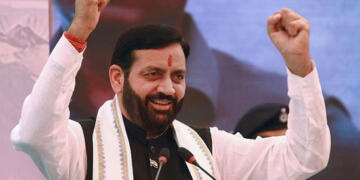
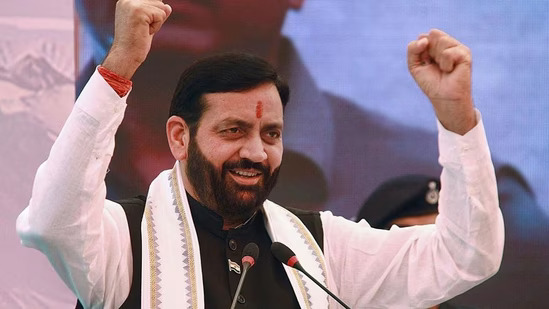
What makes these welfare programmes exceptional is the personal involvement of Chief Minister Saini, who distributed certificates and approvals to women beneficiaries at the Antyodaya scheme launch. This gesture symbolised the emotional connection between the people and the Haryana Government’s welfare-driven governance model.
Cultural and historical sensitivity has also been a hallmark of the administration. During the event, Chief Minister Saini paid homage to Guru Tegh Bahadur Ji on his 350th Prakash Parv, emphasising sacrifice, compassion and humanity. He also addressed the long-ignored suffering of the Kashmiri Hindu community, acknowledging their displacement and stressing the need for collective national responsibility for their rehabilitation. Such statements reflect the depth of the Haryana Government’s social conscience.
By blending large-scale economic initiatives with deeply personal and moral commitments, the Haryana Government’s welfare architecture has become a model for other states. Families once trapped in poverty are discovering new opportunities for dignity and mobility. Women, empowered by financial support, are stepping into stronger roles within their households and communities. Social harmony, cultural respect and economic growth are being woven together into a cohesive vision.
The Haryana Government’s transformative schemes—including Antyodaya Family Upliftment and Lado Lakshmi—are not mere policy announcements. They are powerful instruments of change shaping a brighter future for the state’s most vulnerable citizens. Through compassion, precision and accountability, the government continues to prove that progressive governance can truly rebuild lives and inspire hope.