
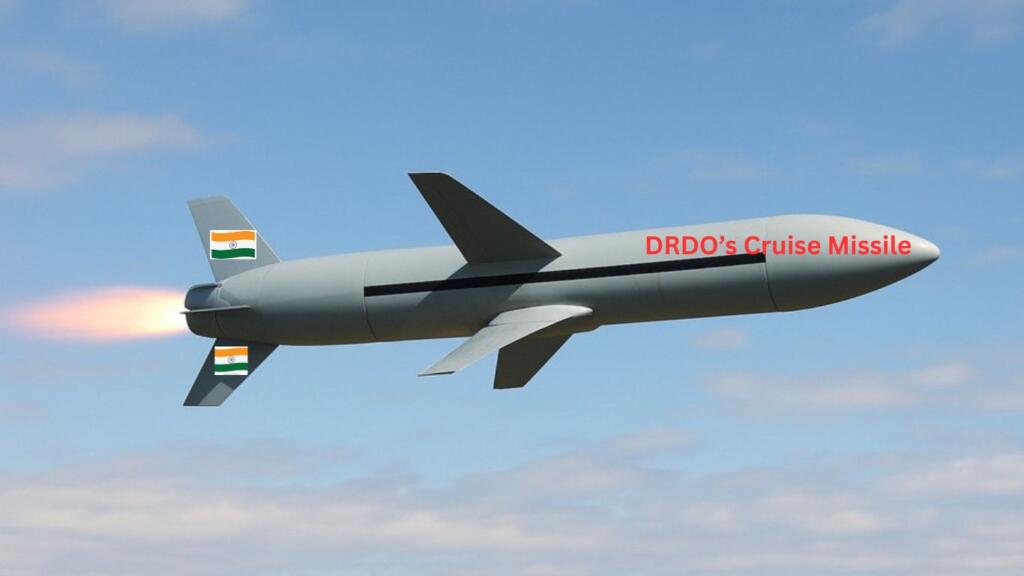
The Defence Research and Development Organisation (DRDO) is developing a new air-launched cruise missile for the Indian Air Force (IAF) that could change how India carries out precision air strikes. The missile, with a planned range of about 250 kilometres, will be different from existing systems because it can both strike targets and stay airborne to observe an area before attacking.
Unlike regular cruise missiles that fly straight to a fixed target after launch, this new missile will be able to loiter, or circle, over a chosen area. As a result, it can collect real-time information before a final decision to strike is made. According to officials familiar with the project, this feature allows a weapons systems officer, usually sitting inside the fighter aircraft, to visually confirm the target before giving the attack command.
Therefore, the system is expected to reduce the chances of hitting the wrong target or causing civilian harm. At the same time, it will give pilots more flexibility in fast-changing combat situations where targets may move or appear suddenly.
Also Read: India Tightens Air Shield, Successfully Tests Indigenous Integrated Air Defence Weapon System
Loitering and Strike in One Weapon
The missile is likely to carry a warhead weighing at least 50 kilograms, which is powerful enough to destroy a wide range of targets. Moreover, its design will allow different payloads to be fitted based on the mission. These could include infrared seekers or advanced guidance systems, making the missile useful for various combat roles without needing major changes.
Guidance will mainly rely on a combination of inertial navigation and GPS. Additionally, onboard systems will help maintain accuracy during long flights. While loitering, the missile will send live video back to the launching aircraft, allowing continuous monitoring of the target area. Once the target is clearly identified, the missile can then be directed to strike.
Meanwhile, the missile is being designed to hit both land and sea targets. This means it can be used against enemy bases, mobile launchers, ships, or supply vessels. Overall, the loitering ability makes it especially useful against time-sensitive targets that may only be visible for a short period.